How Do You Launch a Manual Car at the Drag Strip?
Launch a manual car by staging, setting the engine in its traction-friendly power band, and feeding the clutch out fast enough to move hard without spinning the tires. A useful starting target is a 60-foot time in about the 1.8 to 2.2-second range, then adjust from the slip, bog, or spin you see. Get it wrong and you lose elapsed time, haze the tires, or shock the driveline.
Launch basics for a manual car
A clean manual launch is a traction choice, not a clutch-dump contest. The drag race covers 1,320 feet, but the first 60 feet tells you far more about whether the car hooked, bogged, or spun.
On a manual car, clutch engagement speed, launch rpm, and throttle overlap all have to match the tire and the track. Street tires on a marginal surface usually want less rpm and more clutch slip. Sticky tires on a prepped lane can take a quicker release.
What the Christmas tree and staging beams
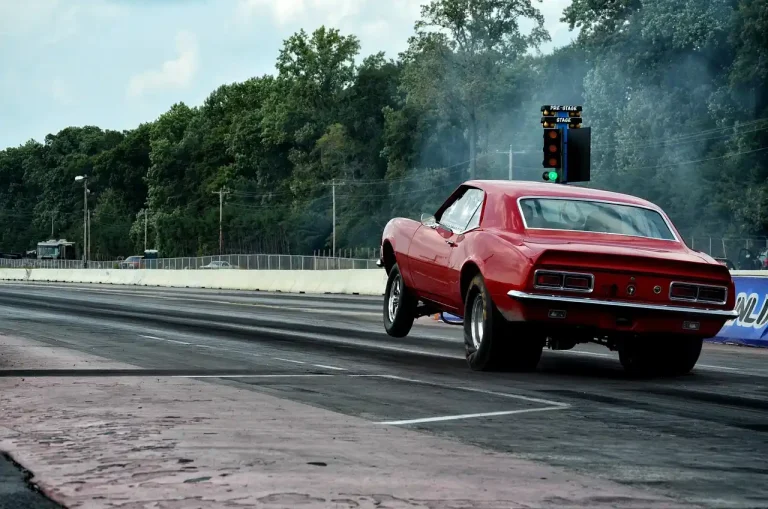
Stage by rolling into the beams in two steps: pre-stage first, then stage. Pre-stage is the first bulb; stage is the second. The car is set in position when the front tires break the beam set across the lane, and the launch happens from there.
A Pro tree uses all three amber lights flashing together, then green comes on 0.4 seconds later. Leaving before green is a foul and ends the race. That timing matters, but it does not change the traction choice you make with the clutch and throttle.
Why 60-foot time matters more than a hero burnout
The 60-foot time is all launch. It measures the first part of the pass, where traction and clutch control matter most, and it is far less sensitive to reaction time than the rest of the run.
A good reaction time does not fix a bad launch. On the other hand, a consistent 60-foot usually tells you the launch setup is close, even if the rest of the pass still needs gear or shift-point work.
Why launch rpm must match traction, not guesswork
Launch rpm should sit where the engine responds cleanly without forcing the tires past their grip limit. Peak torque arrives around 3,000 RPM on the example setup, peak power is about 5,300 RPM, the quickest shift is a little past peak power at about 5,600 RPM, and the rev limiter is at 6,000 RPM.
Those numbers are vehicle-specific, so treat them as a model for how to think, not a universal recipe. Small engines, big cams, aggressive tunes, and different tire packages change the right launch point.
What you’ll need
- A tachometer or shift light you can trust
- Helmet and any track-required safety gear
- Tire pressure gauge and a way to adjust pressure
- Notebook or phone for 60-foot notes
- Window of clean space in your schedule for repeat passes, not one-off guesses
Launch decision table
| Car and track setup | Starting rpm range | Clutch release speed | Throttle overlap | Most likely failure mode |
|---|---|---|---|---|
| Street tire, low power, marginal prep | 1,500–2,500 | Slow and progressive | Light overlap; feed in after the car starts moving | Bog from too little rpm or too much clutch too soon |
| Street tire, higher power, good prep | 2,000–3,200 | Moderate slip, then quicker once rolling | Small overlap to keep the engine in the band | Wheelspin or hop from too much clutch speed |
| Drag radial or slick, good prep | 3,000–4,500 | Quicker release with controlled slip | Short overlap; let the tire take the hit | Driveline shock or missed shift if rpm climbs too fast |
Use the table as a starting point. If the car bogs, the launch point is usually too low or the clutch is out too fast for the tire. If it spins immediately, the launch point is usually too high, the release is too abrupt, or the surface is not ready for the tire.
How do you stage the car correctly?
Roll into pre-stage, then ease forward until the stage bulb comes on. Set your feet, hands, and steering angle before the final inch of movement, because any extra movement after staging can change your launch timing and the way the car loads the drivetrain.
Step-by-step staging sequence
- Roll up until pre-stage lights.
- Move forward slowly until stage lights.
- Straighten the wheel and settle the car.
- Set the engine at your planned launch rpm.
- Hold steady and read the tree.
Suppose a street-tire car creeps a few inches after staging because the driver is still settling the clutch pedal. That extra movement can change the launch rpm you thought you had, and it often turns a clean hit into a bog or a spin.
How do you launch the car on the tree?
Use the tree to time the release, not to rush the clutch. On a Pro tree, the ambers flash together, then green comes 0.4 seconds later, so your hands and feet need to be ready before the last amber sequence finishes. The car can move before green in a competitive launch, so the goal is to time the beam break, not arrive late to the pedal.
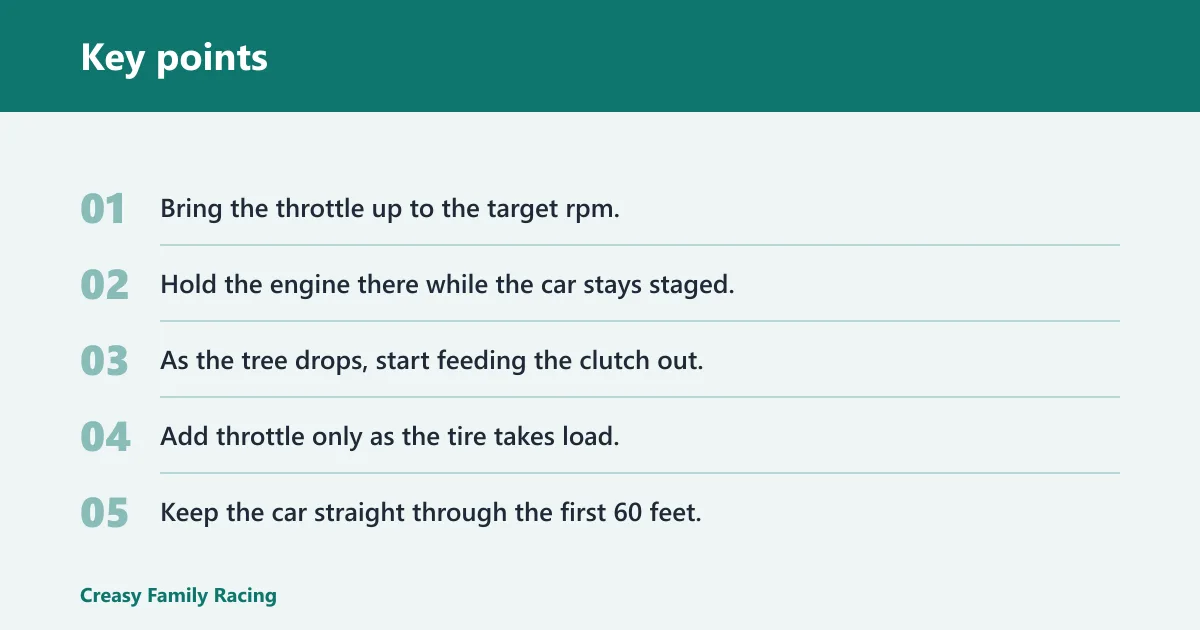
Build throttle against the clutch without rushing it
- Bring the throttle up to the target rpm.
- Hold the engine there while the car stays staged.
- As the tree drops, start feeding the clutch out.
- Add throttle only as the tire takes load.
- Keep the car straight through the first 60 feet.
Say your car is on street tires and the lane is only lightly prepped. A quick clutch release with full throttle can overwhelm the contact patch in the first few feet, so a measured overlap is usually safer and quicker than a hard hit.
Use the tree to time the move, not the fear
Reaction time is measured from the start signal to when the car clears the stage beam, not from green alone. On the Pro tree used here, anything under 0.500 reaction time is described as solid in the supplied example context, but that does not mean the launch itself was good or fast.
Keep reaction separate from elapsed time. A clean leave can still be slow if the car bogs, and a late reaction can still pair with a strong 60-foot.
How do you choose launch rpm and clutch slip?
Start lower on street tires and raise rpm only after the data says the car can take it. Slip more when traction is limited, less when the surface is prepared and the tire can absorb the hit. The right answer depends on power level, gear spacing, and how quickly the engine falls between shifts.
Street tires: begin conservative
Street-tire traction limits are real. If the car is low power or the surface is marginal, use less launch rpm and let the clutch do more of the work. The goal is to get the car moving cleanly before the tire is asked to carry full torque.
What rpm should you launch at on street tires? Start in the lower part of your engine’s usable band and adjust in about 200 to 300 rpm steps after each pass. If it bogs, add rpm. If it spins, reduce rpm or increase clutch slip time.
Sticky tires: release faster, but still control the hit
Drag radials and slicks on a good prep surface can take a harder launch, but they still need a controlled engagement speed. A quicker clutch release usually works better here because the tire has more grip and the car is less likely to haze the first 10 feet.
Even then, dumping the clutch is not automatically faster. If the car shocks the tire, wheel hop and missed shifts can cost more than a slightly softer leave.
How do you adjust after each pass?
Read the 60-foot first, then decide what to change. The first 60 feet is where launch quality shows up, so it is the cleanest place to see whether rpm, clutch slip, or tire choice needs to move.
Use one change at a time
- Record launch rpm, tire pressure, and 60-foot time.
- If it bogged, raise launch rpm by 200 rpm.
- If it spun, lower launch rpm by 200 rpm or slow the clutch release.
- If it hopped, reduce hit speed and check surface or tire pressure.
- Repeat the same change on the next pass only.
Change one variable at a time. If you lower tire pressure, raise launch rpm, and change shift timing on the same pass, the result tells you almost nothing.
Shift light and shift timing
A shift light is a cue, not a command to stare at the dash. Use it to stay near the power band and avoid the limiter, but do not wait so long that the engine slams into 6,000 RPM and falls off the best part of the pull.
The quickest shift on the supplied example data is a little past peak power, at about 5,600 RPM. That is not a universal number, so confirm your own shift point with 60-foot, gear drop, and trap speed changes.
Common mistakes
Dumping the clutch on marginal traction is the fastest way to lose the first 60 feet. A sharp release can also shock the driveline and trigger hop, especially on street tires.
Chasing the limiter instead of the shift point usually hurts more than it helps. A short-shift can be bad, but a missed shift or a limiter hit is worse.
Ignoring wheel hop, bog, or tire spin as if they are the same problem leads to the wrong fix. Bog means the engine load came in too hard or too early. Spin means the tire got more torque than it could hold. Hop means the chassis, tire, and surface are fighting each other.
Changing tires, pressure, and rpm all at once makes the next pass hard to read. Make one move, then check the 60-foot again.
Frequently asked questions
How to launch a manual car at the drag strip
Stage the car, set a launch rpm that matches the tire, and let the clutch out at a controlled rate as the tree falls. For most manual cars, the first useful data point is the 60-foot time. Use that number to decide whether the next change is more rpm, less rpm, or a slower release.
How to launch a manual car in a drag race
Use the same sequence every run: stage, hold rpm, move on the tree, and stay straight. If the car is on street tires, lean conservative. If it has drag radials or slicks on a good prep surface, you can usually release the clutch faster and add less overlap.
Should you slip the clutch or dump it for a faster launch?
Slip the clutch when traction is limited, and use a quicker release when the surface and tire can take it. Dumping the clutch is only useful when the setup can absorb the hit without spin or hop. If the car is street-tire based, controlled slip is usually the better starting point.
What rpm should you launch at on street tires?
Start in the lower-to-middle part of the engine’s usable range, then adjust in 200 to 300 rpm steps. If the car bogs, add rpm. If it spins immediately, lower rpm or slow the clutch release. The right answer depends on engine size, tune, gear ratio, and how clean the track is.
Why does my car spin the tires on launch?
Wheelspin usually means the launch rpm, clutch speed, or throttle hit is too aggressive for the surface and tire. Street tires on a marginal track are the most common case. The fix is usually less launch rpm, a slower clutch release, or a better-prepped lane.
Why does my car bog on launch at the drag strip?
Bog means the engine fell out of its useful range because the clutch loaded the car faster than the motor could pull. Raise launch rpm first, then trim clutch speed if needed. If the car still bogs, the gear ratio or shift drop may be too tall for the engine’s band.