What Is a Drag Strip and How Does a Race Work?
A drag strip is a straight, measured race course where two cars launch from a fixed start line and run to a set distance, commonly 1/4 mile or 1/8 mile, with timing started at the launch. Ignore staging, reaction time, or track rules, and you can lose a round, slow the run, or create a safety problem. This guide explains the staging lanes, the start, the run, the time slip, and how to read the numbers.
What is a drag strip?
A drag strip is a closed-course straight-line racing venue with a measured distance and a finish line at the end of that distance. The common benchmark distances are 1/8 mile and 1/4 mile, and some facilities also use 1/2 mile or longer formats. It is for track use, not public roads.
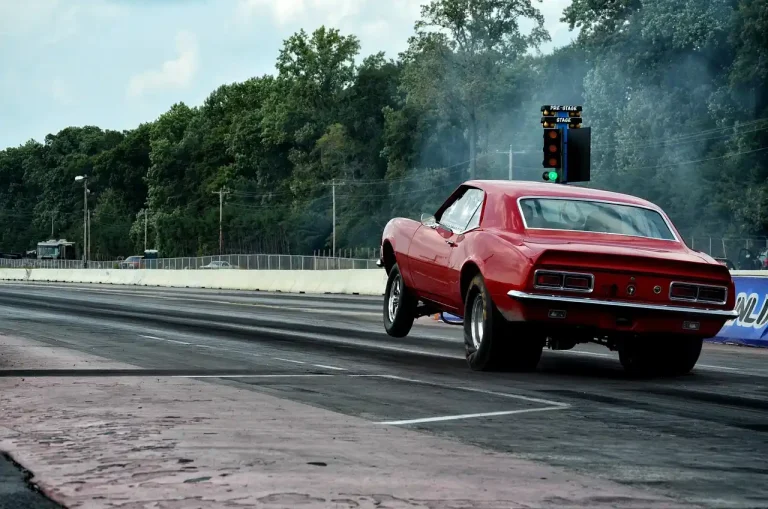
The important part is the measured lane. You are not guessing where the race ends. The strip sets the start line, the finish line, and the timing system that records the run.
Where the finish line sits
The finish line sits at the end of the measured distance, not wherever the car happens to stop. That sounds simple, but it matters because the run is judged by the line the car crosses, then by the numbers the timing system records at that line.
On a 1/4 mile strip, the finish line is at 1/4 mile. On a 1/8 mile strip, it is at 1/8 mile. The driver’s job is to get the car from the start to that point cleanly and legally.
Why 1/8 mile and 1/4 mile both matter
The 1/4 mile is the standard drag racing benchmark, but the 1/8 mile is often friendlier for a first outing. The shorter distance gives you a quicker turnaround, less time at full pull, and a simpler first read on launch and traction. That makes it a practical choice for a stock street car.
For a beginner, the distance choice changes the learning pace. A 1/8 mile run can show whether the car leaves cleanly without asking the driver to stay in it as long as a 1/4 mile pass.
What is a drag race?
A drag race is a run between two vehicles over a fixed distance. The main outcomes are elapsed time and trap speed, while reaction time measures how well the driver leaves when the tree goes green. Depending on format, the winner is the quickest elapsed time or the best result under the class rules.
That means the fastest car on paper does not always win a given round. A slower car can take the round if the format uses a handicap or if the other driver leaves poorly.
What elapsed time measures
Elapsed time, often shortened to ET, is the time from the start to the finish line. It tells you how long the car took to cover the distance. It does not include the same thing as reaction time, and it should not be mixed up with it.
For a beginner, ET is useful because it shows the full result of launch, traction, shift timing, and power delivery in one number.
What trap speed measures
Trap speed is the speed recorded at the finish line. It gives a snapshot of how hard the car was pulling near the end of the run. A car can have a decent ET and still show a lower trap speed if the launch or shift points were off.
That is why ET and trap speed belong together. One tells you how quickly the car crossed the line. The other tells you how fast it was moving when it got there.
How does the starting line work?
The starting line uses pre-stage and stage beams to tell the driver when the car is set. After that, the amber bulbs on the tree count down to green. If the driver moves too early, the result can be a red-light start, which can lose the round even if the car is quick.
The start is where many first-time mistakes happen. The car is staged before the run begins, and the lights decide when the clock starts and how the launch is judged.
Pre-stage and stage bulbs
Pre-stage means the car has rolled close enough to break the first beam. Stage means it has rolled a little farther and is fully set for the launch. Those lights are the driver’s visual cue that the car is in position.
Move too far, and you can roll out of the stage beam before the tree drops. Stay too far back, and you are not fully staged. Both can change the start.
Amber-to-green sequence
The tree gives the driver the start signal with amber bulbs before green. The exact sequence can vary by format, but the purpose is the same: the driver waits for the start signal, then leaves on time. Reaction time begins at that moment.
Good staging gives the driver a fair start. It also keeps the timing system and the lane official on the same page.
Red-light and false-start risk
If a car leaves too soon, it can trigger a red-light start. That means the car moved before the proper start signal. A false start can end the round even if the car runs well after that.
A common first-timer mistake is rolling toward the staging beams too early and jumping the start before the tree finishes counting down. That problem gets worse with a car that has a sharp throttle tip-in or a quick automatic launch.
What happens before your run?
Before the run, you usually go through staging lanes, line order, burnout, and tech inspection. Those steps keep the lane organized and the car within the track’s rules. For a street car, they also expose weak traction, loose items, or equipment issues before the car reaches the line.
The run starts well before the green bulb. If the car is not ready in the lanes, it is not ready at the tree.
Staging lanes and line order
The staging lanes are the waiting area before the starting line. Cars move forward in the order the track sets, then the driver rolls into the next step when directed. This keeps runs moving and reduces confusion at the line.
For a beginner, the key point is simple: follow the lane official, stay in line, and be ready when called. The lane is part of the race flow.
Burnout box basics
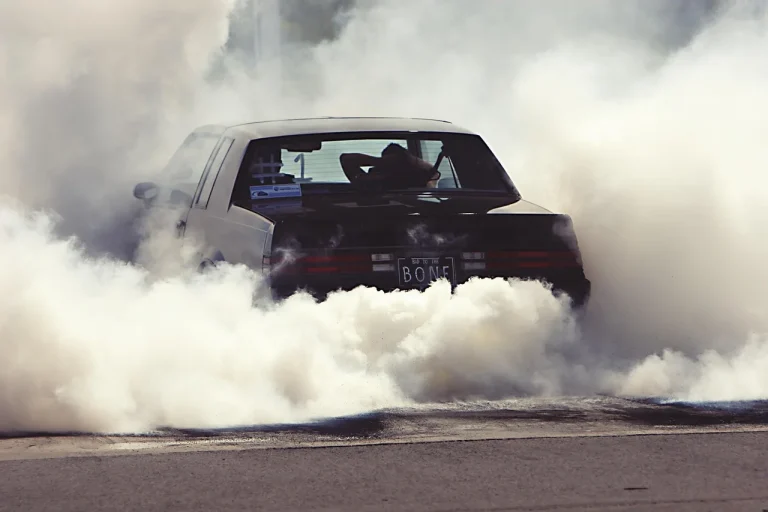
The burnout box is where many cars clean the tires and heat them before a run. Some street cars need only a short cleanup, while others skip a hard burnout depending on tire type and track direction. The track’s instructions matter more than any internet habit.
On a street car, the goal is often traction consistency, not smoke. A tire that is too hot or too cold can change the launch.
Tech inspection for a street car
Tech inspection is the track’s basic safety check before racing. The staff may look at the car’s general condition, brakes, tires, battery security, fluids, and any class-specific equipment. Driver gear rules can also vary by track, class, and ET.
What passes tech at one track may not pass at another. That is normal. The track sets the standard for its own lanes.
Drag strip checklist
This checklist and decoder shows what happens on a first pass, what the clock is measuring, what can go wrong, and what the number means for a stock street car. Use it to read the run from the line to the slip without guessing.
| Stage of the run | What the driver does | What the official clock measures | What can go wrong | What the number means for a stock street car |
|---|---|---|---|---|
| Staging lanes | Wait in order, keep the car ready, follow lane calls | Nothing yet; the run has not started | Missing your call or arriving unprepared | Shows whether the car is ready for repeated runs |
| Burnout box | Clean or heat the tires if directed | Still not the run clock | Too much wheelspin, overheated tires, or skipping track directions | Helps traction more than peak power on street tires |
| Pre-stage | Roll forward until the first beam is broken | The system is waiting to start | Rolling too far or stopping crooked | Sets up a fair start and a clean light read |
| Stage | Roll a little farther and stop when fully staged | The car is armed for the launch | Deep staging too soon or creeping through the beam | Affects how quickly the car can leave the line |
| Launch | Leave on the start signal and apply throttle smoothly | Reaction time begins at the tree | Red-light start or bogging the launch | Shows driver timing and launch control, not final speed alone |
| First 60 feet | Keep the car straight and manage wheelspin | 60-foot split | Spinning, bogging, or poor clutch release | The best early clue for traction and launch quality |
| Mid-track | Keep pulling and shift as needed | Elapsed time keeps running | Slow shifts or missed gears | Shows whether the car keeps building speed cleanly |
| Finish line | Cross under control and stay in lane | Elapsed time and trap speed | Lifting early or crossing unsettled | Gives the headline ET and finish speed for comparison |
What does a time slip mean?
A time slip is the printed or digital record of your run. It usually shows reaction time, 60-foot, elapsed time, and trap speed, along with lane or run details. For a beginner, it is the best tool for seeing what happened at the start, not just what happened at the finish.
The slip is not a trophy. It is a diagnostic sheet. The numbers tell you where the run helped or hurt.
Reaction time
Reaction time is the driver’s response to the start signal. It measures launch timing, not the car’s full run time. A quick reaction helps in formats where the tree matters, but it does not replace a quick ET.
That difference matters. A driver can have a quick light and still lose to a car with a better elapsed time.
60-foot split
The 60-foot split measures the first 60 feet of the run. For a beginner, it is often the best diagnostic number because it points to launch and traction problems faster than ET alone. If the 60-foot is poor, the rest of the run often suffers.
Suppose a stock automatic car cuts a decent ET overall but the 60-foot is slow. That usually tells you the launch was soft, the tires spun, or the car left too gently. The finish number only shows the result. The 60-foot points to the cause.
Elapsed time and trap speed
ET and trap speed should be read together. ET tells you how long the full run took. Trap speed tells you how fast the car was moving at the finish. On a stock street car, those two numbers often change when traction, shift timing, or launch technique changes.
Picture a front-wheel-drive street car on regular tires. If the driver spins hard at the line, the slip may show a slower 60-foot and a worse ET, even if the finish speed is close to the last pass. That tells you the launch needs work before power changes do.
How do bracket and heads-up races differ?
Bracket racing and heads-up racing use different goals. In bracket racing, the driver chooses a dial-in time and tries to run close to it without breaking out. In heads-up racing, the cars race side by side with the quickest car usually winning on raw pace or class rules.
Beginners often see bracket racing because it gives slower cars a way to compete on skill and consistency. It also keeps the focus on repeatable runs instead of only peak horsepower.
What changes for the driver
In heads-up racing, the driver is usually chasing the quickest possible pass. In bracket racing, the driver is managing consistency, the launch, and the dial-in. That changes how hard you leave, how you read the tree, and how much the lane official matters to your run plan.
For a first outing, bracket format is often easier to understand because the win condition is more than just raw speed.
What should a first-time street car driver expect?
A first-time street car driver should expect traction limits to matter more than peak power. Automatic cars often leave more easily because the launch is simpler to repeat. Manual cars can work well too, but clutch control, tire grip, and shift timing matter more. Small changes beat big guesses.
The key is to learn from one change at a time. That keeps the time slip useful.
Automatic versus manual launches
An automatic street car usually needs a steady brake-and-throttle launch or the track’s preferred launch method for that class. A manual car asks for clutch modulation and clean gear changes. Both can run well, but the manual driver has more chances to upset traction at the start.
Can you drag race a manual transmission street car? Yes. The car just needs a launch that matches the tire and the clutch. A rough shift can hurt ET, and a missed shift can end the run’s chance of a good number.
Traction limits on stock tires
Stock street tires usually limit the launch before engine power becomes the problem. A gentle launch may be slower on paper, but it often gives a cleaner 60-foot and a better repeatable result. That is especially true on a first pass or on a track with a slicker surface.
The first goal is not a hero launch. It is a clean one.
Why small changes beat big guesses
Begin with one change, then compare the slip. Tire pressure, launch rpm, and shift timing are easier to interpret than a long list of changes made at once. That is how the numbers stay readable.
DragRaceTimer says it measures 0-60 mph, 0-100 km/h, 1/8 mile, 1/4 mile, 60-foot splits, and launch G, and it uses GPS and accelerometer data at 20 Hz. Those features match the same basic idea as a track slip: the run is only useful if each segment can be compared cleanly.
Frequently asked questions
How do drag races work?
Cars line up in staging, roll into the beams, wait for the start signal, and launch when the tree drops. The timing system records reaction time, the run’s elapsed time, and the speed at the finish. The result then depends on the class rules and who ran the better pass.
What is the purpose of drag racing?
The purpose is to compare acceleration, launch quality, and driver control over a fixed distance. It is also a useful way to test setup changes in a controlled place. A track gives you repeatable conditions that are safer and more measurable than guessing on the street.
How long is a drag strip and where is the finish line?
A drag strip is commonly set up for 1/8 mile or 1/4 mile runs, though some tracks and formats use other distances. The finish line is at the end of the measured distance, not at a general point down the lane. That is where the clock ends.
Can you run a stock street car at a drag strip?
Yes. Many tracks allow stock or lightly modified street cars, especially in beginner-oriented test-and-tune sessions. The main limits are traction, track rules, and basic safety compliance. A stock car may be slow, but it can still teach launch and consistency very well.
What do they check in drag strip tech inspection?
Tech inspection usually looks at the car’s general condition, safety items, and any class-specific gear. That can include brakes, tires, battery security, leaks, and driver equipment rules. The exact list changes by track and by ET, so check the track’s rules before you line up.