How to Do a Proper Burnout in an Automatic Car
A proper automatic-car burnout at the drag strip is a short, controlled tire warm-up. Stay on the track, turn off traction aids, hold the car with the brakes, and stop as soon as the tires clean up or the water is gone. Done wrong, it can cook the transmission, shock the driveline, or send the car into the wall. This guide covers the setup, the right sequence, drivetrain-specific choices, legal limits, and the warning signs that say to stop.
Driven-wheel warm-up
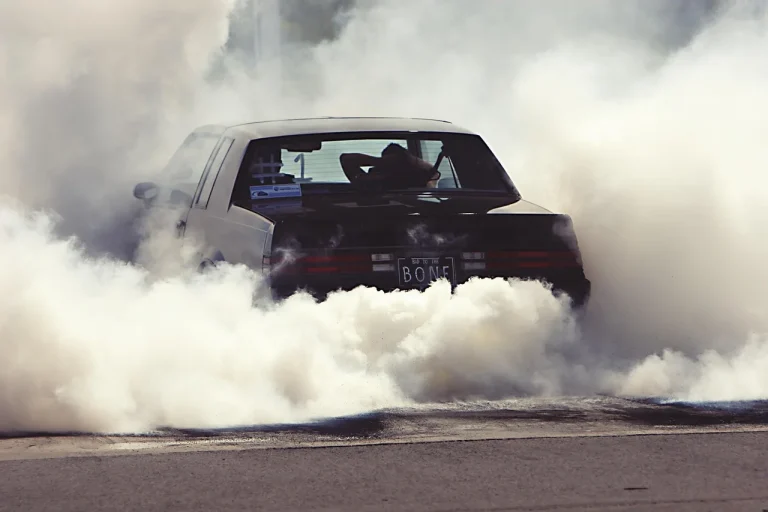
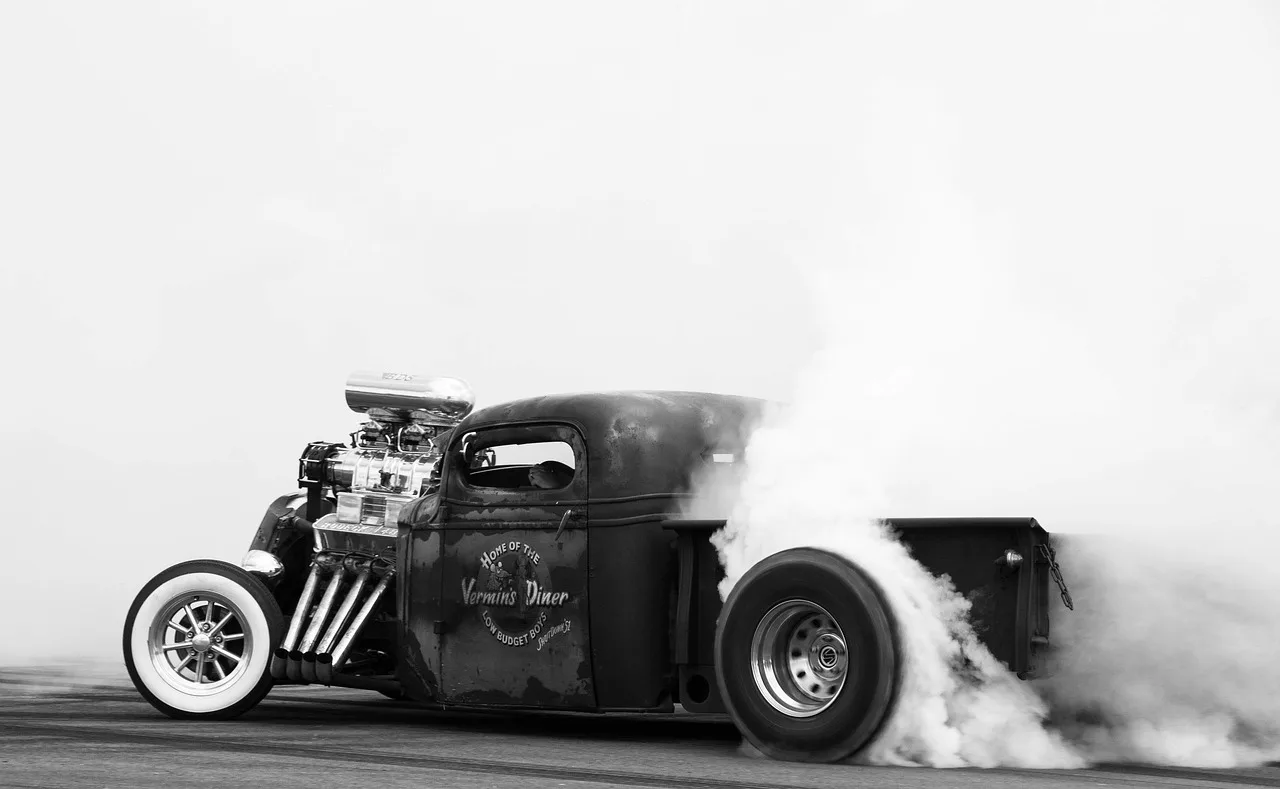
A burnout spins the driven wheels while the car stays mostly in place. Drag racers use that brief tire warm-up to clear water and heat the tread before a pass, but the same motion also stresses tires, brakes, the engine, the transmission, and the driveshaft.
Automatic cars can do this. The transmission may need the lowest usable gear or first gear if manual override exists, but the exact choice depends on the model. A proper setup keeps throttle input controlled while the brakes hold the car still.
Why drag racers do it?
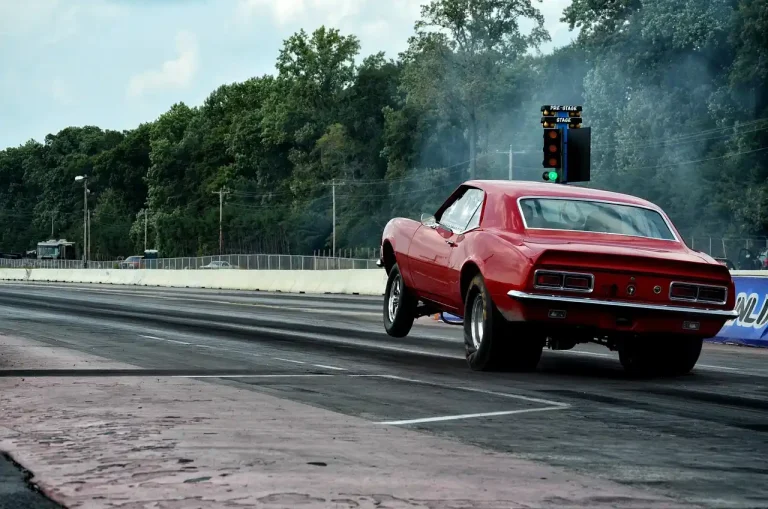
Burnouts warm tires so they can grip harder on launch. That is the main reason to do one, and it is why the car should stay on track surface or other private property, not on public roads.
Public-road burnouts are not allowed, and the risk goes beyond a ticket. They can lead to fines or jail time, and even on private property they can trigger noise complaints, surface damage, and danger to bystanders if the car moves unexpectedly.
Is it legal to do one?
Only do this in a lawful place that allows it, such as a drag strip or another controlled private setting with permission. Track rules, staging-lane etiquette, and local noise rules still matter, so the fact that a car is off public roads does not make a burnout acceptable everywhere.
Private property and track rules
At a track, follow the track crew’s instructions. Some facilities may want a quick roll-through burnout in the water box; others may limit burnout length or restrict it to a set area. The right answer is whatever the event rules and the owner’s manual allow.
A common first-timer mistake is treating the staging lane like a practice area. That can put water, smoke, and loose rubber where other cars need grip, and it can make the track officials stop the run before it starts.
Noise and surface damage
Even a clean burnout is loud. It can also chew up the surface if done in the wrong place or for too long. Keep the car pointed straight, keep spectators clear, and stop as soon as the tires are ready for the pass.
Automatic burnout checklist
Use this as a decision checklist, not a universal recipe. Some automatics accept a burnout easily, while others fight throttle input, brake pressure, or shift logic. If the car does not behave as expected, stop and check the manual instead of forcing it.
| Branch | Pre-checks | Exact control sequence | Stop-now failure signs |
|---|---|---|---|
| FWD | Traction control off; front tires are the driven wheels; confirm the car does not use a brake-throttle override that blocks throttle when the brake is held; check track rules and surface condition. | Use drive or the lowest usable range the manual allows; hold the car with the foot brake and, where the vehicle layout allows, the parking brake fully; apply only enough throttle to start the front tires spinning while the car stays nearly still; keep the car straight. | No tire spin; engine flares hard without wheel movement; the car creeps forward; brake pedal goes soft; smoke or smell builds fast; wheel hop starts. |
| RWD | Traction control off; rear tires are the driven wheels; verify the transmission can hold first gear; confirm rear brake pressure can keep the car from rolling. | Select first gear if the manual calls for it; hold firm brake pressure with the foot brake; bring the throttle up in a controlled way until the rear tires spin; keep the nose pointed straight and stop as soon as the tire surface is ready. | Car surges ahead; brake fade; wheel hop; harsh transmission flare; drive shaft vibration; smoke that keeps building after the tires are clean. |
| Unknown drivetrain | Do not guess. Check the owner’s manual or the build sheet, and identify which wheels actually drive the car before trying anything. | Stop and confirm FWD or RWD. If the drivetrain is unclear, do not attempt a burnout sequence. | If the car layout is still uncertain, if the manual forbids the maneuver, or if the transmission logic fights the input. |
Pre-checks before you try it
Confirm the location. Use private property with permission or a drag strip. Public roads are out, and even legal locations can still have noise limits or event rules that change how long you may hold the burnout.
Turn traction aids off. Traction control should be disabled before attempting the burnout because it limits wheelspin if left on. If the car has additional stability or launch logic, check the manual for what can be disabled without causing a fault.
Check the brakes and tires. Burnouts heat tires, but they also wear faster than normal and stress the brakes. If the pedal feels weak, the fluid is old, or the tires are damaged, stop before trying.
Set the gear correctly. Put the automatic in the lowest gear or first gear if manual override exists, but only if the owner’s manual calls for that mode. Some transmissions respond differently to manual range selection than to drive.
Exact control sequence
Stage the car straight. Line up the car, leave room ahead, and keep the steering wheel nearly centered. A straight setup reduces sideways movement if the tires grab unevenly.
Hold the car still. Keep steady pressure on the foot brake. If the vehicle layout calls for it, use the parking brake or emergency brake fully too. The goal is to hold the car in place while the driven wheels spin, not to let it creep forward and catch it later.
Feed in throttle. Bring the throttle up in a controlled way until the driven wheels start spinning. Keep the input smooth enough that the car does not lurch, and stop increasing throttle once the tires are clearly spinning.
Hold only briefly. Keep the burnout short. A practical stop point is when the tires are clean, warm, and showing the change the track surface needs, or when the water is mostly gone. If the car starts to surge, hop, or fade, end it immediately.
Release and roll out. Lift off the throttle first, then release the brake and move forward cleanly. Do not keep forcing the tires after the useful warm-up is done.
How drivetrain changes the method
Front-wheel drive and rear-wheel drive do not use the same burnout setup. The driven wheels are in different places, the brake load is different, and some automatics will react to throttle-and-brake input in ways that limit the attempt.
Front-wheel drive
Front-wheel-drive cars can do a burnout, but the method is different from rear-wheel drive. Many FWD automatics need drive or the lowest gear, and some are limited by open differentials or brake-throttle override that reduce or block wheelspin when the brake is held.
Use the parking brake in the example method only if the vehicle layout and the owner’s manual allow it. On many FWD setups, the front tires are still the driven wheels, so the brake hold must be strong enough to keep the car from rolling while the fronts spin. If the car keeps pulling forward, stop.
Suppose a compact FWD sedan with an automatic will not spin the tires even with traction control off. If the transmission is in drive, the pedal goes in, and the car only noses ahead, the issue may be brake-throttle override or not enough torque for that drivetrain and tire setup.
Rear-wheel drive
Rear-wheel-drive cars use brake pressure while the driven rear tires spin. That is why the setup feels different: the car is being held by the front brakes and the rear tires are doing the work. The rear tires should spin while the car stays mostly in place.
For a typical automatic rear-wheel-drive setup, first gear is a common choice when the manual supports it. Keep brake pressure firm, bring the throttle up under control, and watch for wheel hop. If the rear tires chatter instead of spinning cleanly, end the burnout before the driveline takes the hit.
Unknown drivetrain
If the drivetrain is unknown, stop and identify it before trying anything. A wrong guess can create the wrong brake hold, the wrong gear, or a launch that moves the car forward instead of warming the tires.
All-wheel drive is different again. It should not be treated like FWD or RWD for this purpose, and if the manual does not specifically allow a burnout method, do not attempt one.
What gear should you use?
The best gear depends on the transmission and drivetrain, so there is no universal answer for every automatic. The general guidance is the lowest usable gear or first gear if manual override exists, but the owner’s manual controls the final choice.
Lowest usable gear versus manual range
Some automatics respond better in drive, while others may hold first gear more predictably in a manual range. That difference matters because the wrong selection can cause a weak spin, an unexpected upshift, or a surge forward when the transmission logic changes under load.
Use the manufacturer’s instructions. If the manual warns against holding the car against the brakes in a certain mode, do not improvise.
Why won’t my car burn rubber?
The usual reasons are traction control still on, too little torque at the wheels, the wrong gear selection, or drivetrain limits. FWD cars can also be blocked by brake-throttle override, while some automatics simply will not cooperate the way a novice expects.
Traction control still
If traction control is active, it may cut power or apply brakes as soon as wheelspin starts. That makes the burnout feel dead, jerky, or impossible. Turn it off before trying again, then confirm the dash indicator shows the system is off.
Weak torque or drivetrain limits
Some cars do not have enough wheel torque to start a burnout cleanly on the surface they are on. A tall gear, cold tires, an open differential, or a transmission that upshifts early can all make the attempt fail even with the right pedal work.
Picture a mild-tune automatic coupe with all the right settings but a cold, high-grip surface. The rear tires may only chirp once, then the car rolls ahead. That is a setup limit, not a reason to keep forcing it harder.
Burnout damage and when to stop
Burnouts wear tires faster than normal and can damage other parts if they run too long. Tires are the first wear item, but the brakes, transmission, driveshaft, and differential can also suffer if the car is held in the burnout too hard or too long.
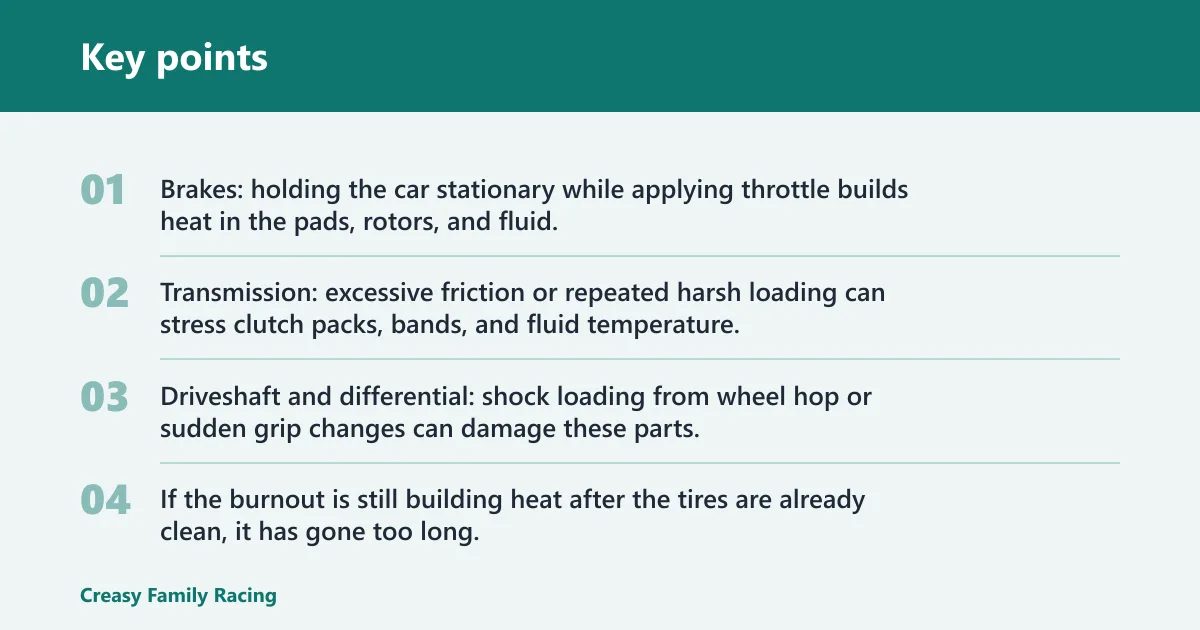
Damage ranking and stop points
Tires: the first and most obvious wear item. Heat and abrasion shorten tread life fast.
Brakes: holding the car stationary while applying throttle builds heat in the pads, rotors, and fluid.
Transmission: excessive friction or repeated harsh loading can stress clutch packs, bands, and fluid temperature.
Driveshaft and differential: shock loading from wheel hop or sudden grip changes can damage these parts.
Stop immediately if you feel wheel hop, smell overheated brakes or fluid, see the car surging forward, or notice a harsh transmission flare. Those are warning signs, not part of a good burnout.
Practical hold time
There is no safe universal countdown for every automatic, so the better rule is to stop as soon as the tires are ready for the pass. If the burnout is still building heat after the tires are already clean, it has gone too long.
Frequently asked questions
How do I do a burnout in an automatic car?
Turn off traction control, select the lowest usable gear or first gear if the manual allows it, hold the car with the brakes, and apply controlled throttle until the driven wheels spin. Keep it short. Stop at the first sign of wheel hop, forward surge, or brake fade.
What gear should I use for an automatic burnout?
Use the lowest usable gear or first gear if manual override exists, but the owner’s manual decides the final choice. Some automatics prefer drive, while others hold better in a low manual range. If the transmission behaves oddly, stop and verify the correct setting.
Should I disable traction control for a burnout?
Yes. Traction control should be disabled before attempting the burnout because it limits wheelspin if left on. If the car still will not spin, check for other stability aids, brake-throttle override, or a drivetrain setup that is not suitable for the method.
Can front-wheel-drive cars do a burnout?
Yes, but the setup is different from rear-wheel drive and may be limited by open differentials or brake-throttle override. Use the correct gear, hold the car still, and stop if the front tires never break free or the car begins to creep forward.
Can rear-wheel-drive cars do a burnout?
Yes. Rear-wheel-drive automatics commonly use first gear with firm brake pressure while the rear tires spin. Keep the car straight, keep the hold short, and stop if wheel hop, harsh flare, or brake fade appears.
Are burnouts legal on public roads?
No. Public-road burnouts are not allowed and can lead to fines or jail time. Even on private property, track rules, staging-lane etiquette, and local noise concerns still apply, so the right place and the right permission matter.