What to Bring to Your First Track Day
Bring your driver’s license, a helmet that meets the event’s rules, closed-toe shoes, water, and the car’s basic service items. Add event paperwork, inspection forms, and a small tool kit. Missing one required item can mean you fail tech or miss your run group. This guide separates compliance items, car-side essentials, and comfort extras so you pack enough without loading the car with junk.
Essential gear and inspection requirements
Bring the items that let you register, pass tech, and drive safely: a current driver’s license, event confirmation, waiver paperwork, an approved helmet, and a car that meets the organizer’s inspection rules. Add fluids, a tire gauge, water, and basic hand tools so small issues do not end the day early.
Most beginner events treat registration check-in and technical inspection as separate gates. The first gate verifies who you are and what group you belong in. The second gate checks that the car is generally safe enough for on-track use, including brakes, tires, fluid levels, battery security, and lug nut condition.
| Must bring | Nice to have | Why it matters at a first track day |
|---|---|---|
| Current driver’s license | Spare photocopy of registration confirmation | Used for check-in, waiver signing, and organizer records |
| Event confirmation, waiver, run group info, tech form if required | Printed schedule with session times | Confirms you are signed up for the correct event and group |
| Helmet that meets the event’s standard | Helmet bag or clean storage sack | Most track days require a helmet for on-track driving |
| Closed-toe shoes and event-compliant clothing | Weather layers, gloves, sunscreen | Meets basic safety rules and keeps you comfortable in the paddock |
| Tire pressure gauge, fuel, water, and basic fluids | Portable air source, chair, canopy, snacks | Lets you correct common day-of issues without leaving the venue |
| Brake, tire, battery, and lug nut check completed before arrival | Zip ties, duct tape, rags, brake cleaner | Reduces the odds of failing inspection or sitting out a session |
A common first-timer mistake is packing comfort items first and paperwork last. That can leave a driver with a chair, gloves, and snacks, but no waiver or license at check-in. The car may be ready; the entry packet may not be.
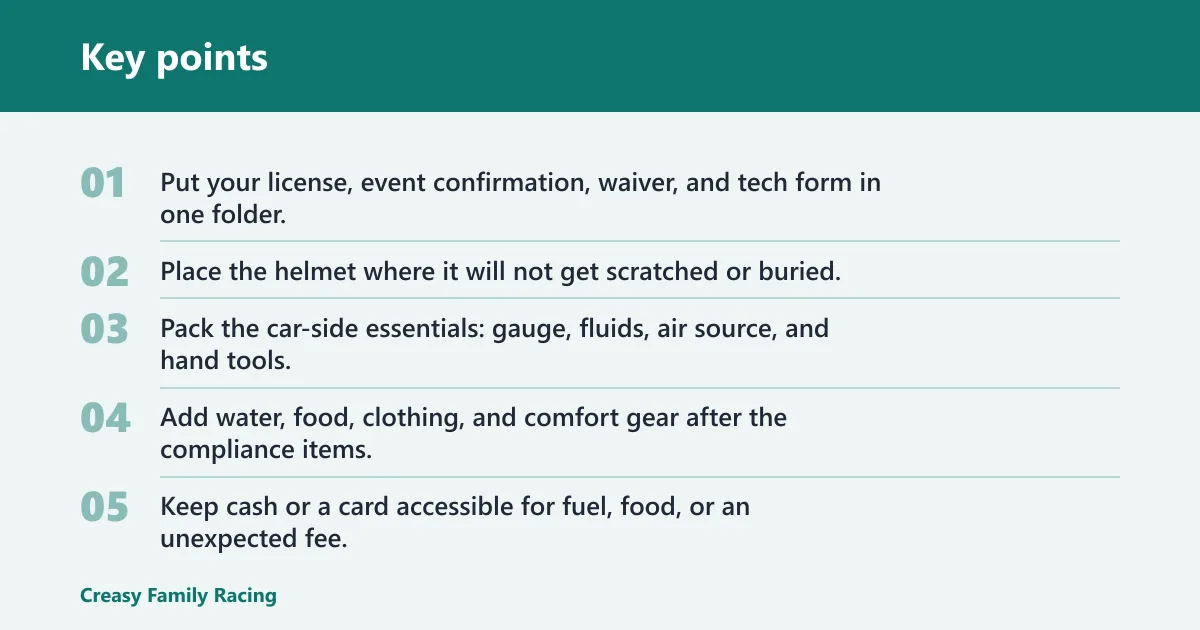
- Put your license, event confirmation, waiver, and tech form in one folder.
- Place the helmet where it will not get scratched or buried.
- Pack the car-side essentials: gauge, fluids, air source, and hand tools.
- Add water, food, clothing, and comfort gear after the compliance items.
- Keep cash or a card accessible for fuel, food, or an unexpected fee.
What documents do you need for a track day?
You usually need a current and valid driver’s license, your event confirmation, signed waivers, and any organizer-specific tech inspection form. Some events also want run group information or a schedule at check-in.
License, waivers, and registration
Your driver’s license is the identification most organizers use for registration and waiver purposes. Bring the original card, not a photo, unless the event specifically accepts a digital copy. Registration confirmation should match the name on the license.
Helmet approval and paperwork
Helmets are usually required for on-track driving at beginner events. The organizer may specify a Snell rating or another approved standard, plus fit requirements. Full-face helmets are required by some organizers for open cars, while some organizers allow open-face helmets in enclosed cars if their rules permit it; confirm the event rule before you pack.
Borrowing a helmet can work if the organizer allows it and the fit is correct. A helmet that moves on your head, pinches your temples, or sits too high can be rejected at inspection. Check the size label and the event’s standard before arrival, because a helmet that is legal for one venue may not pass at another.
What should you wear to your first track day?
Wear clothing that fits the organizer’s rules and keeps you safe in the car: closed-toe shoes, long pants, and a shirt that covers the body as required by the event. Add weather layers and sunscreen. Helmet fit matters more than style, so start there.
Clothing and shoes
Closed-toe shoes are the baseline choice for driving. Many events also require long pants, and some specify a long-sleeve shirt for certain sessions or instruction groups. Check the organizer’s rule sheet rather than assuming the same clothing rule applies everywhere.
Choose shoes with a thin sole and enough pedal feel to avoid clumsy inputs. Avoid bulky soles that make brake and throttle movement uncertain. Keep extra clothes in the car if the weather can shift between cool morning check-in and hot afternoon sessions.
Helmet fit and comfort
Helmet fit should be snug without pressure points. The shell should not wobble when you shake your head. If you are borrowing a helmet, confirm the size and standard in advance and verify the padding does not shift under load.
Weather and paddock comfort
Sun exposure and noise add fatigue fast. Bring sunscreen, gloves, a chair, and some form of shade if the event allows it. Keep items out of airbag zones and the driver’s view, and check local laws and organizer rules before mounting or placing gear in the vehicle.
What should you check on the car?
Check brakes, tires, fluid levels, battery security, lug nuts, and loose items before arrival. A car that looks clean can still fail inspection if a tire is worn, brake pads are thin, a battery is loose, or a wheel hardware check reveals a problem. Fuel level also matters if the venue is far from a pump.
Brakes, tires, and fluids
Inspect brake pad thickness and rotor condition, then check for leaks or warning lights. Tire tread should be usable, and tire pressure should be set with a gauge, not guessed. Do not treat the sidewall number as a track pressure target; it is a maximum inflation marking, not a setup recommendation.
Brake fluid deserves attention because a low level can point to pad wear or another fault. Do not assume it only needs a top-off. Engine oil and coolant should be at proper levels, and the car should not show signs of seepage or overheating before you leave home.
Battery, lug nuts, and loose items
Make sure the battery is secure and the lug nuts are torqued correctly with a torque wrench to the vehicle maker’s specification and, where applicable, the wheel maker’s exact procedure for that wheel setup. Loose floor mats, cargo, tools, and bottles should be removed from the cabin. Keep anything in the car secured so it cannot slide under the pedals.
Suppose a car arrives with a tire that is down several psi from the night before. That may be a simple pressure correction, but it can also point to a slow leak or valve issue. Recheck it before the first session instead of assuming the gauge is wrong.
Fuel and event-specific prep
Arrive with enough fuel to avoid cutting the day short. Some circuits are far from the nearest station, and some organizers restrict refueling methods in the paddock. If the event requires a visible tow hook or a particular mounting method, follow the organizer rule and the vehicle manual; do not improvise hardware that blocks airflow or the driver’s view.
What tools should you bring to the track?
Bring a tire pressure gauge, a portable air source, a torque wrench, and any hand tools the organizer permits for wheel checks or small adjustments. Add cleanup supplies and simple repair items so a minor drip, loose trim piece, or dirty windshield does not become a bigger problem between sessions.
Core tools
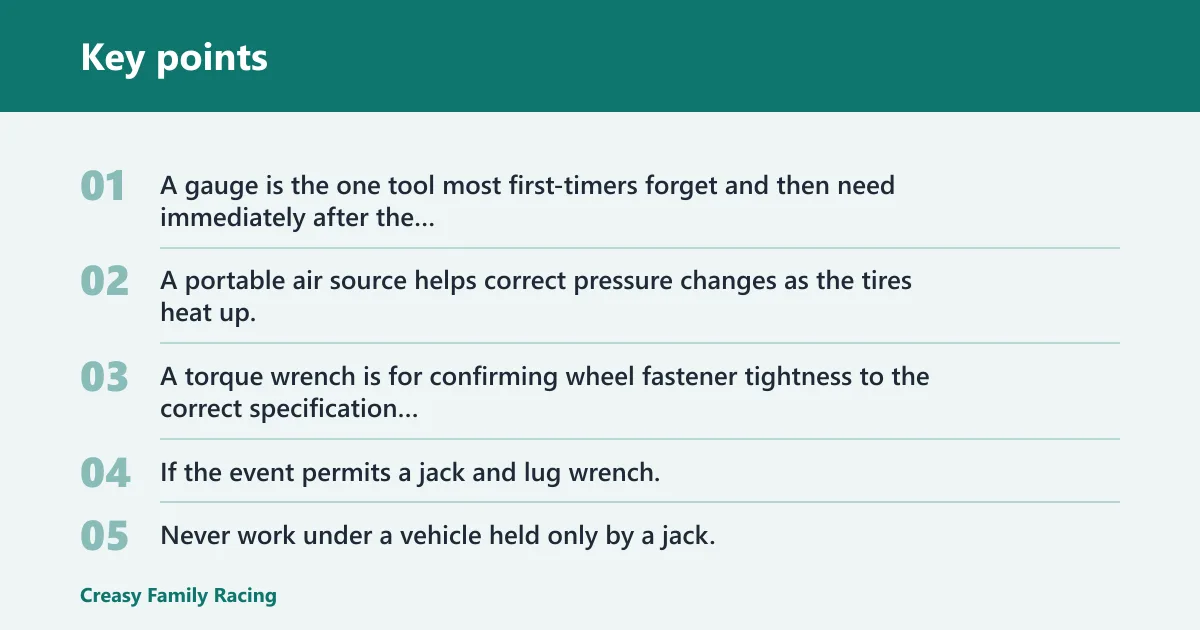
A gauge is the one tool most first-timers forget and then need immediately after the first session. A portable air source helps correct pressure changes as the tires heat up. A torque wrench is for confirming wheel fastener tightness to the correct specification for that exact wheel setup, not for guessing at it.
If the event permits a jack and lug wrench, bring them only if you know the venue’s rules and your vehicle manual allows roadside-style wheel service at the paddock. Never work under a vehicle held only by a jack. If you need to lift the car, follow the manual exactly.
Cleanup and minor repair supplies
Paper towels, rags, zip ties, and duct tape are useful for minor cleanup and temporary organization. These are not substitutes for real repairs, but they can help secure loose trim, wipe spilled fluid, or clean dust off a wheel before inspection.
Keep these items where they can be reached quickly. A small bag in the paddock beats digging through the trunk after a session ends and the next run group is being called.
What should you eat and drink?
Drink water before you arrive and keep drinking throughout the day. Eat light, easy-to-digest food before the first session and between runs. Heavy or greasy meals can slow you down, especially in heat, while a simple snack plan keeps energy steady without making the paddock feel like a buffet.
Hydration plan
Bring a refillable bottle or a cooler with water. Electrolytes can help on hot days, especially if the event runs long or the paddock offers little shade. A full-day event needs more water planning than a half-day morning session, so pack for the longer schedule.
Food and snacks
Choose plain meals and snacks that sit well: fruit, crackers, sandwiches, or other light foods that do not weigh you down. Eat before you get hungry, then add small snacks between sessions. Avoid a heavy breakfast that leaves you sluggish by the first briefing.
Picture a hot afternoon event with a blacktop paddock and little shade. A driver who brings only a single bottle of water and a greasy lunch may feel fine at check-in and then fade by midday. A cooler, a second bottle, and a light snack avoid that problem.
What do you need if you are driving a stock car?
A stock car still needs the same basic prep: license, helmet, paperwork, a valid tech check, fluids, and a tire gauge. What changes is usually the amount of extra hardware you need. A clean street car with good brakes and tires can be enough for a beginner event if the organizer approves it.
What stays the same
The core checklist does not change just because the car is stock. Brakes must be sound, tires must be usable, all fluids must be correct, and loose items must be removed. The driver still needs the same event documents and approved safety gear.
What to confirm before arrival
Confirm whether the event has a noise limit, tow hook visibility rule, helmet standard, or sleeve requirement. Some organizers inspect battery tie-downs, brake pad thickness, and wheel nut condition closely on stock cars because those items reveal how well the car was maintained.
What to leave out if the organizer restricts it
Leave out anything the organizer bans, including loose interior items, uncertified helmets, or unsupported mounting hardware. If you are unsure about a jack, portable air tank, or tow hardware, check the event rules and the owner’s manual before packing it. The organizer’s rule set wins on site.
What are the most forgotten items for a first track day?
The most forgotten items are enough fuel in the car, a tire gauge, water, and cash or a card for incidentals. Those four items solve the most common day-of problems: low fuel, incorrect tire pressure, heat, and small purchases that are easier to pay for at the venue.
Many first-timers remember the helmet and forget to check that the helmet meets the event rule. Others pack food and clothing but leave the gauge on the workbench at home. Check those four items again before you roll out, because they are the easiest to miss.
Frequently asked questions
What do you need to bring to your first track day?
Bring your driver’s license, event confirmation, waivers, an approved helmet, closed-toe shoes, water, and car basics such as a tire gauge and fluids. Add a folder for paperwork and a small tool kit. Those items cover check-in, safety, and common day-of adjustments.
What should I pack in my track day bag?
Pack documents, helmet gear, water, snacks, sunscreen, gloves, paper towels, rags, a tire gauge, and a few small tools. Keep the bag organized by use: paperwork together, comfort items together, and repair items together. That makes check-in and paddock work faster.
What should I eat before a track day?
Eat something light and easy to digest, such as fruit, toast, yogurt, or a simple sandwich, before the first session. Avoid a heavy or greasy meal that can make you sluggish in the car. Add small snacks during the day rather than waiting until you feel drained.
What should I wear to my first track day?
Wear closed-toe shoes, long pants, and the clothing required by the organizer, which may include a long-sleeve shirt. Bring weather layers and sunscreen. Make sure the helmet fits correctly and meets the event’s approval standard before you leave.