How Long Should a Burnout Last on Street Tires?
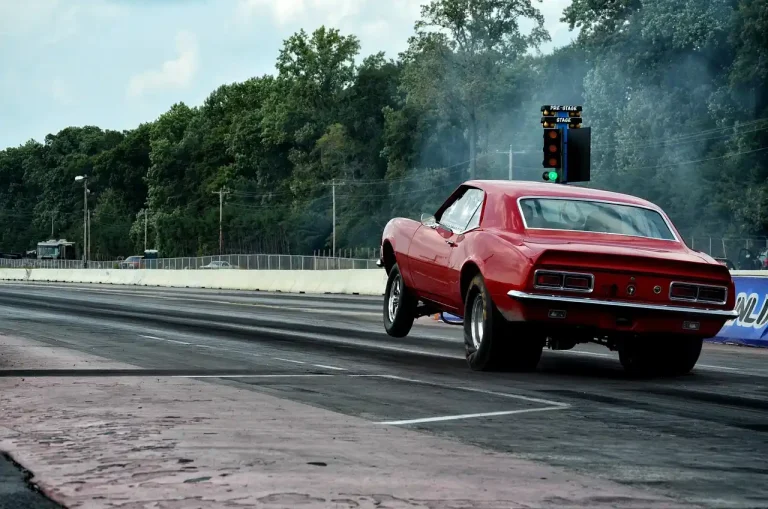
A street-tire burnout is often kept to about 3 to 5 seconds. Stop sooner if the tires stop gaining heat, the car starts moving hard, or wheel hop appears. Go longer, and you can glaze the tread, overheat the carcass, and punish axles, clutches, and transmissions. This guide explains the seconds-based rule, when to shorten it, and the warning signs that tell you to quit.
Burnout time and stop points
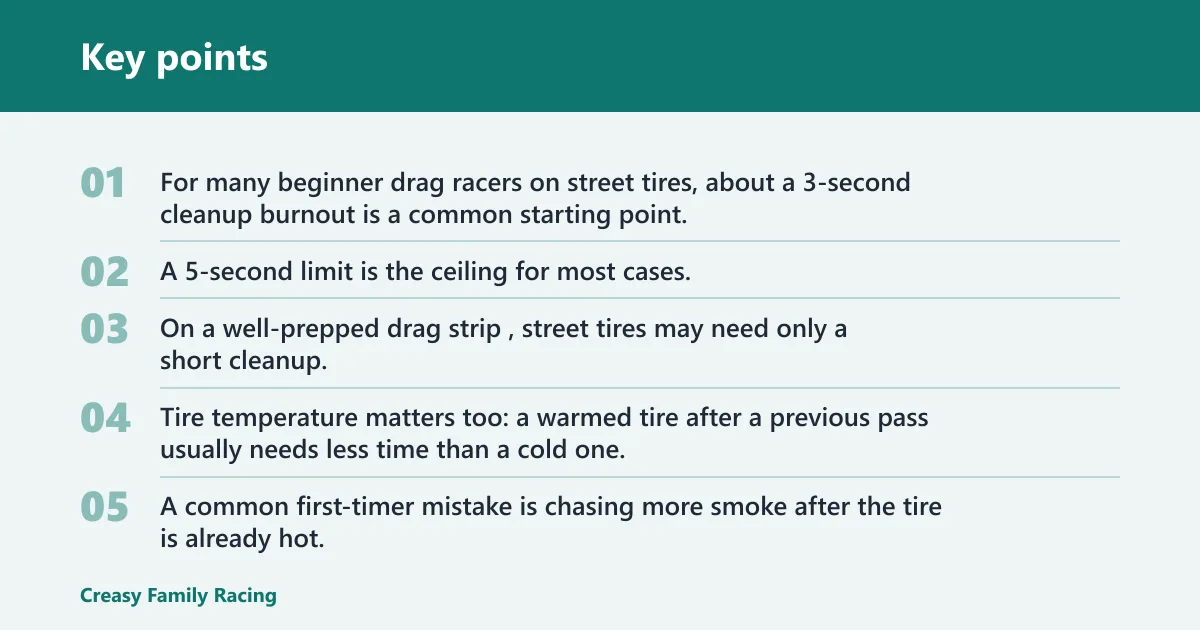
For many beginner drag racers on street tires, about a 3-second cleanup burnout is a common starting point. A 5-second limit is the ceiling for most cases. Street tires have less heat tolerance than drag radials or slicks, so the goal is to clean the tread and add a little heat, not make a long smoke show.
When the answer changes
Track prep changes the target. On a well-prepped drag strip, street tires may need only a short cleanup. On a marginal surface, a dry hop or a very brief spin may be enough, because a long burnout can just overheat the tire without adding useful grip. Tire temperature matters too: a warmed tire after a previous pass usually needs less time than a cold one.
A common first-timer mistake is chasing more smoke after the tire is already hot. Suppose a rear-wheel-drive car on 225-width street tires does a 4-second burnout, leaves visible smoke, and the tread looks clean. More throttle after that point usually adds heat faster than it adds traction.
What stops the burnout
Stop when you see steady smoke, the tread looks clean, and the car feels stable. Stop immediately if wheel hop starts, if the car pulls out of the water box hard, or if you smell clutch or driveline heat in a manual car. The right end point is usually sooner than people expect.
Do you need a burnout on street tires?
Not always. Street tires are not drag slicks, and many cars only need a short cleanup spin, a dry hop, or no burnout at all. If the tires already have enough grip, the surface is clean, and the car is not dragging water onto the starting line, skipping the burnout can be the better call.
When a short cleanup works
A short cleanup burnout makes sense when the tires are cold, dusty, or slightly damp from the water box. The point is to remove loose grime and bring the tread into a usable temperature range. For many street tires, that means seconds, not a long hold at high rpm.
When a dry hop is better
A dry hop is a brief tire spin without water. It is less aggressive than a full wet burnout and can be enough to clean the tread or check how the car reacts before the launch. It is useful when the tires need little help and the driver wants to avoid extra heat.
When you can skip it
You can often skip the burnout if the track is well prepared, the tires are already warm, and the car hooks predictably without spinning on the line. That is common with some lighter cars, mild power, or a pass after staging lanes have already warmed the tires. Less heat is often enough on street tires.
- Check the tire condition. Look for embedded debris, uneven wear, cracking, or missing chunks before you stage. If the tire is already damaged or heat-cycled hard, a burnout will not fix it.
- Decide on dry or wet. Use a dry hop if the goal is just a quick cleanup. Use the water box only if the tires need help starting to spin or the track surface is dry enough to support it.
- Keep the spin short. Aim for 3 to 5 seconds on street tires. Stop as soon as the tread is cleaned and the car feels settled.
What street tires can and cannot handle
Street tires use harder compounds than drag radials or slicks, so they tolerate less heat and less abuse from long burnouts. They can warm up enough for a pass, but repeated or extended spinning can overheat the rubber, soften the tread surface, and sometimes chunk the shoulders or center blocks.
What cleanup looks like
Cleaned tread usually looks free of loose dust, water, and small stones. The tire may smoke lightly and then taper off. That is the cue to stop. If the smoke keeps building after the tread is already clean, the burnout is moving from cleanup into excess heat.
Signs the tire has had enough
- Smoke is steady and the tread is visibly clean.
- The tire starts to smell hot and the smoke changes from light to thick.
- The car moves forward harder in the box or starts to tug against the brakes.
- You see shiny, glazed-looking rubber or tiny chunks after the run.
Repeated abuse can shorten tire life even if the tire still has tread depth left. Heat damage is not always visible at a glance. After repeated burnouts, check for chunking, cracking, or a roughened surface before the next pass.
Water box and line lock basics
The water box wets the rear tires so they can spin easily at the start of a burnout. That helps begin the spin, but a street car does not always need a full wet burnout every pass. Line lock is a brake-holding device that keeps the front brakes applied, which helps rear-wheel-drive cars stay put while the rear tires spin.
When line lock helps
Line lock is common on rear-wheel-drive cars because it keeps the car from rolling through the water box or creeping forward during the burnout. It does not change the tire compound, and it does not make a long burnout safe. It only helps control the car while the rear tires spin.
When to avoid a full wet burnout
Some street-tire cars should avoid a full wet burnout because the tire only needs a short cleanup. If the track is prepped, the tires are already warm, and the car hooks well, a dry hop or short spin may be enough. A long wet burnout can add heat the tire does not need.
- Stage the car straight. Keep the steering wheel centered and the car aligned before you start the spin. A crooked start can set up wheel hop or uneven traction.
- Use only enough water. Wet the rear tires enough to begin the spin, but do not soak the whole contact patch longer than needed. Too much water can make the burnout last longer than necessary.
- End on visible smoke. Stop once the tread is cleaned and the tire is smoking lightly and consistently. That is usually the right point for street tires.
Burnout duration decision table
This table gives a one-page rule set for street tires. Use the seconds listed as a starting point, then stop at the warning signs. The right answer changes with tire temperature, drivetrain layout, and track prep.
| Scenario | Recommended seconds | When to stop | Warning signs |
|---|---|---|---|
| Cold street tire at a prepped track | 3 to 4 seconds | Stop when the tread is clean and smoke is steady | Smoke builds fast, tire smells hot, car starts to creep |
| Warmed street tire after one pass | 1 to 3 seconds | Stop at a short cleanup spin or a light haze | Very quick smoke, extra tire smell, no added grip benefit |
| Wheel-hop-prone car | 0 to 2 seconds | Stop before hopping starts, or skip the burnout | Rapid oscillation, banging noise, rear of car shakes |
| Manual-transmission car | 2 to 4 seconds | Stop when smoke is visible and clutch load stays light | Clutch smell, slipping feel, pedal change, heat buildup |
| No-water dry hop case | 0.5 to 2 seconds | Stop after a short scrub of the tread | Little spin gain, tire already warm, no need for more |
Use the shortest time that gets the job done. On a street tire, the ceiling is usually the mistake point, not the target. If the car is on a marginal surface or the tire is already warm, the best answer may be a very brief dry hop instead of a wet burnout.
Why wheel hop changes the answer
Wheel hop changes the advice because it can damage the driveline fast. Rapid tire oscillation sends shock through the axles, differential, and transmission, and it can break parts even during a short burnout. If hop starts, the correct response is to stop, not to add throttle.
How hop hurts the drivetrain
Wheel hop can load and unload the tires several times per second. That repeated shock can stress axle shafts, U-joints, differential gears, and transmission parts. Manual cars can also shock the clutch when the tires grab and release in quick cycles.
What to do if it starts
- Lift out of the throttle. Stop the spin as soon as hop appears. More throttle usually makes the oscillation worse.
- Check for noise. Listen for clunks, bangs, or new gear noise after the run. Those can point to driveline damage.
- Inspect before another pass. Look for leaking fluid, broken mounts, axle movement, or a burnt clutch smell. Do not assume the car is fine just because it still moves.
Manual vs automatic risk
Manual-transmission cars face clutch heat and slipping risk during long burnouts. Automatic cars avoid clutch slip, but they can still be shock-loaded when traction returns abruptly, and the transmission can take heat and torque spikes. Different failures, same warning: excess burnout time is hard on the drivetrain.
Picture a rear-wheel-drive manual car on a prepped track that starts smoking at 3 seconds but begins to smell like hot clutch at 5 seconds. The safe call is to stop at 3 seconds, because the extra heat has already started to move into the clutch instead of the tire.
Frequently asked questions
How long should a burnout last on street tires?
About 3 to 5 seconds is the practical range for most street tires. Start near 3 seconds, then stop sooner if the tread is clean, smoke is visible, or the car starts to move hard. Longer than that can overheat the tire and add unnecessary drivetrain load.
Should you use line lock for a burnout in a street car?
Line lock is useful on rear-wheel-drive cars because it holds the front brakes while the rear tires spin. It is common, but not required for every street-tire burnout. If you do not have it, keep the burnout short and controlled so the car does not creep.
Why won’t my car spin the tires in the water box?
Some street tires resist spinning because the compound is harder, the surface is too dry, or the car has enough traction that the water is not helping much. A brief dry hop may clean the tread better than a longer wet attempt. Do not force extra time just to make smoke.
Can a burnout damage your clutch, transmission, or diff?
Yes. A manual clutch can overheat or slip, an automatic transmission can be heat-stressed and shock-loaded, and the differential can take a hit from wheel hop or a violent return to traction. If you smell clutch, hear new drivetrain noise, or see hop, stop the burnout.
Dry hop vs burnout: what helps more at the drag strip?
Dry hop helps more when the tire only needs a quick scrub and extra heat would be wasted. A wet burnout helps more when the tire is cold, dirty, or needs help starting to spin. On street tires, the shorter option usually wins unless the track or tire condition says otherwise.