What Does a Burnout Do at the Drag Strip?
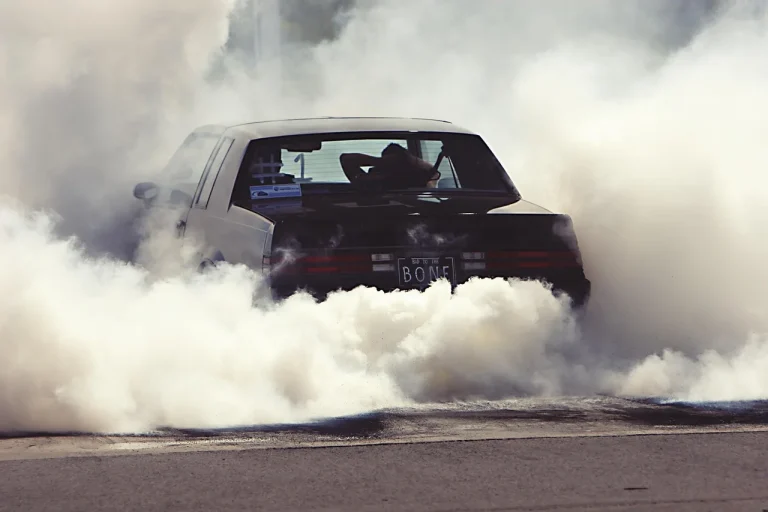
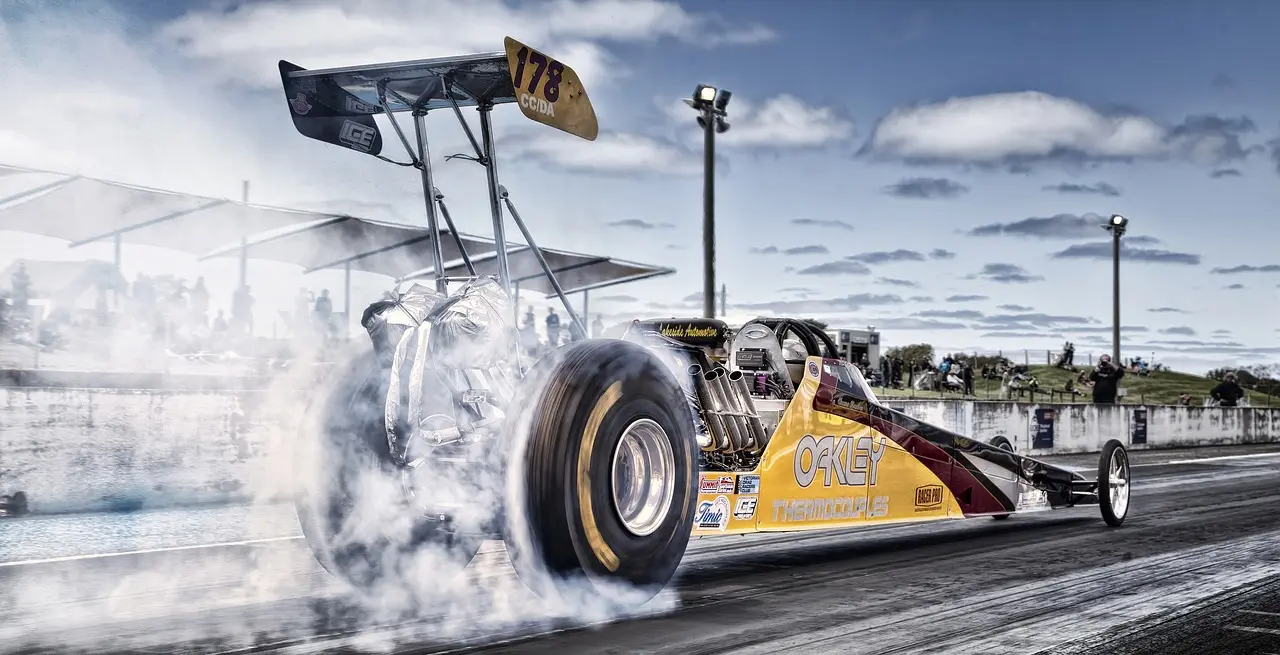
A burnout mainly cleans and heats the drive tires before staging, but only some tires benefit from that extra heat. Slicks and many drag radials can use it; most street tires do better with a brief scrub or none at all. Done wrong, it can reduce grip and stress parts.
What a burnout changes
A burnout is first a tire-surface job. Heat softens the top layer of the compound, and spin scrubs away water, dust, and loose rubber so the contact patch can bite more evenly at launch. Sanctioning-body drag-racing procedures and tire-maker guidance both treat the burnout as a controlled prep step, not a smoke show for its own sake.
Heat at the tire surface
When the rear tires spin, friction raises tread-surface temperature. That matters because drag tires grip best when the outer layer is warm enough to conform to the track surface instead of skating across it.
Bias-ply slicks usually need more heat than street tires because they are built to work with a hotter, softer tread surface. Drag radials usually want less heat than full slicks, and too much heat can make the tread feel greasy or unstable, which is consistent with tire-manufacturer guidance on drag radial use and track-prep guidance from major drag-racing sources.
Cleaning the contact patch
The other job is cleanup. The burnout clears water from the water box and removes loose debris, rubber dust, and grime from the part of the tire that touches the track.
That cleanup matters most when the tires will be asked to dead-hook hard. A clean contact patch gives the tire a better chance to load evenly when the car leaves the line.
What it does not change
A burnout does not fix a bad suspension setup, a worn tire, a poor clutch tune, or a track that is simply not there yet. It also does not create traction if the tire type is wrong for the surface or the pass.
If a car already has enough grip, more burnout time can be wasted effort. In some cases it makes things worse by heating the tread past its useful range.
Do I need a burnout on street tires?
Usually, no. Most street tires need only a brief clean-off, if anything, because they are not designed to benefit from a long heat cycle the way drag slicks are. Track and tire makers generally advise a short scrub or a dry hop for many street-car passes, especially when the goal is just to remove water, dust, or loose rubber before staging.
Drag strip burnout basics
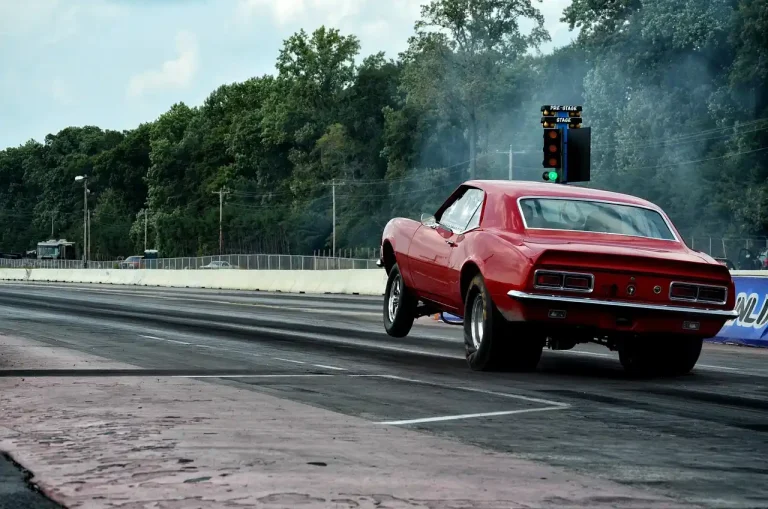
The burnout happens before staging, not during the run. The water box helps start tire spin, and the staging lanes are where the car should be prepared so the burnout and lane process stay smooth and predictable. NHRA-style lane procedure and common track rules also make the burnout a controlled, pointed, forward-moving maneuver rather than a prolonged stationary spin.
Water box purpose
The water box is the wet area used to start the burnout. It matters most for slicks and drag radials, because those tires are more likely to benefit from a controlled spin and cleanup.
Track layout changes how much water the tires pick up and how far the burnout needs to travel. Some lanes have a long wet patch, others have a short one, and staff may ask drivers to stop or roll forward in a specific spot.
Burnout before staging
The usual flow is simple: line up in the staging lanes, enter the water box when directed, complete the burnout, roll forward to clear the water, then move into the beams. The burnout should be done with enough discipline that the car stays pointed straight and the lane stays clear for the next car.
Signal discipline matters. Follow the starter and crew, wait for the lane to open, and do not back up or roll forward until the situation is clear. That keeps the run orderly and avoids surprises for the driver behind you.
Track staff and lane etiquette
Some tracks want only a short tire scrub for street cars. Others expect a more complete burnout for drag tires. The staff’s instruction wins every time because the lane, water placement, and surface prep are their call.
A line lock is common on rear-wheel-drive cars because it holds the front brakes during the burnout. That lets the rear tires spin without cooking the front service brakes.
- Enter the water box only when the lane is ready.
- Set up straight, then start the burnout with controlled throttle.
- Keep the car pointed and the steering input small.
- Let off cleanly, roll out of the water, and stage.
Which tires need a burnout?
Not every tire needs the same treatment. Slicks, drag radials, and street tires respond differently because their compounds, carcasses, and tread patterns are built for different jobs.
Drag slicks
Drag slicks are purpose-built racing tires, and they usually need a proper burnout to work consistently. They rely on heat more than street tires, and a short, half-hearted spin may leave them cold and less predictable at the hit.
For slicks, the goal is a warm, even surface with the water cleaned off. A long smoky display is not the point; a controlled burnout that gets the surface ready is.
Drag radials
Drag radials are street-legal performance tires, and they often need less burnout than full slicks. Many work best with a shorter, cleaner burnout that brings the surface up to temperature without overheating it.
Too much spin can damage the compound or make the tire greasy. If the tire starts feeling vague or inconsistent after the burnout, the driver probably went too far.
Street tires
Street tires usually do not need a long burnout. For most street-car passes, a short clean-off or a dry hop is more sensible than a full burnout, especially if the tire is not built for drag strip heat.
Excess heat can make street tires greasy and reduce grip. That is why a quick scrub to clear debris is often enough, while a long burnout only adds wear and inconsistency.
Dry hop versus full burnout
A dry hop is a short tire scrub on dry pavement, often used to knock off debris and settle the carcass without loading the tire with heat. A full burnout adds more heat and is better suited to drag tires than to ordinary street tires.
That difference matters for beginner street-car racers. If the tire only needs a clean contact patch, a long smoky burnout can be the wrong tool.
What changes by drivetrain?
Drivetrain layout changes how hard the burnout is on the car and how much of it actually helps. Rear-wheel-drive cars usually get the most direct benefit, while front-wheel-drive and street-tire cars often need less or none at all.
Rear-wheel-drive cars
RWD cars are the common burnout case because the rear tires are the drive tires. A line lock helps here by holding the front brakes so the rear tires can spin cleanly in the water box.
With RWD, the main risk is overdoing it. Too much spin can overheat the tire, stress the clutch, and increase drivetrain shock when the car hooks hard.
Front-wheel-drive cars
FWD cars usually do not need the same style of burnout because the drive tires are in front, and many tracks and tire choices do not call for a long spin. If a burnout is used, it is often a short scrub for cleanup rather than a deep heat cycle.
Because the front tires also steer, a messy burnout can make staging harder and add unwanted wear without giving much return.
Automatic and manual cars
Automatic cars are usually easier on the driveline during a burnout because they do not depend on a clutch release to start the spin. Manual cars can be more sensitive because the clutch takes the load when the tires bite or the car is brought into the spin.
That does not mean manuals cannot do burnouts. It means the driver has less margin for shock loading, especially if the tires hook, hop, or catch suddenly. Wheel hop is especially hard on axles, U-joints, transmissions, and clutches because the tire alternates between grabbing and releasing instead of applying smooth load.
Say your car is on 275 drag radials and the burnout leaves the tread shiny and sticky-looking after only a few seconds. That is a sign the tire may already be hot enough. Going longer can move it from ready to greasy, which usually hurts consistency rather than helping it.
A common first-timer mistake is treating every rear tire the same. A 28×10.5 slick may want a deliberate burnout, while a hard-compound street tire on the same car may do better with a quick scrub and no extra heat.
Burnout or no burnout?
The right choice depends on tire construction, drivetrain, and how much the tire needs heat versus cleanup. Use the table below as a starting point, then match it to the track’s instructions and the car’s behavior.
| Setup | Recommended burnout goal | Approximate burnout length | Water box use | Common mistake to avoid |
|---|---|---|---|---|
| Bias-ply slicks | Heat the tread and clear the contact patch | Long enough to build clear tire heat, usually a full controlled burnout | Yes, usually | Stopping too early and leaving the tire cold |
| Drag radials | Warm the surface without overheating it | Short to moderate | Usually, depending on track prep | Spinning until the tread gets greasy |
| Street radials | Clean debris, avoid extra heat | Very short, or none | Often no, or only a light scrub if directed | Doing a long burnout and glazing the tire |
| Street tires in or around the water box | Brief clean-off only, then roll out of the wet area | 1-2 seconds after smoke, or just a short scrub | Do not linger in the water box unless the track asks for it | Rolling around in the water and carrying water to the line |
| Automatic cars | Match tire needs without shocking the drivetrain | Depends on tire type | Use it only if the tire setup needs it | Holding the car against the brakes too long |
| Manual cars | Limit clutch stress while getting useful heat | Usually shorter than an aggressive automatic burnout | Use only as needed | Dumping the clutch or shocking the drivetrain |
| FWD | Light cleanup, not a long heat cycle | Short scrub or none | Usually unnecessary | Wasting tire life on a long spin |
| RWD | Spin the drive tires cleanly and evenly | Depends on tire type and track prep | Common on drag tires | Letting the car wander or wheel hop |
When a burnout hurts traction
A burnout stops helping when the tire gets too hot, the drivetrain gets shocked, or the car leaves the box out of control. The common failure cases are easy to spot if you know what to watch for.
Overheating the compound
Too much heat can make drag radials and street tires feel slick instead of sticky. The tire may look fine, but the surface can be beyond its useful range and give less bite at the hit.
That is why a longer burnout is not automatically better. The useful range ends somewhere, and past that point the tire loses grip instead of gaining it.
Wheel hop and clutch shock
Wheel hop is often considered one of the worst signs at the strip. It pounds the clutch, axle, joints, and transmission because the tire is alternating between grabbing and releasing instead of hooking cleanly.
A manual car that hops during or after the burnout can break parts faster than a smooth, controlled launch. The fix is usually setup, tire choice, or technique, not more burnout time.
Too much spin, too far forward
If the car spins too far forward out of the water box, it may carry water or debris back into the lane. That can undo the cleanup you just tried to do.
Spinning too long also heats the rear tires more than the fronts, then the car sits with a hot tire and a hot driveline while it waits to stage. That can make consistency worse on the next pass.
Troubleshooting common burnout problems
When the burnout does not behave, the fix is usually to shorten it, change where it starts, or stop asking the wrong tire to do the wrong job.
Won’t spin in the water box
If the tires will not break loose, the tire may be too hard, the water box may be shallow, or the car may simply not have enough torque to start the spin easily. The next step is a shorter, more deliberate hit, a better line-lock setup, or accepting that this tire may not need a burnout at all.
Car bogs after burnout
If the car falls flat after the burnout, the tire may be too hot, the driver may have rolled too slowly to the line, or the car may have been staged too long after the tires were ready. The next step is to shorten the burnout, reduce the wait before staging, and aim for a cleaner transition from burnout to launch.
Tire feels greasy
A greasy feel usually means the compound is overheated. That is common with drag radials and even more likely with street tires that were asked to do a racing-style burnout. The next step is a shorter burnout or no burnout, plus a tire choice that better matches the track and surface.
Wheel hop starts in the box
Wheel hop usually points to a traction, suspension, or driveline issue, not a need for more heat. If it starts in the box, the next step is to stop the aggressive spin, inspect setup basics, and reduce the shock load from the launch instead of trying to power through it.
Frequently asked questions
Why do drag racers do a burnout?
Drag racers do a burnout to heat the drive tires and clean the contact patch before staging. That helps the tire grip more evenly at launch, especially on slicks and many drag radials. It is a prep step, not part of the run itself.
How do burnouts work?
A burnout works by spinning the drive tires against the track so friction warms the tread surface and scrubs off water and debris. The water box helps start the spin. The goal is controlled heat and cleanup, not smoke for its own sake.
How long should a burnout last?
As short as it takes to match the tire. Slicks usually need more time than drag radials, and street tires often need only a brief scrub or none at all. If the tire starts getting greasy, the burnout has gone too long.
What tires actually need a burnout?
Drag slicks usually need the most deliberate burnout. Drag radials often need less. Street tires generally need only a short cleanup, if any. Tire construction matters more than the car’s noise, and a long burnout is not a requirement for every setup.
Can a burnout hurt my clutch or transmission?
Yes. Aggressive burnouts can stress the clutch and drivetrain, especially if the tires hop or the car shocks when traction comes back. Manual cars are usually more sensitive than automatics. Smooth wheel speed and controlled throttle are safer than a violent spin.
Why won’t my car spin the tires in the water box?
The tire may be too hard, the track may not have much water, or the car may not have enough torque to break the tires loose easily. That does not always mean something is wrong. Some street setups simply need a short scrub or no burnout at all.