How to Read Tire Wear Patterns After a Track Day
Read tire wear by location: shoulder wear usually points to camber, feathering to toe, and center wear to pressure; a single hot session can mask normal street patterns. Read it wrong, and you can chase the wrong setup change, lose grip, and destroy a tire before the next event. This guide separates normal track heat wear from alignment, pressure, suspension, balance, and damage clues.
What tire wear tells you after track laps
Track use changes the tread in ways street driving often does not. Heat, load transfer, and repeated cornering can wear the shoulders faster than the center, especially on the axle that does the most work. The tread can show whether you need an alignment, and tire makers also note that wear bars indicate when tread is at or near the end of serviceable life.
Why track heat changes what you see on the tread
Hot laps raise pressure, scrub the tread, and put more load on the loaded shoulder in cornering. That means some outer-edge wear can be expected after a hard day, especially on a car with limited camber. The key is whether the wear is even, one-sided, feathered, cupped, or mixed with vibration.
Normal wear versus a setup problem
Normal track wear usually shows as more shoulder use than a street tire would have, but the wear stays smooth and consistent across the axle. A setup problem leaves a pattern: one edge, a sawtooth feel, patchy spots, or a cup-and-ridge look. Mixed patterns matter most, because they often point to more than one issue.
Which clues matter first: location, texture, or vibration?
Start with location, then texture, then what the car did on track. Outer shoulder wear, inner edge wear, center wear, feathering, and cupping each point in different directions. Then check whether the steering wheel or floorboard shook, because that can point to balance or suspension trouble instead of tread alone.
Center wear after a track day
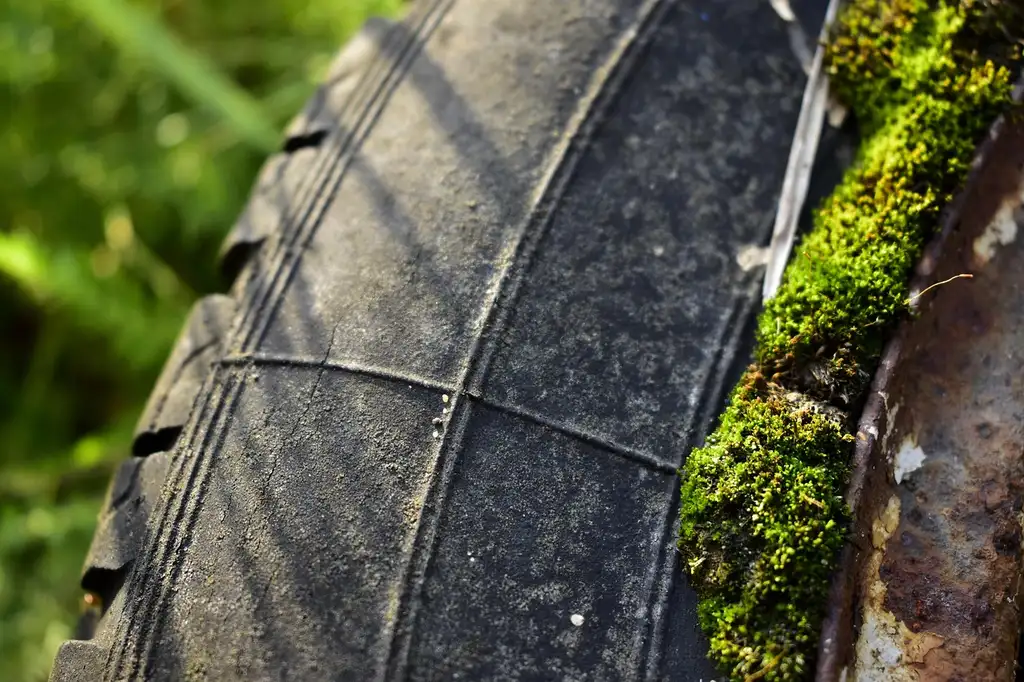
Center wear is the simplest clue to read. Overinflation is linked to center wear. If the tread crown is wearing faster than the shoulders, pressure is the first check, but hot pressure after a session may be different from the cold setting on the door sticker or in the owner’s manual. Door-sticker pressures are street baselines, not always track targets.
Overinflation clues on the tread crown
When the center wears faster, the tire is carrying too much load down the middle. On a track tire, that can come from starting too high, then ending even higher after heat builds. Check hot pressure first if the tire was set in the paddock and never adjusted after the session. Tire-pressure references from manufacturers and NHTSA consistently note that pressure should be checked cold for street baseline settings and adjusted for the operating condition being used.
Hot pressure drift and why it matters
Track tires can gain pressure quickly as they heat. If the pressure was right cold but ends high hot, the contact patch crowns and the center can scrub. Compare the current hot and cold checks with the vehicle door sticker or owner’s manual, then decide whether pressure or another setup change fits the wear pattern. That comparison matters because the same tire can read differently once temperature, load, and speed rise.
What to check before the next session
Reset pressure to the target for the next event, then inspect all four tires for matching wear. If only one axle shows the center wear, that axle may be overinflated relative to load. If the center wear is paired with feathering or vibration, add alignment and balance to the checklist.
Say your 200TW 245/40R17 front tires look shiny in the middle after a 20-minute session, but the shoulders still have visible tread blocks. That points first to pressure, not replacement. If the center remains the only fast-wearing area after a proper reset, the next look should be at heat, load, and camber, not just inflation.
Why are the edges wearing faster?
Edge wear usually means the tire is running on its shoulders more than its center. Underinflation is linked to edge wear. On track, aggressive cornering can make that pattern worse, so you need to separate simple pressure loss from camber and roll-over before you change anything else. Outer wear is usually pressure- or roll-over-related, but camber, load transfer, tire construction, and session length can also influence it.
Inside edge wear and camber
Inside edge wear often points to camber, especially on track cars that run negative camber for grip. Camber affects how the tire sits on the road, and aggressive cornering can concentrate load on the inner shoulder. If the inside edge is thin while the outer edge still looks healthy, camber is a strong suspect. Alignment references from tire and suspension makers consistently describe excessive negative camber as an inner-shoulder wear pattern.
Outside edge wear and underinflation or roll-over
Outer edge wear can come from underinflation, but track cornering can also roll the tire onto its outside shoulder even when pressure is close. If the outside edge is rounded, scrubbed, and the rest of the tread looks normal, look at pressure and body roll together. If it is only on one axle, camber or load transfer may be part of it.
When track cornering makes edge wear look worse than it
A single hard event can cause shoulder wear that may look alarming but can still be usable. That is common on front tires, especially when the car is driven hard into corners and exits with heat in the rubber. The question is whether the wear is smooth and symmetrical, or whether one edge is disappearing much faster than the other.
Suppose a rear-wheel-drive car returns from a day with the outside shoulders worn, but the tread is smooth and the inner edge still has depth. That can be normal load on a low-camber setup. If the outside shoulder is also feathered or scalloped, the problem is likely broader than cornering load alone.
What does feathering mean?
Feathering is a tread feel, not just a look. Feathering often points to toe alignment issues, and incorrect toe alignment can create feathered tire wear. If the tread blocks feel smooth in one direction and sharp in the other, the tire has been scrubbed sideways as it rolled. Toe settings are a common reason a tire wears evenly in one direction and rough in the other.
How toe creates a sawtooth tread feel
Toe changes the direction the wheels point relative to travel. Too much toe-in or toe-out makes the tread drag instead of roll cleanly, which creates scrub wear and a sawtooth edge on the blocks. This is why toe often falls out of alignment notice first in the hands, then in the tire.
Why feathering often points to alignment work
Feathering rarely comes from pressure alone. If the tread is feathered across a wide band, toe is the likely culprit. If feathering appears with inner or outer edge wear, camber may be involved too. Mixed wear means the car needs a full look, not a single-issue guess.
How to spot feathering by touch and sight
Run a hand lightly across the tread blocks. One direction may feel smooth while the reverse feels sharp or stepped. Sight can help too, especially under bright light, but touch usually reveals it faster. Check both front tires and compare them side to side; toe problems often mirror on the axle.
Why is the tread cupped or patchy?
Cupping and patchy wear point beyond pressure and camber. Cupping can be caused by worn shocks or struts. Out-of-balance assemblies can cause diagonal or patchy wear. If the tire feels scalloped and the car shook on track, suspension or balance should move high on the list. Suspension references from major parts makers commonly link cupping or scalloping to poor damping, especially when the tire repeatedly loses contact with the pavement.
Cupping, scalloping, and suspension wear
Cupping means the tread has alternating high and low spots. That pattern often develops when the tire bounces or skips instead of staying planted. Worn shocks or struts can let that happen, and cupped tires can cause vibration and shaking in the steering wheel or floorboard.
How shocks and struts affect tire contact
Shocks and struts manage up-and-down weight transfer. If they cannot control the wheel well, the tire can lose even contact with the pavement and wear in scallops. This can show up on the front axle first, but any corner with weak damping can leave the same mark.
When balance issues belong on the checklist
If the wear is patchy or diagonal, wheel and tire balance belongs on the list. An out-of-balance assembly can leave irregular wear that looks random until you match it with vibration. If the floorboard or steering wheel shook at speed, do not ignore balance just because the tread also looks worn.
Track tire wear decision table
Use this after the car cools enough to inspect safely. Match the wear location, then the texture, then the symptom before you decide what comes next.
| Wear location | Texture or symptom | Likely cause | What confirms it | Immediate action | Drive-home or service-only call |
|---|---|---|---|---|---|
| Center tread | Evenly worn crown, shoulders look fuller | Overinflation linked to center wear | Hot pressure is above target and the shoulders still have depth | Check hot and cold pressure against the door sticker or owner’s manual | Usually drive home if no cords, bulges, or vibration |
| Outer shoulder | Rounded edge, tread blocks scrubbed | Underinflation, roll-over, or camber limit reached in cornering | Outer edge is thin while the center still has usable tread and the wear is mostly on the loaded side | Set pressure correctly and compare left-right wear | Drive home if the shoulder still has tread and no cords show; service-only if the edge is very thin |
| Inner shoulder | One-sided thin edge on the inside | Camber and possibly toe | Inner edge wears faster than the outer edge on the same axle | Inspect alignment before the next event | Drive home if intact; service-only before another track day |
| Across the tread blocks | Sawtooth feel, sharp one way and smooth the other | Toe alignment issue, feathering | Hand check shows a directional roughness across multiple blocks | Schedule alignment check | Usually drive home if the tire is intact |
| Patchy or diagonal | Uneven spots, shake or steering vibration | Out-of-balance assembly | Vibration matches the wear pattern and may change with speed | Check balance and inspect for wheel damage | Drive home cautiously if no bulge or cord is visible; service-only if vibration is severe |
| Scalloped or cupped | Alternating dips, thump or shake | Worn shocks or struts, sometimes balance | Alternating high-low spots match a bounce or hop feel | Inspect dampers and balance together | Drive home only if the tire is intact and the shake is mild; service-only if the cup pattern is deep |
| Any tread zone | Visible cords, chunking, bulges, cracks | Damage or end-of-life tire | Wear bars are at or below tread or structural damage is visible | Remove the tire from service | Service-only; do not run another session |
How to tell when a tire is done
Use tread wear bars and tread depth together, not one alone. Wear bars are raised bits of rubber between tread blocks. When wear bars are even with tread, replacement is likely needed. A penny can be used to measure tread depth at home, but wear bars are still the faster visual check. Many tire manufacturers and consumer-safety sources treat the wear bar as the clearest end-of-life indicator.
Reading tread wear bars and tread depth together
Look in the grooves first. If the wear bars are close to even with the tread, the tire is near the end of useful life. Then check tread depth in several grooves, because one good-looking section can hide a worn shoulder. Use both checks after a track day, especially when one axle took the most abuse.
Cords, chunking, bulges, cracks, and sidewall damage
A tire with visible cords must be replaced. Chunking, bulges, and cracks also move the tire out of service, because they point to structural damage rather than simple wear. Sidewall damage matters even if the tread still looks usable, since the sidewall carries loads the tread cannot show.
Front-versus rear-axle wear on FWD, RWD, and AWD cars
FWD cars often wear the front tires first because they steer and drive. RWD cars may show more rear wear if the setup is loose or the driver applies power hard on exit. AWD cars can sometimes spread wear more evenly, though the front axle may still show more shoulder wear from steering and braking load.
Post-track inspection checklist
Use the steps below in order, because a quick pressure correction can hide a deeper alignment or suspension issue. Start with inflation, then look at pattern, feel, and damage before deciding whether the tire stays in rotation or comes out of service.
- Check the hot or cooled pressure and compare it with the vehicle’s recommended setting.
- Inspect the tread location first: center, inner edge, outer edge, or the full face.
- Feel for feathering, scalloping, or a smooth but thin shoulder.
- Look for vibration clues that point to balance or suspension wear.
- Check tread wear bars, tread depth, and any cords, chunking, bulges, or cracks.
- Decide whether the tire is safe to drive home, safe only for gentle service, or out of service now.
Frequently asked questions
How do I read tire wear patterns after a track day?
Start with where the wear shows up, then read the texture. Center wear points to pressure, edge wear points to pressure or camber, feathering points to toe, and cupping points to shocks, struts, or balance. A single session can add normal shoulder wear, so compare both tires on the axle before changing setup.
What does inside edge wear mean on a track tire?
Inside edge wear often points to camber, especially after aggressive cornering. If the inner shoulder is thin but the rest of the tread still looks usable, the tire may be working as intended within a limited camber range. If the wear is sharp and uneven, add toe to the alignment check.
Why are my tires wearing on the outside edge at the track?
Outside edge wear can come from underinflation, but track cornering can also load the outer shoulder hard enough to make it look worse than a street tire would. If the wear is smooth and the center still has depth, that may be normal. If it is thin, rounded, and feathered, inspect pressure and alignment.
Why is the center of my tire wearing faster after track sessions?
Center wear usually means the tire is too highly inflated for the load and heat it saw. Overinflation is linked to center wear. Check hot pressure after the session, then compare it with the vehicle door sticker or owner’s manual. If the shoulders are still deep, pressure is the first place to start.
What does cupping or scalloping on a tire mean?
Cupping or scalloping means the tread has alternating high and low spots. That pattern can come from worn shocks or struts, and it often brings vibration or shaking with it. If the wear is patchy or diagonal too, add wheel and tire balance to the inspection list before the next event.
Is feathering a sign of alignment problems?
Yes. Feathering often points to toe alignment issues, and incorrect toe alignment can create feathered tire wear. If the tread blocks feel sharp one way and smooth the other, the tire has been scrubbed sideways. That is different from simple edge wear and usually calls for an alignment check.
When is tire wear bad enough to replace the tire?
Replace the tire when wear bars are even with the tread, when cords are visible, or when the tire has bulges, cracks, or chunking. A penny can help with tread depth, but it does not override wear bars or visible damage. If the tire is thin enough to doubt, do not save it for another hard session.