
Are Driving Gloves Worth It for Track Days and Autocross?
Yes, if your wheel gets hot, your palms sweat, or you run long sessions. For short, cool, low-effort runs, gloves are optional. Skip them when they reduce steering feel or distract you, and you may trade comfort for slower, less precise inputs. This guide explains when gloves pay off for track days and autocross, what features matter, and when bare hands are the better call.
When gloves start to help
The short answer is conditional. Gloves can improve grip and comfort for some drivers, especially when heat and sweat make the wheel slippery, but they are not mandatory for most events. Fit matters because overly loose gloves reduce steering feel, and the wrong material can make a thin rim feel vague instead of planted.
What changes the answer on track
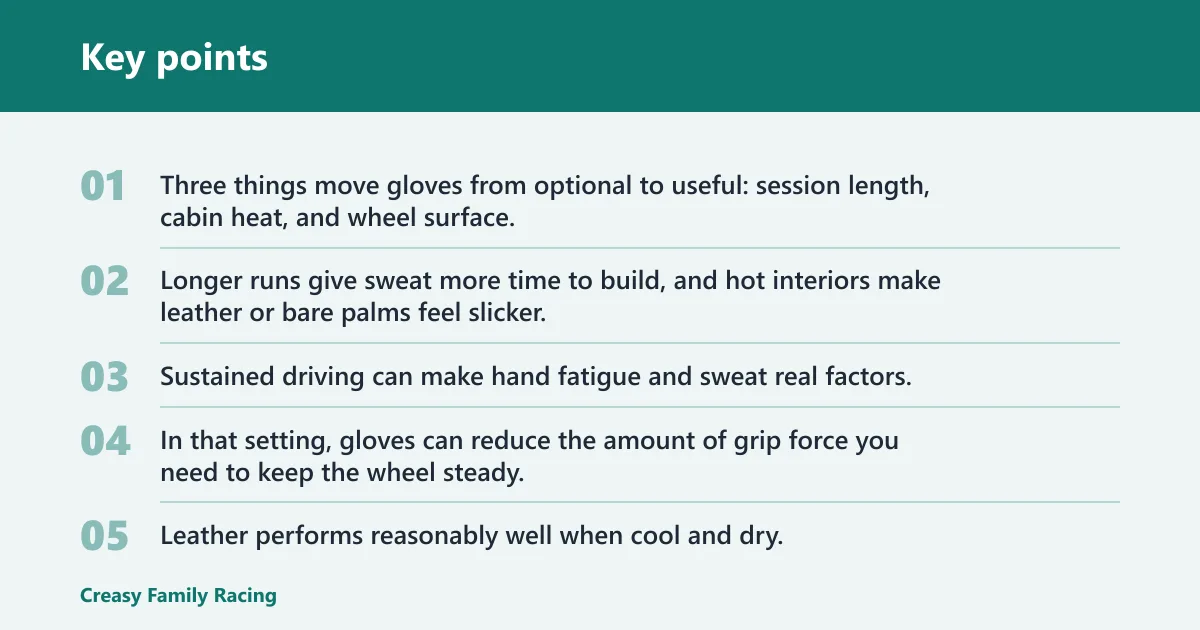
Three things move gloves from optional to useful: session length, cabin heat, and wheel surface. Longer runs give sweat more time to build, and hot interiors make leather or bare palms feel slicker. Steering wheel grip also changes with the rim material, because a grippier surface can feel different once heat and moisture rise.
That is why the same glove can feel excellent on one car and distracting on another. Grip affects steering precision and front-axle feedback, so anything that changes the connection at the rim changes how confidently you can place the car.
Session length and cabin heat
Sustained driving can make hand fatigue and sweat real factors. Over longer sessions, squeezing a wheel for extended periods taxes forearms and hands, and cabin heat on a hot afternoon can make the wheel feel slick. In that setting, gloves can reduce the amount of grip force you need to keep the wheel steady.
Leather performs reasonably well when cool and dry. It gets slick when hot. That is the basic tradeoff.
Sweat level and grip consistency
Some drivers buy gloves for sweat control first and everything else second. Sweaty hands can change steering feel run by run, and gloves can keep the contact patch more consistent. That matters because grip consistency supports repeatable inputs. Less hand slip means less mid-corner correction from the upper body.
Wheel material and rim thickness
Wheel surface matters as much as climate. Alcantara often offers strong initial grip, but heat and friction change how it feels over a session. A thin rim with good texture may already give enough bite that gloves add little beyond comfort, while a smooth or hot rim can push gloves higher on the list.
Material choice also affects glove-to-wheel friction. Leather gloves, synthetic gloves, and felt-based grips each interact differently with the rim, so the best option is the one that preserves feedback while solving the actual problem.
Are driving gloves worth it for autocross?
Often, yes, but less often than on track days. Autocross runs are generally short and intense, so many drivers can manage fine with bare hands if the wheel is cool, the fit is good, and the interior does not get heat-soaked. Gloves help most when rapid steering inputs, sweat, or a grippy-but-hot wheel make the first few turns feel awkward.
Short runs and rapid inputs
Autocross asks for quick hand-over-hand movement, fast transitions, and immediate feedback. Gloves can help if your palms slide during those rapid inputs or if the wheel surface feels sticky enough to snag skin instead of letting the wheel move cleanly. Short runs reduce the fatigue benefit, so the main value is grip control.
When bare hands already work well
For many autocross setups, bare hands are still the best choice. A driver with dry hands, a well-fitted wheel, and enough natural texture in the rim may get better steering feel without gloves. In that case, gloves can be pure friction cost, especially if the fit is loose or the seams sit under the fingers.
If the car has a thick, textured wheel and the event is mild, gloves may add little beyond convenience, while bare hands keep the most direct feedback.
Are driving gloves worth it for track days?
More often than for autocross, yes. Track days often mean longer sessions, higher cabin temperatures, and more time with the wheel in your hands, so heat, sweat, and forearm fatigue have more room to build. If your grip starts to soften after extended running, gloves can help you stay consistent across a session.
Longer sessions and rising cabin temperatures
Club-level driving often means repeated sessions, not a handful of short runs. That changes the calculation. A wheel that feels fine at the out lap can feel slick by the middle of a session, and bare hands can lose purchase as the cockpit heats up.
That is where gloves move from comfort item to useful tool. They can keep steering feel steadier when the interior, not the tire, becomes the limiting factor.
Why fatigue and grip loss matter more here
When you need extra grip just to hold the wheel in place, your forearms do more work than they should. Gloves can reduce grip force and driver fatigue, which helps over longer sessions. Less white-knuckling can also make inputs smoother, since the hands are not fighting the rim for position.
On a hot afternoon with a leather wheel that has gone slick, gloves may not make the car faster by themselves, but they can make the steering easier to repeat from lap to lap.
Driving gloves decision matrix
This table turns the choice into a cost-benefit call. The right answer depends on heat, session length, sweat, and wheel surface. If two or more of those factors are present, gloves are usually worth trying. If none of them are present, bare hands often remain the better choice.
| Scenario | Expected benefit | Likely downside | Signal count | Buy or skip |
|---|---|---|---|---|
| Hot-weather track day | Better grip when the cabin gets hot; less palm slip; lower hand fatigue over longer sessions | Can feel warm if the glove breathes poorly; loose fit reduces steering feel | Two or more factors | Buy if the wheel gets slick or sessions run long |
| Cool-weather track day | Small grip gain and mild comfort boost | Often little payoff versus bare hands; can dull feedback on a good wheel | One factor or none | Skip unless you want protection or consistent feel |
| Autocross | Helps quick inputs if hands slip; useful when sweat builds between runs | Short runs limit fatigue benefits; poor fit can slow hand movement | One factor or more | Conditional buy |
| Sweaty hands | More stable grip and less mid-run slippage | Some materials hold heat; thick seams can annoy sensitive hands | Two factors | Buy if sweat changes steering feel |
| Alcantara wheel | Can keep grip consistent when friction changes with heat | May be unnecessary on a clean, cool wheel; some gloves grab too hard | One factor or more | Conditional buy |
| Beginner budget setup | Comfort gain if the wheel is hot or slippery | Money may be better spent on brake pads, fluid, alignment, or seat time | One factor or none | Skip first unless heat or sweat is already a problem |
What to look for in driving gloves
The best glove is the one that solves the problem without dulling the steering wheel. Materials, fit, and seam placement matter more than logos or style. Look for a pair that matches your wheel texture and the heat level you expect at the event.
Leather vs synthetic vs felt-based materials
Leather gloves usually feel best when cool and dry, and they can give strong steering feel. Synthetic gloves often breathe better and may stay more usable when the cockpit heats up. Felt-based grip gear can appeal to drivers who want a more secure contact patch when grip is changing, especially at local autocross events and club-level track days.
Felt can feel secure quickly, and that may be useful when the wheel surface itself is part of the problem. The tradeoff is that it can change the steering feel more than a thinner glove.
Fit, seam placement, and steering feel
Fit is the first filter. A glove that is even a little loose can wrinkle under load and reduce the precision you feel through the rim. Seams should stay out of the main contact zones, or they will remind you of every small correction instead of disappearing into the drive.
-
Measure your grip needs.
Decide whether the main problem is heat, sweat, fatigue, or surface grip. That tells you whether you need breathability, a tackier palm, or simply a thin liner that preserves feel. -
Check the wheel surface.
Note whether the wheel is leather, Alcantara, or a grippy aftermarket wrap, and whether the rim is thin or thick. A thin rim with strong texture often needs less help than a smooth or heat-soaked one. -
Prioritize close fit.
Choose a size that sits snug without pinching. Loose gloves cut feedback and can slow hand transitions, which matters more on track than on a casual drive. -
Match material to climate.
Favor breathable synthetic or thin leather for hot sessions, and reserve thicker or more textured options for specific grip issues. The goal is stable contact, not more bulk.
Grip texture and breathability
Textured palms can help when the wheel is hot or when sweaty hands are the main issue. Breathability often matters more in track-day use, where cabin heat can build during a session. If the glove traps heat, it may solve one problem and create another.
A common first-timer mistake is buying the grippiest glove available and then discovering it feels sticky on turn-in. That can be worse than a mild slip, especially on a wheel that already has enough bite.
When gloves are not worth buying
Skip gloves when your hands stay dry, the weather is mild, and the wheel already gives enough grip. They are also a low-value purchase if your wheel is thin, textured, and comfortable, because the extra layer can reduce feel without solving a real problem. For a beginner on a tight budget, other safety and setup items often matter more.
Dry hands and mild weather
If the cockpit stays cool and your hands do not sweat, gloves may offer little more than protection from abrasion. In those conditions, bare hands often give the cleanest steering feedback. That is especially true when the session is short and the wheel surface is already well matched to your grip.
Thin-rim wheels with enough natural grip
A thin rim can already provide precise feedback, and gloves can make that connection feel less direct. If the steering wheel is well shaped and the surface has enough texture, the glove may solve no problem at all. In that setup, the best move is often to leave the wheel alone.
Budget priorities before gloves
For a first-time driver, tires, brake fluid, alignment, and proper seat position usually return more value than gloves. Gloves are a comfort and control accessory, not a requirement. If the budget is tight, spend where the car’s behavior changes first.
Frequently asked questions
Do gloves actually improve steering wheel grip?
They can, but only when the wheel and the driver need more traction than bare skin provides. That matters more in heat or sweat than in cool, dry conditions. The wrong glove or a loose fit can reduce feedback and make the wheel feel less connected.
Do driving gloves reduce hand fatigue on track?
Yes, when the wheel requires less squeeze to stay under control. Over longer sessions, that can ease forearm strain and keep the steering steadier. The effect is strongest in hot cabins and repeated sessions, where grip loss becomes more noticeable.
Are gloves better than bare hands in hot weather?
Usually, yes. Heat can make bare palms and leather feel slick, which hurts grip consistency and can increase the need to clench the wheel. Gloves are more useful here because they help keep the steering feel steady as cabin temperature rises.
When are driving gloves not worth buying?
They are usually not worth it for mild-weather events, dry hands, and wheels that already feel secure. They are also a poor value if fit is loose or the glove dulls steering feel on a thin rim. In those cases, bare hands often give better feedback for less money.