Can You Use a Head and Neck Restraint with a 3-Point Belt?
A head and neck restraint can work with a 3-point belt in some street-car setups, but only when the exact device manual explicitly approves OEM 3-point use and the seat, belt path, and tether hardware match that manual; otherwise, it is a no-go. Many devices are not approved for that use. Poor belt geometry can let the restraint slide, raise neck load, or make the setup worse than expected in a crash.
What a head and neck restraint does
HNR and FHR: the terms to know
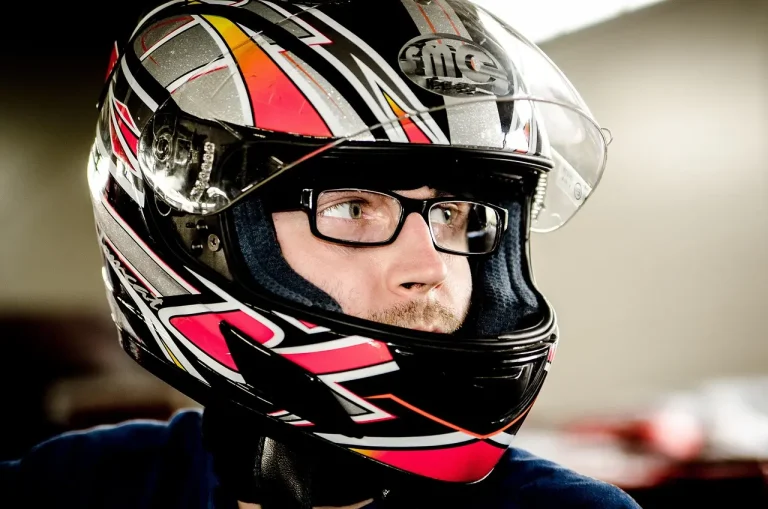
Head and neck restraint, often shortened to HNR, and frontal head restraint, or FHR, are the terms to watch in product listings and instructions. The device sits across the shoulders and upper chest, and the helmet tethers connect the helmet to the restraint. It is built to work best in frontal or angular collisions, not every crash type.
Some approved devices carry SFI 38.1 certification, the safety designation to look for on tested auto-racing devices. That standard uses a pass/fail test protocol for restraint performance, so certification matters more than marketing language. [SFI 38.1]
How helmet tethers and shoulder support work
The shoulder belts sit on top of the device, and that interface controls a lot of the fit. If the shoulder belts are too loose, too narrow, or pulled from the wrong angle, the restraint can shift before it does its job. Helmet anchors also matter because post anchor and quick click styles install and release differently, and the manual has to approve the exact hardware combination.
Why frontal impacts matter most
These devices are mainly for frontal hits, with some benefit in angular hits. That matters because a belt-and-seat setup that lets your torso travel too far can increase forward motion of the helmet relative to the body. The restraint is meant to control that motion, not make every seat-belt setup safe.
Can you use a head and neck restraint with a 3-point belt?
Yes, but only in limited cases. A 3-point belt can be a compromise in some street-car and track-day setups, yet it is not the preferred pairing and it is not a racing harness. The answer is no unless the exact model explicitly approves OEM 3-point use and your belt path and seat angle match the manual.
The short answer for street-car and track-day use
A factory lap-and-shoulder belt can be common in passenger cars and light trucks, and some HNR/FHR devices can be used with it. That said, 3-point belts are not suitable for professional racing cars that need more seat belt points. The real test is not whether the belt is present; it is whether the geometry, seatback angle, and tether hardware are correct for that exact device.
Why the 3-point belt is a compromise, not a racing harness
A 3-point belt gives upper-body restraint through one shoulder belt and one lap belt, while multi-point systems are often preferred with HNR/FHR use because they help contain the pelvis. That lower-body control can reduce neck load and keep the torso from sliding out of position. A stock belt may be acceptable for some street cars, but it is not the same as a proper multi-point setup.
What the device maker’s instructions must allow
If the seat, belt anchors, or helmet hardware do not match the maker’s instructions, the answer is no. Look for wording in the product manual, fit guide, or approval chart that names a 3-point belt, factory belt, or stock belt use. If the instructions only cover a multi-point setup, do not assume the device will work safely with a factory belt.
-
Check the approval language.
Read the manual and product listing for your exact model. You are looking for direct mention of a 3-point belt or factory belt, plus any seat-angle or helmet-hardware limits that come with it. -
Inspect the shoulder-belt path.
Confirm that the shoulder belt rides over the top of the device and does not pull the restraint sideways. If the belt crosses the wrong part of the shell or anchor geometry is off, stop there. -
Verify seat position.
Make sure the seatback keeps your torso upright enough that the device does not drive your head forward under normal driving posture. A more reclined seat can change how the restraint pushes you forward. -
Match the helmet hardware.
Confirm that the helmet anchors and release hardware are the type the device maker specifies. Post anchor and quick click systems are not automatically interchangeable.
Use head and neck checklist
| Vehicle type | Shoulder-belt geometry | Seatback angle | Helmet tether style | Expected downside | Go/no-go recommendation |
|---|---|---|---|---|---|
| Street car with stock seats | Shoulder belt stays centered and does not saw across the device | Near-upright, with stable upper body support | Matches the exact helmet anchor spec in the manual | Fit can vary with belt height and seat shape | Go only if the maker approves 3-point use |
| Track-day car with OEM seat | Shoulder belt tension stays even through the device | Upright to mildly reclined | Correct post anchor or quick click setup | More torso motion than a multi-point setup can allow | Conditional go, if all instructions match |
| Autocross car with stock belt | Upper anchor keeps the belt from slipping low or high | Upright seat with no excessive lean | Helmet hardware is fully compatible and secure | Brief but sharp loading can expose poor geometry | Conditional go for approved devices only |
| Street car with reclined seat | Belt angle pulls the device forward or sideways | More reclined than the device expects | Any style, if the seat position is wrong | Increased forward pressure and poorer stability | No-go unless the maker approves that seat angle |
| Any car with loose or poorly routed belt | Belt does not stay on top of the device | Any angle | Any style | Restraint can slide, twist, or load the neck poorly | No-go |
When a 3-point belt is a workable compromise
A 3-point belt can be workable in a street car when the restraint maker allows it, the shoulder belt sits correctly, and the seat keeps the driver fairly upright. The setup should feel controlled, not loose. If the device rocks around or the belt migrates off the top surface, it is the wrong fit.
Stock-seat cars with correct shoulder-belt routing
Factory seats often place the shoulder belt at a usable height, which can help keep the belt on top of the restraint. That does not guarantee approval, but it can reduce the fit problems that show up when the belt angle is too low or too high. Shoulder-belt width also matters; compatibility depends on the exact device model, and some devices are approved for 2-inch belts, some for 3-inch belts, and some for both only within the maker’s manual.
Upright seats and stable upper-belt anchors
Seatback angle changes how the device pushes you forward. A change in seat incline can change comfort and the amount of forward pressure you feel from the restraint. A more upright seat often keeps the geometry cleaner, while a more reclined seat can make the device feel like it is driving the helmet forward.
Say your street car has an upright bucket seat and the shoulder belt runs cleanly across the top of the restraint. That is the kind of setup that may fit the approved-use window, assuming the maker allows 3-point belts. Change only the seatback to a more reclined position and the fit can move from acceptable to poor.
Helmet tether styles that match the device
Helmet anchors are not all the same. Post anchor and quick click hardware can both work, but only if the device and helmet are designed for that interface. If the release method or anchor location does not match the product instructions, do not assume the parts are close enough.
When a 3-point belt is not enough
A 3-point belt is not enough when the shoulder belt geometry is off, the seat lets the torso move too much, or the maker does not approve that use. In those cases, the restraint can become unstable. A 6-point or 7-point setup may be the better fit, but only with compatible seats, anchors, and rollover protection.
Loose shoulder belts and poor belt geometry
Bad geometry can make the shoulder belt slide off the device or load it unevenly. If the upper anchor is too low, too high, or too far to the side, the restraint may not stay in the intended position. That is a setup problem, not a product upgrade problem.
Seats that let the torso move too much
If the seatback or seat shell allows the upper body to move before the belt loads, the HNR/FHR has less stability to work with. That can change the way the shoulder belts sit on the device and can increase the chance of poor helmet control in a crash. A more secure seatback and correct belt path matter as much as the restraint itself.
Cases where a 6-point or 7-point setup is the better fit
6-point or 7-point systems with HNR/FHR use because they contain the pelvis and help keep the torso in place. That is especially relevant in purpose-built track cars, not in every street car. Do not install a multi-point setup unless the seat, anchors, and rollover protection are all designed for that arrangement.
A common first-timer mistake is assuming a multi-point setup alone solves the problem. Suppose the seat is reclined, the shoulder anchors are wrong, and the car has no compatible structure for the belts. The result can be worse positioning, not better protection.
What seat and helmet details matter
Seatback angle, shoulder-belt width, and helmet anchor hardware decide whether the restraint sits correctly. These are the details that separate a usable compromise from a poor fit. If any one of them is off, the setup can fail in ways that are hard to spot before driving.
Seatback angle and forward pressure
A seatback set at a shallow incline can change how the device pushes you forward. A more upright seat often reduces the sense of being shoved forward by the restraint, while a more reclined position can increase that feeling. Comfort matters because discomfort usually means the geometry is working against the device.
Shoulder-belt width and position
Shoulder belts must sit on top of the device, and width affects how they settle. The wrong width can change how the belt tracks across the shoulders and can create fit issues. If the shoulder belt is not centered on the restraint, the device may shift before it loads.
Helmet anchors and release hardware
Post anchor and quick click styles both exist, but they are not universal. Installation and release vary by use case, and the helmet side has to match the restraint side. Check the maker’s chart or manual for the exact anchor type before you buy or bolt anything together.
-
Confirm seat and belt geometry.
Sit in the driving position and check whether the shoulder belt crosses the top of the restraint without pulling it off line. If the belt height is wrong, fix that before any track use. -
Match the tether hardware.
Verify that the helmet anchors are the exact style called out by the device maker. Do not mix hardware types unless the instructions say they are interchangeable. -
Check the seating angle.
Compare the seatback position with the fit guidance for your model. A small change in recline can change how much forward pressure the device creates. -
Reassess before driving.
If anything moved, twisted, or feels loose, do not drive until it is corrected. The correct answer depends on the full system, not the restraint by itself.
Frequently asked questions
Is a 3-point seat belt safe with a HANS device?
It can be acceptable in some street-car cases, but it is a compromise rather than the preferred setup. A HANS-style device depends on clean shoulder-belt routing, correct seat angle, and approved tether hardware. If those pieces do not line up, the setup should be avoided.
Do you need a 5-point or 6-point setup for a head and neck restraint?
Not always, but 6-point or 7-point systems are commonly recommended with HNR/FHR use by some industry experts because they help contain the pelvis. That lower-body control helps keep the torso in place. Use a multi-point setup only with compatible seats, anchors, and rollover protection.
Will a head and neck restraint work with a factory seat belt?
Sometimes it will, if the restraint maker approves factory-belt use and the seat keeps your torso upright enough. A factory belt is common in passenger cars and light trucks, but it is not a racing setup. Check the manual for exact approval language before you rely on it.
What happens if you use a HANS with shoulder belts only?
If the shoulder side is not paired with the correct lap restraint and belt geometry, the device can shift, load the neck poorly, or sit outside its intended setup. The shoulder belts must sit on top of the device, and the whole system needs proper routing. Missing pieces change the result fast.
Do SFI head and neck restraints require racing setups?
SFI 38.1 tells you the device passed the safety test, not that every setup will work with it. Some approved devices can be used with 3-point belts, while others expect a multi-point setup. The deciding factor is the maker’s instructions, not the certification label alone.
Which head and neck restraints work best with a 3-inch shoulder belt?
There is no universal answer. Fit depends on the exact model, the seat angle, and how the shoulder belt sits on the device. Check the manufacturer’s listing for your model and look for direct approval of the belt width and belt type before you choose a restraint.