How Many Heat Cycles Can a 200tw Tire Take Before It Slows Down?
Many 200tw tires start losing noticeable grip after about 10 to 20 full heat cycles, though some stay acceptable past 25 if they see moderate temperatures and cool slowly. Ignore that window and you can chase setup changes for a problem the tire already created, then lose lap time, consistency, and wear the outer shoulders faster. Judge remaining grip from session type, surface heat, age, storage, and the tire’s feel, not mileage alone.
Why grip fades before tread does
A heat cycle is one full heat-up and cool-down event. On a 200tw tire, repeated cycles alter the rubber compound chemistry, so grip can fall before the tread looks worn. The UTQG treadwear rating is only a comparison number, not a heat-cycle counter, and it does not predict how fast a specific compound ages.
Heat cycle vs treadwear rating
UTQG treadwear helps compare relative wear among tires, but it does not tell you how many track sessions a tire can take. A 200tw tire can still have usable tread depth while the compound has hardened enough to slow lap times, lengthen braking zones, and reduce cornering grip.
Why grip drops before tread depth does
The outer rubber layer changes from repeated thermal stress. Surface temperature, carcass temperature, session length, ambient heat, and cool-down all affect the rate of change. That is why two tires with the same tread depth can feel very different on the same car.
How many heat cycles can a 200tw tire take?
There is no single number that fits every 200tw tire. A short autocross run, a 20-minute HPDE session, and a hot road-course day do not place the same thermal load on the compound, so the same tire can age very differently depending on use. A practical range is about 10 to 20 cycles for noticeable decline, with some tires staying serviceable past 25 when heat stays controlled.
Typical performance bands by use pattern
Short, cool autocross runs often use fewer total heat cycles per event, but the peak temperature can still be high. Longer HPDE sessions usually build more heat into the carcass and shoulders, which can age the tire faster. Newer 200tw compounds often resist heat better than older designs, but the spread by brand and model is still large.
| Tire use pattern | Observable symptoms | Likely remaining performance band | Buy / keep / replace recommendation |
|---|---|---|---|
| 1 to 6 cycles, moderate autocross or short sessions | Strong grip, even wear, stable hot pressures | Near full performance | Keep. Log pressures and watch shoulder wear. |
| 7 to 12 cycles, mixed autocross and HPDE | Small lap-time drift, slightly wider pressure swings | Roughly 80% to 95% | Keep if consistent. Recheck alignment and camber. |
| 13 to 20 cycles, repeated hot sessions | Harder feel, slower laps, less cornering bite, more glazing risk | Roughly 60% to 80% | Use cautiously. Keep for practice or local events if still predictable. |
| More than 20 cycles, high heat, or unknown history | Cracking, checking, poor consistency, long warm-up, larger pressure rise | Below 60% or uneven | Replace or buy only at a steep discount. |
Say your 200tw tire still shows 5/32 in the center but the front shoulders have gone chalky and lap times drift by a second while pressures rise 6 psi instead of 3 psi. That pattern points to heat aging, not tread depth, and the tire is already past its best window even though it looks legal.
How do you know a tire is heat cycled out?
A tire is heat cycled out when its behavior changes enough that grip, consistency, or pressure control no longer matches the previous baseline. The clearest signs are hardening, glazing, shoulder wear, cracking or checking, slower laps, and less repeatable braking and cornering. Tread depth alone is not enough to judge it.
Surface signs
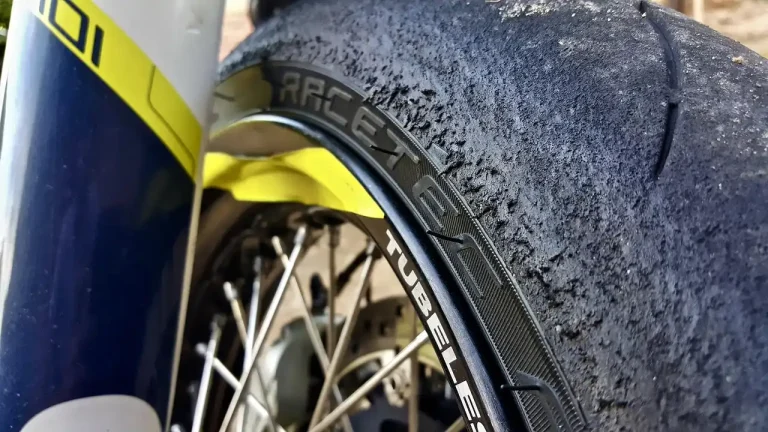
Look for a shiny or slick surface, fine checking across the tread blocks, and shoulders that feel harder than the rest of the tire. Excessive heat can also round the tread edges and leave the tread block faces looking polished instead of fresh.
Behavior signs
Watch for slower laps after the same setup, more steering correction in medium-speed corners, and wider pressure swings from one session to the next. If a tire needs noticeably more slip angle before it responds, the compound may already be aging out.
Autocross vs HPDE heat load
Autocross and HPDE punish tires in different ways. Autocross uses short bursts with rapid cooldown, while HPDE and road-course sessions keep the tire at temperature longer and usually build more cumulative heat into the carcass and shoulders. That difference matters when you estimate remaining life.
Short bursts and rapid cooldown in autocross
Autocross can create very high surface temperature in a short time, especially with aggressive driving and warm pavement. The tire may not stay hot for long, but repeated runs in one day still count as repeated heat cycles if the tire fully cools between them.
Longer sessions and more total heat in HPDE
HPDE often puts more total heat into the tire because the load stays on the compound longer. A 20-minute session on a hot day can age the tire more than several short autocross runs, especially if pressures climb too high or camber is not matched to the car.
How to slow heat-cycle damage
You cannot stop heat aging, but you can slow it by controlling pressure, alignment, and cool-down. Set hot pressure and alignment before you chase lap time, keep the tire in its operating window, and let it cool in a controlled way between sessions. That protects the compound and makes pressure data more useful.
Set hot pressure targets. Start with a cold pressure that lands near the tire maker’s or tuner’s hot target after one session. If hot pressure is too high, the tire overheats at the shoulders and the tread can glaze sooner.
Check camber and toe. Excess toe and too little negative camber can overwork the outer shoulders, especially on front-heavy cars. Alignment does not fix compound aging, but it can stop one edge from dying early.
Log every cycle. Write down hot pressure, ambient temp, session length, and whether the tire cooled fully before the next run. That record helps separate a one-off setup problem from compound decline.
Allow full cool-down. Let the tire return to ambient or near-ambient temperature when possible. Full cool-down helps, but it does not reset compound aging, so it reduces stress rather than erasing the cycle.
Suppose a 255/40R17 tire comes off a 25-minute HPDE session at 42 psi hot, then drops back to 34 psi before the next run. If the same tire climbs to 46 psi hot the next time with the same weather and pace, the compound is likely holding more heat or the setup is asking too much of the shoulder.
Should you buy used 200tw tires?
Used 200tw tires can be a bargain only when the cycle history is known and the tire still behaves like a performance tire. Plenty of tread does not mean plenty of grip. Age, storage, prior camber and toe settings, and visible heat damage matter as much as tread depth.
What to inspect before you buy
Check the manufacturing date, the outer shoulders, the full tread face, and the sidewalls. Look for cracking, checking, uneven wear, glazing, cupping, or a hard, slick feel. Ask how the tires were used: autocross, short track sessions, or long road-course runs make a real difference.
Verify date and storage. Older tires stored in heat or sunlight age faster than tires kept cool and dark. If the date code is several years old and the storage history is unknown, treat the tire as high risk.
Inspect wear patterns. Uneven shoulders can point to too much toe or poor camber, which may have cooked one edge before the rest of the tread was used. Skip tires with strong heat damage or deep checking.
Match price to risk. A small discount is not enough if the tire already feels hard or has unknown cycles. Buy used only when the savings clearly offset the chance of losing grip early.
A common mistake is treating a 200tw tire with only a few heat cycles as if it will still grip the same after several hard track days. If the shoulders are glazed and the seller cannot explain the cycle history, the tire may be worth far less than its tread depth suggests.
When the discount is not worth the risk
Pass on used tires when the age is unclear, the previous alignment was aggressive, or the tires came off a car that saw heavy HPDE use in hot weather. In that case, the compound may already be tired enough that the first few sessions feel inconsistent and the savings disappear in lost grip.
Frequently asked questions
How many heat cycles can a 200tw tire take before it slows down?
Most 200tw tires begin to slow down after about 10 to 20 full heat cycles, but the real number depends on the compound, temperature, and use pattern. Some tires stay usable past 25 cycles when heat is controlled and cool-down is gentle.
What is a heat cycle on a 200tw tire?
A heat cycle is one full heat-up and cool-down event. Each cycle changes the rubber compound a little, which affects grip, consistency, and how quickly the tire responds to steering and braking inputs.
Do 200tw tires lose grip before the tread is worn out?
Yes. Grip often falls before tread depth becomes a problem because the compound hardens or glazes while the tire still looks legal. That is why shoulder condition, lap-time consistency, and pressure behavior matter as much as tread depth.
Does full cool-down between sessions extend tire life?
Yes, full cool-down helps reduce thermal stress and can slow damage. It does not reset the compound, though. The tire still ages with each heat cycle, just more slowly than it would if it stayed hot or was repeatedly overheated.
Are 200tw tires safe to drive home on after track use?
Usually yes, if they are not damaged, corded, or visibly overheated. Let them cool enough to handle safely, check pressure before the drive, and inspect the tread and sidewalls. If cracking, blistering, or severe wear is present, replace the tire first.
Should I buy used 200tw tires with many heat cycles?
Only if the cycle history is known, the storage was good, and the tire still feels consistent. If the shoulders are glazed, the date code is old, or the seller cannot explain previous use, the discount is usually not worth the risk.