First Autocross: How to Start with a Street Car
Start with a two-lane plan: make the car safe and legal first, then spend only on tyres, alignment, and maintenance; for a first autocross, any change that bumps class without fixing safety or feedback usually is a bad buy. Get this wrong and you can fail tech, land in the wrong class, or spend money that makes a daily driver harder to learn in. This guide covers rules checks, must-do car prep, class-safe upgrades, event-day packing, and the common changes to avoid before run one.
Your first event does not ask for a race build. It asks for a road-legal street car that can handle repeated hard transitions, stop cleanly, hold its fluids, and carry no loose junk inside. It also asks for rule discipline, because classing mistakes often happen before the first timed run.
What short courses reveal about your car
How a cone-course event works
Most first-time entrants see two very different formats under one name. In SCCA-style parking-lot autocross, the course is laid out with cones on pavement, often at an airfield or large lot, and runs are completed one car at a time against the clock, not directly door-to-door. Many runs are short, often under a minute, so mistakes show up fast.
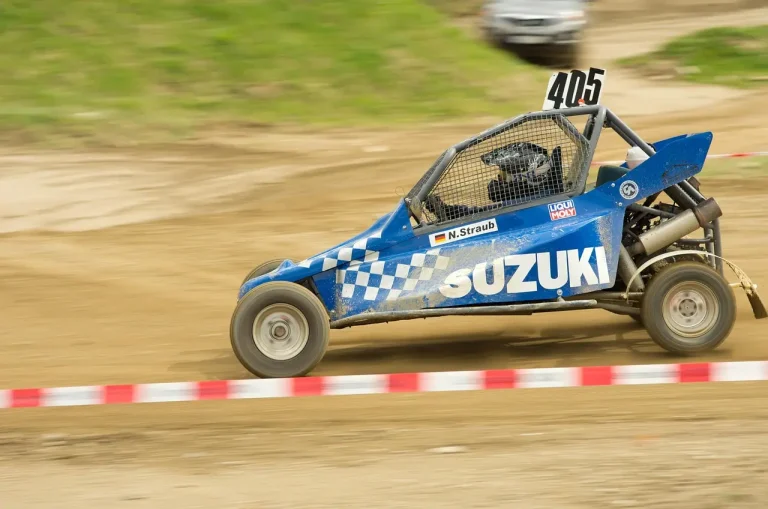
Motorsport UK uses the same word for a loose-surface format. It describes autocross as a temporary course usually between 800 and 1200 metres long, typically on a grass or stubble field, with usually heats of three or four laps. Beginners can start in a standard road car, but the equipment list can be very different from a US parking-lot event.
Why short runs expose setup mistakes fast
A short course does not hide basic problems. Old brake fluid shows up as a soft pedal after a couple of hard stops. Front-heavy cars will chew the outer shoulder of the front tires if pressures are too low. Loose cargo becomes a moving weight shift, then a tech problem.
So a first-event setup should make the car easy to read, not harder to read. Tire pressure, class-legal alignment, and fresh maintenance let you feel what the front end, rear end, and brake pedal are telling you in each corner. Extra horsepower rarely fixes early understeer, vague turn-in, or a pedal that goes long.
What street-car ready really means
A road car you already drive every day is a good starting point if it is roadworthy, stock or lightly modified, and can be driven to and from the event without drama. The baseline is simple: no major leaks, healthy brakes, good tires, secure battery, no loose suspension or exhaust parts, and an empty cabin and trunk.
BFGoodrich notes that autocross can use everything from grocery-getters to heavily-modded race cars. That range matters, because a beginner in a street car should prep for the event without copying the build choices of the race-car end of the paddock.
Can you run your daily driver stock?

A stock daily driver is often enough for a first autocross if it is road-legal, mechanically sound, free of major leaks, and emptied of loose items. For a first event, a stock car is often the smart choice because it keeps classing simple and lets you learn pressure, line, and braking before parts changes.
When a stock car is enough
For most first events, the answer is boring in the best way. If the car starts, idles, steers, brakes straight, and has decent street tires, it can usually make the day. SCCA Street classes are the usual home for this kind of car because they are the least-modified starting point, and BFGoodrich says Street class categories run from Super Street through H Street.
BFGoodrich also says street classes have very restrictive rules. That should calm a beginner, not frustrate one. Restrictive rules mean the field is built around near-stock cars and street tires, so the driver can learn without chasing race-car hardware.
The roadworthy baseline
Check the car like a road car that will be driven hard for short bursts. Look for wet oil or coolant leaks underneath. Check pad thickness through the caliper window if possible. Feel the brake pedal with the engine running; if it feels vague or sinks, sort that before entry day.
Look at each tire shoulder and sidewall. Cracks, cords, bubbles, or severe uneven wear are fail signs. Check that the battery hold-down is present and tight. Make sure the throttle returns cleanly and nothing in the engine bay can flop into a belt or fan.
When to skip the event and fix the car first
Skip the event if the car leaks enough fluid to leave drops, has low pads, has a brake warning light, has a wheel-bearing rumble, overheats in traffic, or has tires near the wear bars with shoulder damage. None of those faults teach useful lessons. They just shorten the day.
Suppose the car feels fine on the commute, but one front rotor has a dark blue patch and the pedal shudders on a firm stop from normal road speed. That is not “good enough for a short run.” It is a brake service appointment.
What should you check before the event?
Check these four areas before the event: tires, brakes, loose items, and fasteners or fluids. That sequence catches the failures that end first days early: bad pressures, tired pads, old fluid, unsecured cargo, weak battery hold-downs, and leaks that turn a normal street car into a tech failure.
Tires: condition, age, pressures, and shoulder rollover
Start with condition. The tire should have even tread depth across the face, no exposed cords, no bulges, and no sidewall cuts. Older tires can still pass tread depth but feel greasy or hard, so age matters if the set has been heat-cycled and baked through several seasons.
For pressure, start near the normal road setting listed on the car placard or door jamb, then adjust based on shoulder rollover and feel. A common first-day check is chalk on the outer shoulder; if the mark scrubs far onto the sidewall, the tire may be rolling over too much. Do not answer that with severe overinflation, because that can cut grip by shrinking the contact patch.
Picture a front-wheel-drive hatch on 225-width all-season tires starting at ordinary road pressure. After the first run, the outer front chalk line is gone well onto the sidewall while the rear still looks untouched. Raise the front a little, leave the rear alone, and check again after the next run.
Brakes: pad thickness, rotor condition, and fluid age
Pad thickness needs to be plainly more than “almost done.” If the friction material looks very thin, replace it before the event. Rotors should be free of major cracks and deep scoring. Surface rust from sitting is normal; heat checking and lips sharp enough to catch a fingernail call for a closer look.
Fluid age matters more than many beginners expect. If the fluid is old and the pedal already feels soft on the road, service it before autocross. A fresh bleed is a better first spend than a power part.
Loose-item sweep: cabin, trunk, floor mats, and phone mounts
Empty the trunk. Empty the door pockets. Remove loose tools, umbrellas, drink bottles, tyre inflators, charging bricks, and child-seat accessories. If the organizer requires floor mats out, take them out. Secure or remove phone mounts if they can detach under load.
A common first-timer mistake is leaving a folding chair, a jack handle, and a litre bottle of washer fluid in the hatch because “they’re behind the cover.” They still move. They still fail tech at some events. They still distract the driver if they slam around in a slalom.
Fasteners, fluids, and simple pass-or-fail checks
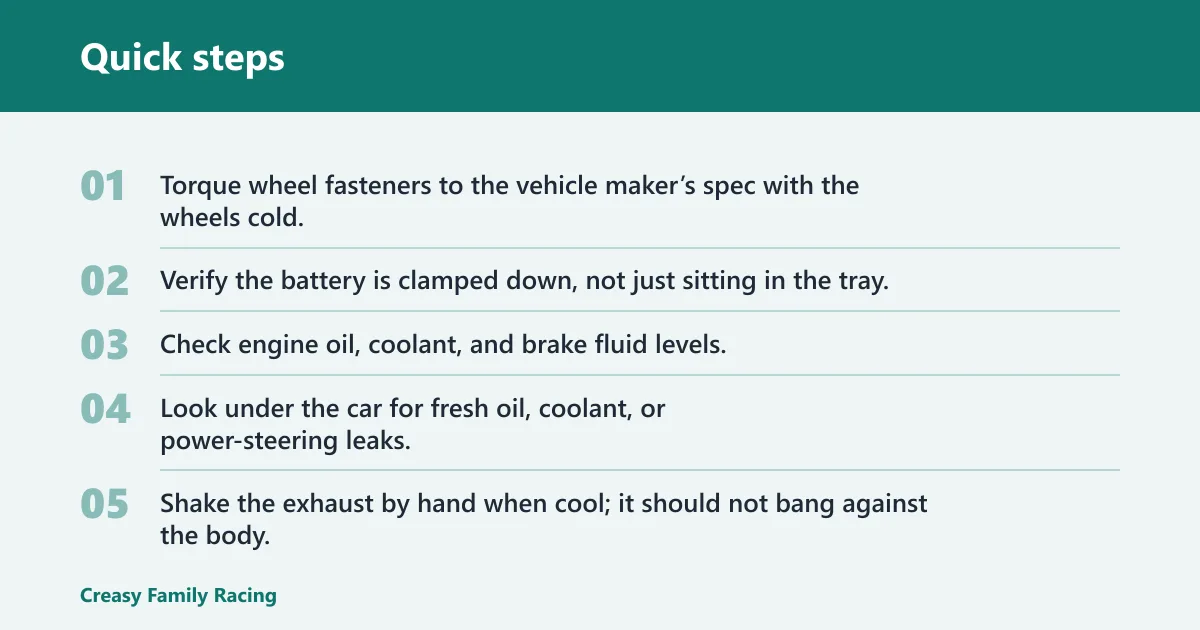
- Torque wheel fasteners to the vehicle maker’s spec with the wheels cold.
- Verify the battery is clamped down, not just sitting in the tray.
- Check engine oil, coolant, and brake fluid levels.
- Look under the car for fresh oil, coolant, or power-steering leaks.
- Shake the exhaust by hand when cool; it should not bang against the body.
- Turn the steering at low speed and listen for clunks from loose suspension parts.
How classing works before you change anything
The SCCA classing system in plain English
The safe beginner approach is to identify the organizer first, then the rulebook, then the class. In SCCA-style autocross, the main class buckets are commonly listed as Street, Street Touring, Street Prepared, Street Modified, Prepared, and Modified. The further down that list the car goes, the more freedom it usually has and the tougher the field usually gets.
Classing is determined by the car and its modifications, not by intent. The same source says Street Touring classes still require street tires. BFGoodrich also says Street Modified allows DOT-approved tires and mods like turbos, engine swaps, and wings. Those are very different homes for a daily driver.
Why Street is the usual first stop
Street is where most stock or lightly modified daily drivers belong at event one. It keeps the focus on legal street tires, sound maintenance, and the driver. It also narrows the list of legal changes, which helps a beginner avoid turning a simple starter car into a mismatched build.
Common modifications that bump a beginner into another class
The exact trigger depends on the ruleset, so there is no single universal list. Still, beginners often get moved by suspension parts, nonstandard wheel or tire choices, engine tuning, intake or exhaust changes, stripped interiors, and aero parts. One wrong part can place the car against faster, more developed entries.
Do not use “stock class” as a vague label and assume any common bolt-on is fine. Read the current class rules for the organizer, then the supplemental regulations for that event. If the organizer is not SCCA, ask where the car is classed before buying anything.
A simple decision tree when you do not know the sanctioning body
- Find the event organizer and identify whether the format is paved parking-lot autocross or loose-surface autocross.
- Read the current rulebook and that event’s supplemental regulations.
- Verify the accepted helmet standard.
- Check vehicle rules for leaks, battery security, and loose-item removal.
- Class the car as it sits before changing parts.
- Only then decide whether alignment, tires, or maintenance work is worth doing first.
Do you need special tires for your first autocross?
No. Normal street tires are enough for event one, and they are often the better teaching tool because they make weight transfer and pressure mistakes easy to feel. Better tires can come later; before that, correct pressures and a legal alignment usually return more useful learning for less classing risk.
Street tires versus stickier options
For a beginner, street tires are the clean answer. They are legal in Street classes and, as BFGoodrich notes, Street Touring still requires street tires. They trade some grip for better wear, less noise, easier rain manners, and better daily comfort than the stickier street-legal options many experienced autocrossers favor.
Stickier 200-treadwear-style tires usually tolerate repeated hard corners better and deliver more front-end bite, but they also tend to bring more road noise, firmer impact feel, and faster wear in daily use. Those tradeoffs matter if the same car handles commuting, errands, and the event drive home.
Pressure tuning without chasing bad advice
Do not chase paddock folklore after one run. Start near road pressures, watch the shoulders, and make small changes. If the front shoulders are rolling over badly, add a little front pressure. If the center is getting hot and the car skates, pressure may already be too high.
Pressure tuning should support the tire, not prop up a bad setup. If the front tires still punish the outer shoulders after sane pressure changes, the next useful step is often alignment, not more air.
Autocrossing with an automatic transmission
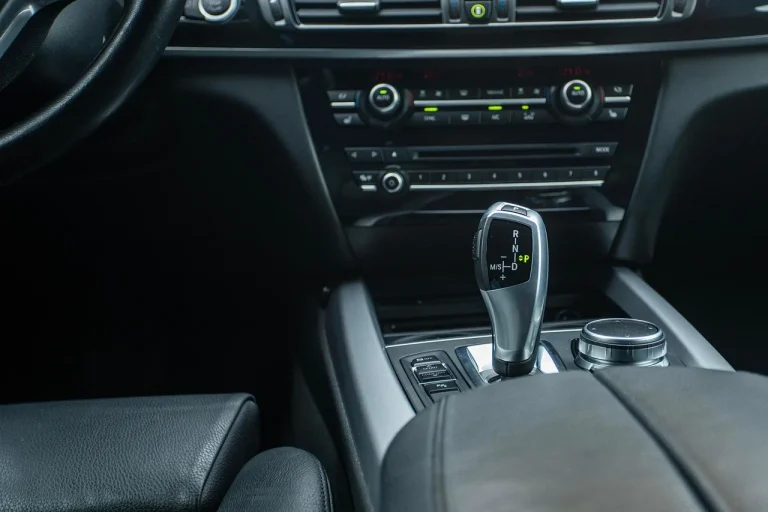
An automatic can work well in autocross, but the key is keeping the transmission from deciding things for you. The supporting guide explains how shift timing, torque-converter slip, and heat can affect run consistency, and why staying in the right gear matters on short, tight courses. It also covers when manual mode, sport mode, or a lower gear can help keep the car responsive instead of hunting between ratios.
If you’re wondering whether an automatic will hold you back, or what you should change before your first event, this autocross automatic guide gives a practical baseline for driving it consistently and avoiding common mistakes that cost time.
What a first autocross really costs
A first autocross in a street car usually lands in the low hundreds, not the thousands. The biggest costs are typically the event entry fee, any temporary club membership, fuel, and the items you already need to safely run the car as-is. This section helps you separate must-pay costs from optional upgrades so you do not overspend before you know what the car actually needs.
For a clearer breakdown of entry fees, tire and brake spending, helmet rules, and the classing mistakes that can raise your budget fast, see first autocross cost.
What safety gear is actually required?
A helmet to the organizer’s accepted standard is the most common personal requirement for a street-car autocross. Beyond that, requirements split by sanctioning body and surface: some events ask little more, while others require a fixed fire extinguisher, mud flaps, and flame-resistant overalls. Check the exact event paperwork.
Common almost everywhere: helmet and tech inspection
For many beginner autocross events, the key personal item is a helmet that meets the event’s accepted standard. Some clubs have loaners; some do not. The car then goes through a basic tech check for leaks, battery security, wheel condition, and loose items.
Event-specific gear: extinguisher, mud flaps, and overalls
Motorsport UK says helmets and flame resistant overalls are minimum equipment. It may also require a fire extinguisher fixed in the car and mud flaps fitted behind each wheel. Those are clear, checkable requirements for that ruleset.
They are not universal. In SCCA-style paved parking-lot autocross, a fixed extinguisher, mud flaps, and overalls are usually not standard requirements for a near-stock street car. That is why “autocross safety gear” must be split into common items and sanction-specific items, not treated as one global list.
Which changes help first, and which ones can wait?
High-value early moves
The best early changes are maintenance items and setup moves that expose the car’s balance without changing its category. Fresh brake fluid if the current fluid is old, pads if they are low, correct tire pressures, and alignment within the rules are the big ones.
Why alignment often matters more than power
Alignment changes can improve turn-in and front grip without touching the engine. Extra front camber, where class-legal and achievable, helps keep the outside front tire upright in corners. Toe should stay conservative for a daily driver; settings that preserve straight-line stability and tire life usually make more sense than an aggressive toe setup for a novice.
Say your front-wheel-drive sedan still shoves wide after pressure tuning, and the outside front shoulder shows wear far beyond the chalk line while the center tread looks fine. A class-legal alignment is the next smart move. An intake or tune does nothing for that problem.
Upgrades to delay until after several events
Delay power mods, coilovers, race pads, stripped interiors, and class-changing aero until the driver knows what the car is doing and where the rules place it. After a few events, the sensible order is usually legal alignment, fresh fluid, healthy pads, then better street-legal tires when the current set is due.
Street-car readiness matrix

How to use the matrix
Read the pass or fail signs literally. If an item fails, fix it before event day. The last two columns matter just as much as the mechanical check, because some items are required by the organizer while others are optional but can still move the car out of a simple Street-class start.
| Item | Why it matters | Pass/fail signs | Required? | Affects classing? |
|---|---|---|---|---|
| Tires | Grip, braking, steering response, and safe load support | Pass: even tread, no cords, bubbles, or major cracks. Fail: shoulder damage, exposed cords, severe age cracking | Yes | Yes, tire type and size can matter by class |
| Tire pressures | Controls rollover, response, and contact patch | Pass: starts near road setting and adjusted by wear marks. Fail: obvious rollover onto sidewall or severe overinflation | Yes | No by itself |
| Brake pad thickness | Repeated hard stops need margin | Pass: plainly usable friction material remains. Fail: very thin pads, uneven wear, warning signs | Yes | No if stock-type replacement |
| Brake fluid age and pedal feel | Old fluid can boil; soft pedal kills confidence | Pass: firm pedal, recent service if unknown history. Fail: soft pedal, dark neglected fluid, fade signs | Yes | No if maintenance only |
| Wheel fasteners | Loose wheels end the day quickly | Pass: torqued to spec. Fail: unknown torque, damaged studs, missing hardware | Yes | No |
| Battery hold-down | Battery must stay fixed under lateral load | Pass: battery clamped securely. Fail: loose battery or improvised restraint | Yes | No |
| Fluid leaks | Tech issue and reliability issue | Pass: dry underside or minor residue only. Fail: active drips of oil, coolant, or other fluids | Yes | No |
| Cargo removal | Loose items become hazards and distractions | Pass: trunk, cabin, door pockets cleared. Fail: tools, bottles, chairs, child-seat items left loose | Yes | No |
| Helmet | Main personal safety item at many events | Pass: accepted standard for that organizer. Fail: no helmet where required or wrong rating | Usually yes | No |
| Fire extinguisher | Safety item in some rulesets | Pass: fixed in the car where required. Fail: absent where required, or loose mount | Event-specific | No |
| Mud flaps | Controls debris on loose surfaces | Pass: fitted behind each wheel where required. Fail: missing in rulesets that require them | Event-specific | No |
| Alignment | Front grip, turn-in, and tire wear | Pass: within class rules and stable on the road. Fail: illegal settings for class or obvious pull and edge wear | No | Yes, if outside class allowances |
What will it cost to get started?
For a first event, spend on the entry fee, fuel, an approved helmet if one is not borrowed, car numbers or tape, and a tire pressure gauge. Before any performance parts, pay for maintenance the car actually needs: brake fluid service, pads, or an alignment if inspection signs point there.
Base costs and one-time gear
Exact prices vary too much by region to fake precision. The useful framework is fixed versus optional. Fixed items are the event entry, fuel, and any required safety gear. Optional items for a first-timer are tape or magnetic numbers, a basic pressure gauge, and perhaps a torque wrench if the car is due for one anyway.
Maintenance costs worth paying before upgrades
If the brake fluid is old, change it before thinking about tires. If the front pads are thin, replace them before buying an intake. If the alignment is chewing the outside shoulders off the front tires on ordinary road use, correct that before the event, provided the settings remain class-legal.
A low-spend path for the first three events
Event one: inspect, empty, and run the car on its current tires if they are sound. Event two: tune pressures and record wear. Event three: if the pattern is clear, pay for a legal alignment or overdue brake service. That sequence teaches more than a pile of parts ordered before the first start line.
Frequently asked questions
Can I autocross my daily driver without modifying it first?
Yes, if it is roadworthy, free of major leaks, on healthy tires, and cleared of loose items. Starting stock also keeps classing simple. For many beginners, that is the fastest route to useful seat time because the day is spent learning lines, braking, and pressure changes instead of sorting avoidable rule problems.
What should I check on my street car before my first autocross?
Check tires, pressures, brake pad thickness, rotor condition, brake fluid age, wheel fastener torque, battery security, fluid levels, and leaks. Then empty the cabin and trunk. Remove or secure floor mats, tools, child-seat accessories, phone mounts, and anything else that can move during quick transitions.
Do I need special tires for my first autocross?
No. Good street tires are enough for event one, and they fit the beginner goal better than sticky upgrades. They let the driver feel rollover, understeer, and braking errors clearly. Manage pressures carefully, watch the shoulders, and save tire upgrades for later once the car’s baseline behavior is understood.
What class will my stock street car run in?
In SCCA-style autocross, a stock or lightly modified street car usually starts in Street, the least-modified group. The same source lists Street class categories from Super Street through H Street. Exact placement depends on the car and the organizer’s rules, so class the car as it sits before changing any parts.
What safety gear do I need for autocross in a street car?
A helmet to the event’s accepted standard is the most common requirement. Beyond that, rules split by organizer. The same source says helmets and flame resistant overalls are minimum equipment and also requires a fire extinguisher fixed in the car and mud flaps fitted behind each wheel. Many paved US events do not.
How do I avoid classing myself out of stock if I modify my car?
Read the current rulebook before buying anything, then verify the event’s supplemental regulations. Keep the car near stock for the first events, stay on legal street tires, and prioritize maintenance, pressures, and class-legal alignment. The expensive beginner mistake is adding parts first and discovering the car no longer fits Street.