Helmet Certification for Bike and Track Use: Which to Buy?
Choose the strictest helmet certification that both your motorcycle law and your car track-day organizer accept. If those rules do not overlap, buy two helmets. For many car track-day organizers, the best one-helmet answer is a full-face Snell SA helmet that also meets your local motorcycle law. If your event or market does not accept that overlap, a single helmet will not cover both uses.
How to choose a helmet certification for motorcycle riding and car track days
Yes, one helmet can work for both motorcycle riding and car track days, but only when the same helmet satisfies the stricter event rule and the road law where you ride. Motorcycle legality alone is not enough for car-track tech. The deciding factor is the organizer’s rule sheet, because that is what inspectors use at the gate.
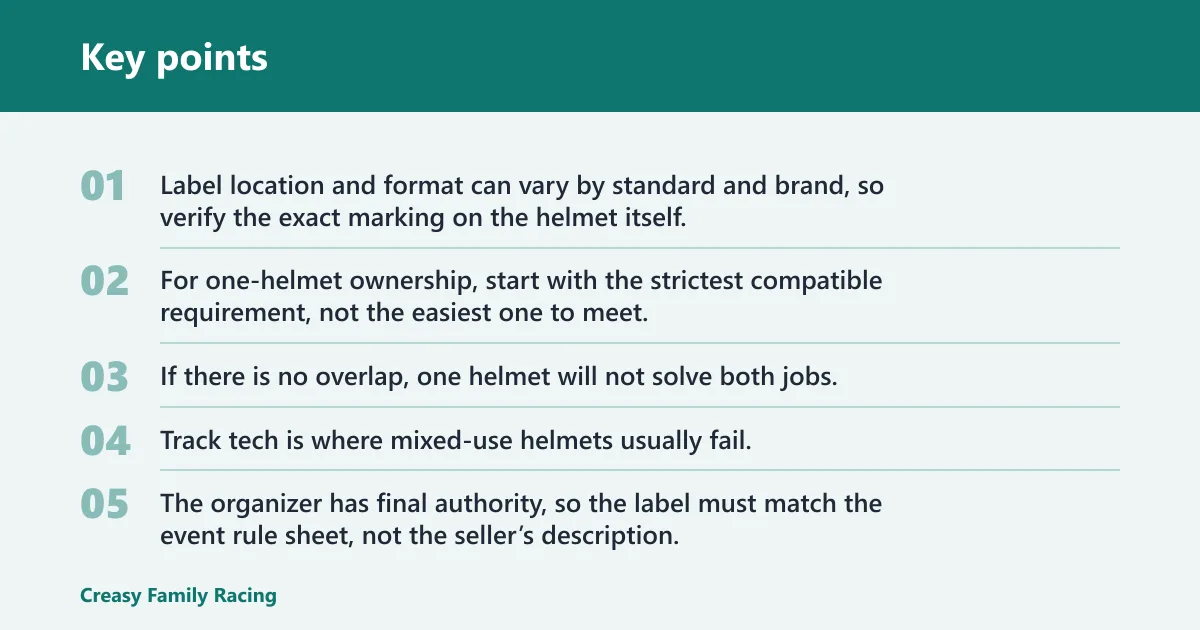
That is where many buyers get caught. A helmet can be fine for street use under DOT or ECE 22.06, then fail a car track inspection because the organizer wants a motorsport-specific label such as Snell SA or another accepted motorsport standard. Label location and format can vary by standard and brand, so verify the exact marking on the helmet itself.
What the stricter rule means for mixed use
For one-helmet ownership, start with the strictest compatible requirement, not the easiest one to meet. If your track-day organizer accepts a motorsport helmet standard and your road law accepts the same helmet for motorcycles, that is the cleanest overlap. If there is no overlap, one helmet will not solve both jobs.
Why car track tech often sets the bar
Track tech is where mixed-use helmets usually fail. A motorcycle-certified helmet can be legal on the road and still be turned away because the car club wants a different certification, a current label, or a full-face design. The organizer has final authority, so the label must match the event rule sheet, not the seller’s description.
NHTSA says to try a new helmet for 30 to 45 minutes before riding. Source: Nhtsa.
What certification should you buy first?
Buy for the stricter use first, then confirm the other use will accept it. For motorcycle-only riding, choose a helmet that meets your local road law and fits correctly. For bike-and-track-car use, start with the helmet standard most likely to pass tech at the events you plan to attend, then verify that it is also legal for street riding where you live.
Best fit for a motorcycle-only path
If the helmet is only for motorcycles, DOT in the United States and ECE 22.06 in many markets are common starting points. Fit still matters, and the helmet must be certified, not only marketed as safe. NHTSA says it does not approve helmets; it uses a self-certification process instead. (Nhtsa)
Best fit for a bike-and-track-car path
For mixed motorcycle and car-track use, a Snell SA-rated full-face helmet is often the best starting point for many car track-day organizers because motorsport rules commonly ask for that type of certification. Snell M is motorcycle-focused and may be accepted for some lower-risk track events, but it is not the same as SA and may not meet some car-tech checks.
When a mixed-use helmet is the wrong buy
Do not buy a helmet based on brand alone, seller claims, or a general “race approved” phrase. If the label does not match the motorcycle law and the track-day rule set, it is the wrong buy. When the standards do not overlap, two helmets are cheaper than a rejected tech inspection and a missed event.
One helmet for bikes and track cars
| Helmet standard | Typical use case | Street legality by market | Common car-club acceptance | Motorcycle-track acceptance | Face style limits | Age-rule risk | Label to check | Common failure reason | Best for one-helmet ownership |
|---|---|---|---|---|---|---|---|---|---|
| DOT FMVSS No. 218 | U.S. motorcycle street use | U.S. road use where DOT applies | No for many car track events | Usually no | Any style allowed by the helmet model and road law | Organizer-dependent | Back label with manufacturer or brand, model designation, DOT, FMVSS No. 218, CERTIFIED | Road legal, but not motorsport-specific | No |
| Snell SA | Motorsport and many car track events | Depends on local motorcycle law | Yes, often required or accepted | Usually yes | Usually full-face for motorsport use | Some events set their own age limits | Snell SA sticker or marking that matches the helmet model | Wrong series, old label, or event requires a different standard | Yes |
| Snell M | Motorcycle-focused use | Depends on local motorcycle law | Maybe, depending on organizer | Maybe, depending on organizer | More likely to be accepted for motorcycle-style lids than open-face track setups | Organizer-dependent | Snell M sticker or marking that matches the helmet model | Accepted for bikes, rejected for some car-track tech rules | Maybe |
| ECE 22.06 | Current motorcycle helmet standard | Common in many markets for road use | Maybe not, unless the organizer allows it | Usually no unless explicitly allowed | Any style allowed by the helmet model and market rules | Organizer-dependent | ECE 22.06 marking on the helmet label | Valid road standard, but not automatically a motorsport pass | No |
Does a motorcycle helmet pass car track tech?
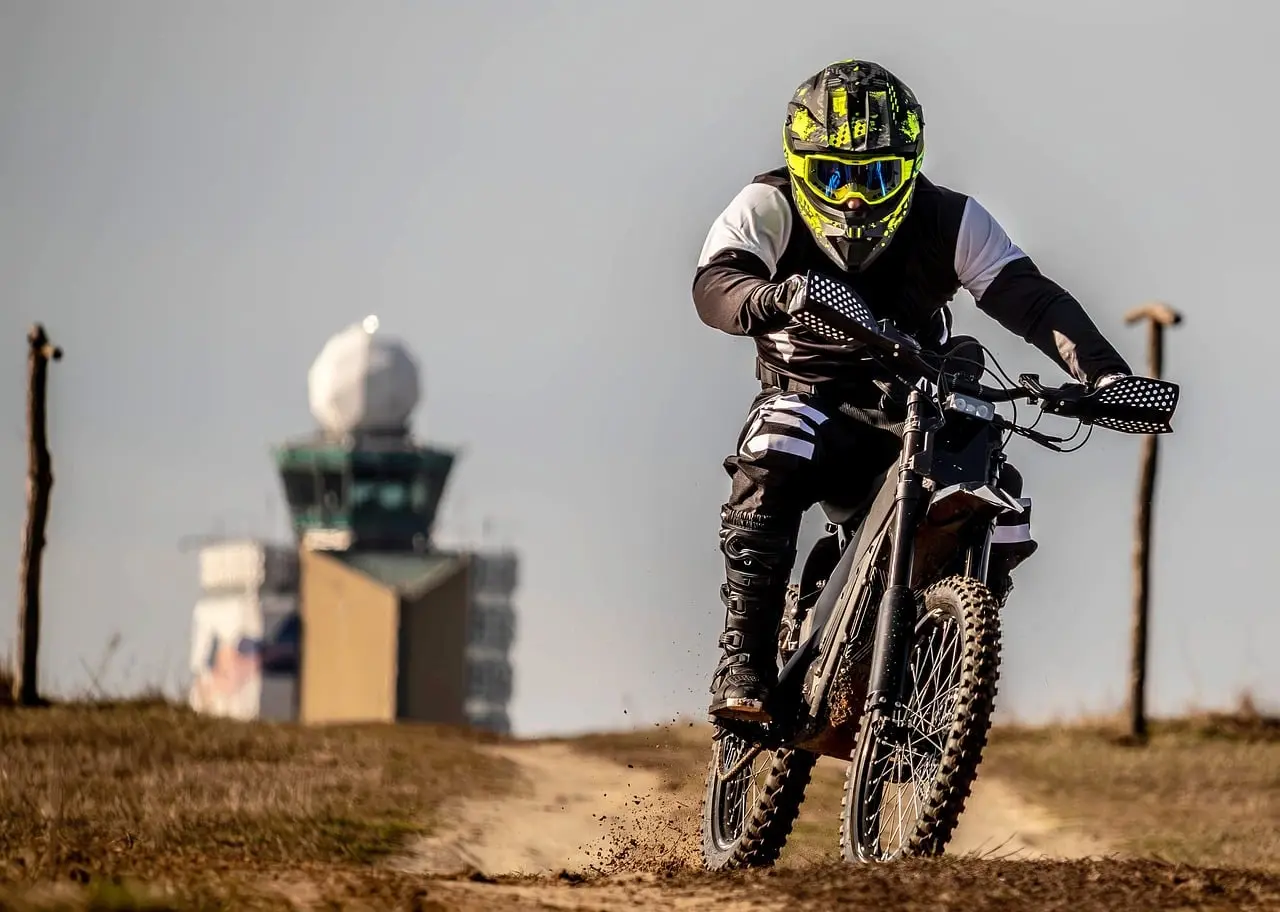
Sometimes, but do not assume it will. A motorcycle helmet can be legal for road use and still fail car-track tech because motorsport clubs often ask for Snell SA or another specific standard. Snell M is closer to track use than DOT alone, yet it still may not satisfy every organizer.
DOT versus Snell SA
DOT FMVSS No. 218 is the U.S. motorcycle standard used in the U.S. for motorcycle helmets. NHTSA says it does not approve helmets, and the system depends on self-certification. DOT-compliant helmets sold in the U.S. must have a label on the back, and that label must include FMVSS No. 218 and CERTIFIED. That is road compliance, not an automatic track pass.
Snell SA is motorsport-specific. It is the label many car track-day rules are written around because the helmet is meant for motorsport use, not only motorcycle riding. If your organizer asks for SA, a DOT-only helmet will usually fail inspection. Snell’s SA examples are the right reference point when a car club requires a motorsport helmet rather than a motorcycle helmet.
Snell M and why it may fall short
Snell M is motorcycle-focused. Some lower-risk track events may allow it, but that depends on the organizer and the event rules. It is not the same as Snell SA, and that difference matters when the helmet is checked at tech. Read the event’s helmet rule before you buy.
Where ECE 22.06 fits
ECE 22.06 is a current motorcycle helmet standard and is common in global motorcycle helmets. It can be a good road-use choice, but it is not automatically accepted for car track tech. A helmet can pass street law under ECE 22.06 and still be rejected if the track requires a motorsport certification.
Picture a rider buying an ECE 22.06 full-face helmet for weekend street use, then showing up to a car track day where the organizer requires Snell SA. The helmet may be well made and legal on the road, yet it still fails inspection because the label does not match the rule sheet.
Can you use an open-face helmet?
You can use an open-face helmet only when the motorcycle law and the event rules both allow it, and that is less common for track work. Open-face helmets offer less facial protection than full-face helmets, and many car-track organizers prefer or require full-face designs. Check the event rules before you assume an open-face lid will pass.
Open-face use on the street
Open-face helmets can be legal for motorcycle use depending on the certification and local law. NHTSA describes open-face helmets as lacking a chin guard, which is one reason they are more likely to be restricted at track events. Legal on the road does not mean accepted at tech.
Why full-face helmets are the safer default for track use
NHTSA lists full-face motorcycle helmets as having aerodynamic features. For mixed-use buyers, that makes full-face the practical default because it is more likely to satisfy motorsport expectations and offers chin protection. If you want one helmet for both bikes and track cars, full-face is the better starting point.
Suppose two riders both want one helmet for street and track use. One buys an open-face helmet because it is comfortable on short rides, then learns the local car club will not accept it. The other buys a full-face helmet with the required motorsport label and clears tech on the first try.
How do you verify the helmet label before you buy?
Verify the actual label, not the ad copy. A helmet is only useful for mixed use if the certification marking is real, legible, and matches both the model and the event rule. Check the back label for DOT details, check the inside or shell marking for motorsport certification, and compare both against the organizer’s list before you pay.
-
Check the event rule first.
Read the track-day helmet requirement before shopping. If the organizer wants Snell SA, a DOT-only or ECE-only helmet is the wrong starting point. -
Find the actual label.
On DOT helmets sold in the U.S., look for the back label. It should typically show the manufacturer or brand, model designation, DOT, FMVSS No. 218, and CERTIFIED. -
Match the helmet model.
The sticker or label should line up with the exact helmet model, not only the brand name. A seller photo that shows the wrong label or a missing model name is a warning sign. -
Reject vague claims.
Skip listings that only say “track legal,” “race style,” or “approved.” Novelty helmets do not meet safety standards, and missing certification marks are not proof of compliance. -
Ask for clear photos.
Request close-up pictures of the back label, the inside certification mark, the strap, and the shell. If the seller will not show them, do not assume the helmet will pass tech.
How to check a used helmet listing
- Check the sticker, shell, liner, and strap.
- If the listing hides the label, mentions a crash, or shows wear around the chin strap or shell edges, move on.
- If the seller’s photos do not show the actual certification mark, treat the helmet as unverified.
- If the helmet has a novelty claim or no visible compliance marking, do not buy it for road or track use.
A common mistake is choosing a discounted helmet from a garage sale because it appears to fit both riding styles without checking whether its certification matches your motorcycle and track-day requirements. If the back label is scuffed off, the shell has a crack, or the liner is loose, the helmet may fail both safety judgment and track inspection even before you consider fit.
How old and worn can a helmet be?
Age alone does not tell the whole story, but condition and event rules can change acceptance. A helmet that looks clean can still be rejected if the label is unreadable, the shell is damaged, the liner is broken down, or the organizer has a rule on helmet age. Impact history matters every time.
What to inspect on a used helmet
-
Inspect the shell.
Look for cracks, dents, deep scratches, and soft spots. Any impact damage can weaken the shell and make the helmet a poor choice for road or track use. -
Check the liner.
Press the inner foam and comfort liner for loose, crushed, or uneven areas. A helmet with a damaged inner structure should not be treated as a good used buy. -
Examine the strap.
Pull the chin strap and inspect the buckle hardware. Frayed webbing or a damaged latch can hurt both security and tech acceptance. -
Confirm the sticker.
Make sure the certification marking is present and readable. If the sticker is missing or altered, the helmet may fail a visual inspection even if the shell still looks fine.
Why impact history matters
Even a helmet that looks untouched can have hidden damage after a crash or a hard hit. Once the shell or liner is compromised, you cannot rely on the certification label alone. A valid sticker does not restore a damaged helmet to safe use.
When age or condition can affect acceptance
Some track organizers set their own age limits or require helmets to be in clean, undamaged condition. Others focus mainly on the label and visible condition. That means a helmet can be legal on the street, but still fail tech because it is too old for the event or worn enough to raise concerns.
Frequently asked questions
Can one helmet work for both motorcycle riding and car track days?
Yes, if the helmet meets the stricter rule set that covers both uses. In practice, that usually means a full-face helmet with a motorsport certification that your track organizer accepts, plus a motorcycle law that allows it on the road. If those rules do not overlap, one helmet will not do both jobs.
What certification should I buy if I ride a motorcycle and drive on track?
Start with the track rule, then check street legality. For many mixed-use buyers, a Snell SA full-face helmet is the most practical starting point because it is commonly requested for car track events. Then confirm that the same helmet also meets motorcycle law where you ride.
What is the difference between DOT, Snell M, Snell SA, and ECE?
DOT FMVSS No. 218 is the U.S. motorcycle standard and uses self-certification. Snell M is motorcycle-focused. Snell SA is motorsport-specific and often requested for car track events. ECE 22.06 is a current motorcycle standard that is common internationally, but it is not automatically accepted for track tech.
How do I tell if a helmet is actually certified?
Check the label, not the seller’s wording. DOT helmets sold in the U.S. must have a back label with manufacturer or brand, model designation, DOT, FMVSS No. 218, and CERTIFIED. For track use, also confirm the motorsport mark matches the helmet model and the organizer’s rules.
What should I check on the helmet sticker before buying used?
Make sure the sticker is present, readable, and tied to the right helmet model. Then inspect the shell, liner, and strap for damage or wear. If the helmet has crash history, a missing label, or any visible defects, it is a poor choice for mixed motorcycle and track use.