What Track Tech Inspectors Notice First
Inspectors often reject a car for clear safety faults such as loose wheels, fluid leaks, an unsecured battery, broken glass, brake or steering defects, or missing driver gear. Any single clear safety fault can be enough to stop tech immediately. Miss those items and you can waste time, pay a second fee, or lose your track session before you turn a lap. It lists the fast triage order inspectors use and the fixes that prevent an instant fail.
How inspectors triage a car at first glance
Track tech inspectors usually start with a fast visual triage: obvious exterior condition, then cockpit safety, then wheels and tires, then fluids, then restraint gear. That order is practical, not universal. Track, club, and sanctioning body rules differ, but the first look is almost always built around what can be seen in seconds and what can hurt someone right away.
The first pass is not a deep inspection. It is a rejection screen. If the car has an obvious safety problem, the inspector often stops there rather than moving on to detailed checks.
Why obvious safety problems get priority
Inspectors are trying to lower risk before the car enters the course. Consumer Reports frames safety around before, during, and after a crash, and that mindset fits tech inspection well: pre-crash issues get the fastest attention. Seat belts matter during a crash, while features such as automatic emergency braking and blind spot warning are pre-crash protections on road cars; track tech focuses on visible condition and physical retention instead of driver-assist tech.
That means a clean body panel matters less than a leaking brake line. A shiny car can still fail on sight.
What parts of the car do inspectors check before anything else?
Inspectors usually check the parts most likely to reveal an immediate hazard: wheels, tires, brakes, leaks, battery security, driver gear, and restraint hardware. They are looking for defects that can be confirmed without tools or disassembly. If something is visibly unsafe, it can stop the inspection before the next section starts.
Exterior red flags that trigger a fast fail
Loose bodywork, broken glass, sharp edges, missing fasteners, and damaged panels can all draw immediate attention if they can cut someone or shed debris. A dangling splitter, unsecured hood pin, or cracked windshield in the driver’s line of sight is the kind of issue that can end the inspection quickly.
Street cars often get looked at for a broader set of obvious trim and glass issues because the car is still close to road condition. Prepared cars may get a tighter look at exposed hardware, panels, and safety equipment because more of the original body has been removed or modified.
Which visible issues make a car fail tech immediately?
The fastest failures are visible, safety-related defects that do not need a test drive to confirm. Tires with cords showing, a brake fluid puddle, an unsecured battery, a missing helmet sticker, or a seat belt that is frayed or cut can each be enough for an immediate turn-away. The inspector does not need to guess whether those items will matter.
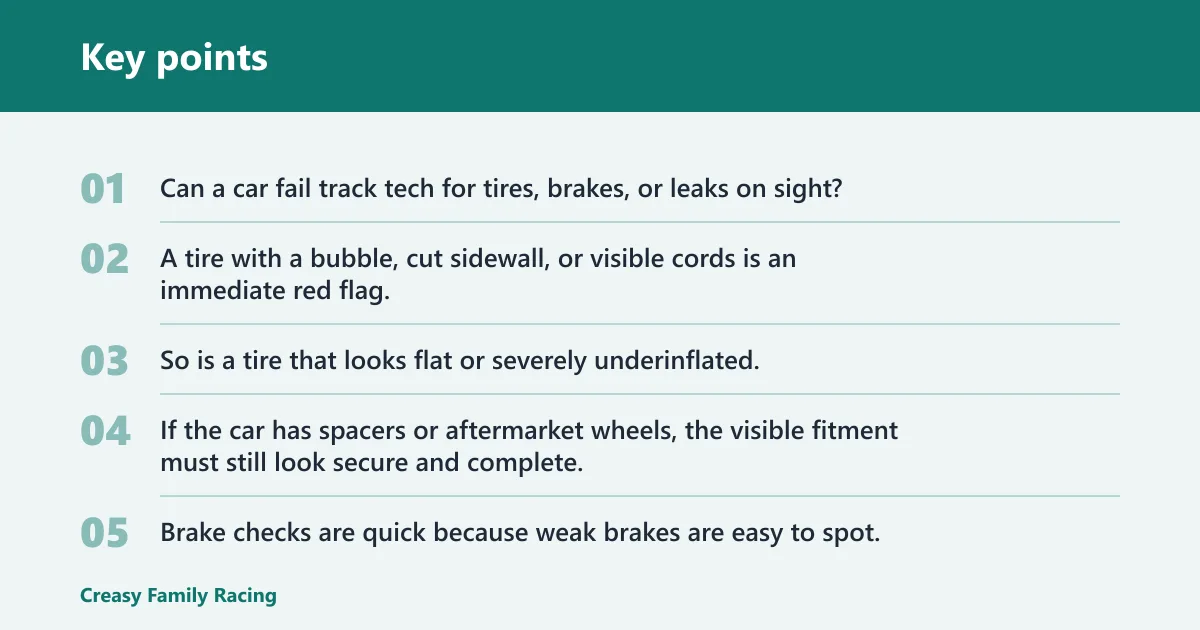
Can a car fail track tech for tires, brakes, or leaks on sight? Yes. Those are among the most common first-look fail categories because the problem is visible and the risk is direct.
Tires and wheels that fail on sight
Inspectors look for tread depth, sidewall damage, exposed cords, uneven wear, age concerns, and obvious inflation problems. A tire with a bubble, cut sidewall, or visible cords is an immediate red flag. So is a tire that looks flat or severely underinflated.
Wheel condition matters too. Cracks, missing lug nuts, loose lug nuts, bent rims, and hardware that does not look seated correctly can stop the car before it gets past the wheel check. If the car has spacers or aftermarket wheels, the visible fitment must still look secure and complete.
Brakes and leaks inspectors spot immediately
Brake checks are quick because weak brakes are easy to spot. Thin pads, cracked rotors, leaking calipers or lines, low fluid level, and a pedal that looks wrong if the driver mentions it can all send the car back out of line. A brake problem does not need to be dramatic to be disqualifying.
Fluid leaks are even more obvious when there is a wet spot under the car. Oil, coolant, brake fluid, and power steering fluid are all inspection concerns, and active drips or residue on hot parts are taken seriously. A leak on the header, exhaust, or brake hardware can turn into a fire, smoke, or loss of control.
Say your car leaves a small puddle of brake fluid on the grid after moving from the trailer. That is not a “watch it” issue for most inspectors. It is a stop-and-fix item because the source may be a line, caliper, or master cylinder failure that can worsen under pressure.
What track tech inspectors look at first when they want to reject a car quickly
Inspectors usually reject a car first on items that are visible from the outside or obvious in the cockpit. The fastest turn-away items are loose wheels, active leaks, damaged tires, missing helmet approval, and unsecured or poorly mounted safety hardware. If the car fails those checks, deeper inspection often never happens.
| Visible issue | What the inspector sees | Why it matters | Immediate turn-away? | Fastest field fix |
|---|---|---|---|---|
| Exposed tire cords | Fabric or steel showing through the tread | Tire failure risk and loss of grip | Yes | Replace the tire |
| Sidewall cut or bubble | Visible damage on the tire sidewall | Sidewall failure can happen under load | Yes | Replace the tire |
| Obvious low tire pressure | One tire looks soft or collapsed | Heat, handling, and bead retention problems | Often yes | Inflate to the correct pressure and recheck |
| Loose wheel hardware | Missing or visibly loose lug nuts | Wheel retention risk | Yes | Torque and verify all lugs |
| Brake fluid leak | Wet line, caliper, or master cylinder | Loss of braking ability | Yes | Repair the leak and bleed the system |
| Low brake fluid level | Reservoir below the safe mark | Possible air in the system or worn pads | Often yes | Find the cause, top off only if allowed |
| Cracked rotor | Visible crack in the friction surface | Rotor failure and braking loss risk | Yes | Replace the rotor |
| Oil or coolant drip | Wet spot under the car or on hot parts | Fire, smoke, or track contamination | Yes | Repair the leak before reinspection |
| Unsecured battery | Battery can move or rock by hand | Short circuit and impact hazard | Yes | Secure the battery with proper hold-downs |
| Uncovered positive terminal | Exposed positive post or clamp | Short risk from tools or metal contact | Yes | Install a terminal cover |
| Missing helmet approval | No current certification sticker or wrong standard | Driver gear may not meet event rules | Yes | Use an approved helmet that matches the event |
| Frayed belt or bad restraint routing | Worn webbing or straps routed incorrectly | Restraint may fail in a crash | Yes | Correct routing or replace the restraint |
Does the car setup change what they check first?
Yes. Street cars usually get a broad visual safety screen, while prepared cars can trigger a closer look at hardware that was added for track use. Roll bars, cages, restraints, and kill switches become more important when the car has been modified away from stock. The inspector still starts with what is obvious and unsafe.
Street cars versus prepared cars
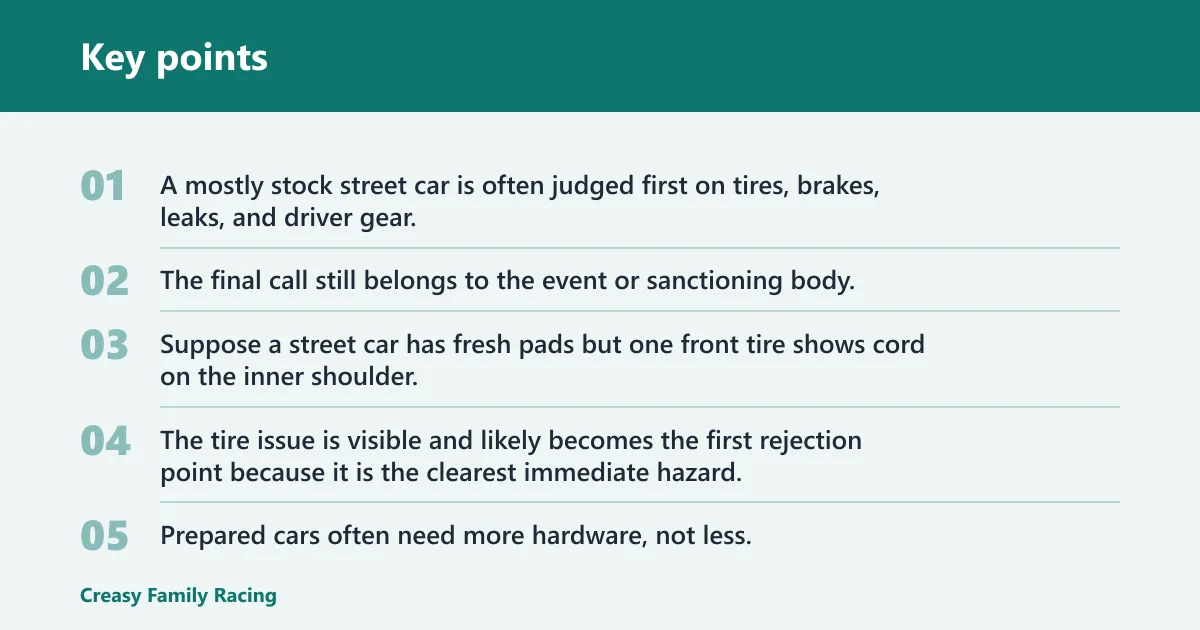
A mostly stock street car is often judged first on tires, brakes, leaks, and driver gear. A prepared car may add checks for seat mounting, restraint routing, battery shutoff, and cage compatibility because those items change the safety equation. The final call still belongs to the event or sanctioning body.
Suppose a street car has fresh pads but one front tire shows cord on the inner shoulder. The pad thickness does not rescue the car. The tire issue is visible and likely becomes the first rejection point because it is the clearest immediate hazard.
Roll bars, cages, and kill switches
Prepared cars often need more hardware, not less. Inspectors may check that the seat, restraints, and roll structure work together, not against each other. If the car has a rear kill switch or external shutoff, it must be accessible and correctly labeled where the rule set requires it.
Battery mounting and electrical shutoff matter here too. Loose wiring, a battery that can shift, or an uncovered positive terminal is a fast fail because track vibration and impact can make a small fault much worse.
What should you fix first before tech?
Fix the items that can get you turned away before the deeper checklist starts: leaks, tire damage, loose battery mounting, wheel retention, and missing driver gear. If time is short, address anything that is visible from outside the car or from the driver’s seat without tools. A quick cosmetic cleanup will not save a car with a real safety fault.
-
Stop every leak.
Look under the car, around the engine bay, and at the brake hardware for wet spots, drips, or residue. Oil, coolant, brake fluid, and power steering fluid all matter, and anything active on hot parts or near the brakes should be fixed before arrival.
-
Inspect tires closely.
Check tread, sidewalls, pressure, and visible wear on all four corners. Replace any tire with cords, cuts, bubbles, or severe wear, because those are among the fastest fail items in the whole inspection.
-
Verify wheel retention.
Confirm every lug nut is present and properly torqued. Look for cracks in the wheel, damaged studs, or anything that suggests the wheel could move under load.
-
Check brake condition.
Inspect pad thickness, rotor surface, calipers, lines, and fluid level. If the pedal feels spongy or the reservoir is low, correct the problem before the car reaches tech.
-
Secure the battery.
Make sure the battery cannot shift by hand and that the positive terminal is covered. Loose mounting and exposed terminals are both common turn-away issues, especially on prepared cars.
-
Confirm driver gear.
Check the helmet sticker, shell condition, and straps, then verify any event-specific approval standard. Inspect seat belts or restraints for fraying, routing mistakes, and mounting issues before you roll into line.
Problems that usually need a repair bay
Some issues are not quick field fixes. A cracked rotor, leaking brake line, exposed cords, torn restraint webbing, or a battery that will not stay secure usually needs real repair or replacement. A last-minute tape patch is not a substitute for a proper fix if the inspector can see the defect.
Frequently asked questions
What do track tech inspectors look at first when they want to reject a car?
They usually look for obvious safety faults first: leaks, tire damage, loose wheels, unsecured batteries, and missing driver gear. Those items are visible in seconds and can stop the inspection before deeper checks start. The first pass is a safety screen, not a full mechanical audit.
Can a car fail track tech for tires, brakes, or leaks on sight?
Yes. Tires with cords, cuts, or bulges can fail immediately. Brake pads that are too thin, cracked rotors, and leaking lines or calipers can also stop the car. Active oil, coolant, brake fluid, or power steering leaks are common on-sight failures.
What is the fastest way to get turned away at track tech?
Show up with a visible safety problem that no one can ignore: a flat or damaged tire, a fluid puddle, a loose battery, missing helmet approval, or a belt problem. Those are the fastest rejection points because they are simple to verify and directly tied to safety.
What should I fix first if I want to avoid a quick tech rejection?
Fix leaks first, then tires, wheel hardware, brake condition, battery security, and driver gear. That order matches the way inspectors triage the car. If time is short, prioritize anything visible from outside the car or from the cockpit without tools.