How Much Is a Track Day with a Street Car?
A first beginner HPDE in a street car usually costs about $300 to $1,000 all in, and a common first-day budget is around $600 to $800 if the car is already street-ready. Skip the real costs, and you can run short on entry fees, fluids, pads, or recovery if something breaks. This guide breaks the total into unavoidable, optional, and risk-managed spending so you can budget the day before you sign up.
What a street-car track day really costs
Entry fee is one line item, not the whole bill. For a beginner HPDE, the total usually includes registration, helmet or rental, fuel, brake wear, tire wear, food, and sometimes lodging or insurance. Those costs shift with the track, the region, and how hard the car works.
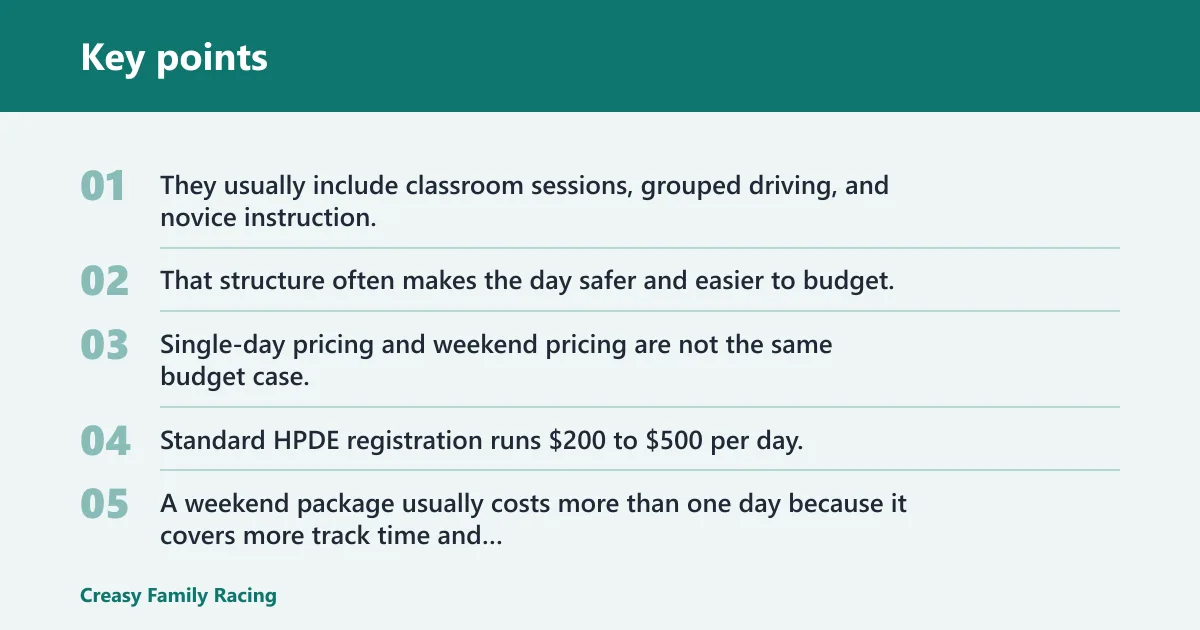
HPDE events are beginner-oriented by design. They usually include classroom sessions, grouped driving, and novice instruction, which is why many first-timers choose them over open lapping days. That structure often makes the day safer and easier to budget, but it does not make the rest of the costs disappear.
How single-day and weekend pricing differ
Single-day pricing and weekend pricing are not the same budget case. Standard HPDE registration runs $200 to $500 per day, while open lapping days can cost about $150 to $350. A weekend package usually costs more than one day because it covers more track time and more operating hours.
The event format matters. Beginner and intermediate run groups usually fall in the $200 to $500 range, and many organizations charge upfront. A weekend entry can look efficient on paper, but the total still grows once you add a second day of fuel, wear, food, and possibly lodging.
What changes the total most
The biggest swing factors are the car, the track, and the region. A heavier street car usually uses more brakes and tires. A higher-horsepower car can also burn fuel faster and heat consumables sooner. Some tracks charge more, and some clubs add membership or non-member fees on top.
Suppose a 3,600-pound sedan runs a novice group at a fast circuit. The entry fee may still sit in the normal range, but brake wear and fuel use will climb faster than they would in a lighter economy car. The budget changes even when the driver does everything else the same.
Track day street-car budget calculator
This calculator shows three first-day scenarios for a street car. The totals separate one-time costs from recurring costs so you can tell what belongs in the first event budget and what may repeat every time you go back.
| Scenario | Registration | Membership | Helmet/rental | Tech inspection | Fuel | Brake wear | Tire wear | Food | Lodging | Insurance | Total range | One-time vs recurring |
|---|---|---|---|---|---|---|---|---|---|---|---|---|
| Bare-minimum local day | $200-$300 | $0 | $50 rental | $0-$60 | $50-$100 | $75-$150 | $0-$75 | $20-$40 | $0 | $0 | $395-$775 | Helmet rental and inspection may repeat; registration, fuel, wear, and food repeat each event |
| Realistic novice day | $300-$500 | $58 | $250+ purchase | $60-$300 | $75-$125 | $100-$200 | $50-$150 | $30-$60 | $0-$150 | $150-$500 | $1,023-$1,943 | Helmet purchase and membership are one-time or annual; the rest are event costs |
| Fully protected day | $500 | $58 | $250+ purchase | $300 | $100-$150 | $150-$250 | $100-$250 | $40-$80 | $100-$250 | $500 | $1,948-$2,288 | Some costs are annual or one-time; insurance, wear, food, and travel recur |
The middle scenario is often the most useful for planning. It assumes a street-ready car, a purchased helmet, some venue-specific paperwork, normal consumables, and optional protection. That is a more honest first-day number than a registration fee alone.
What does registration usually cost?
Registration for a standard HPDE usually runs $200 to $500 per day. That is the event entry fee, not the full budget. Some clubs also charge annual membership fees, and some events ask non-members to pay more.
Typical HPDE price range
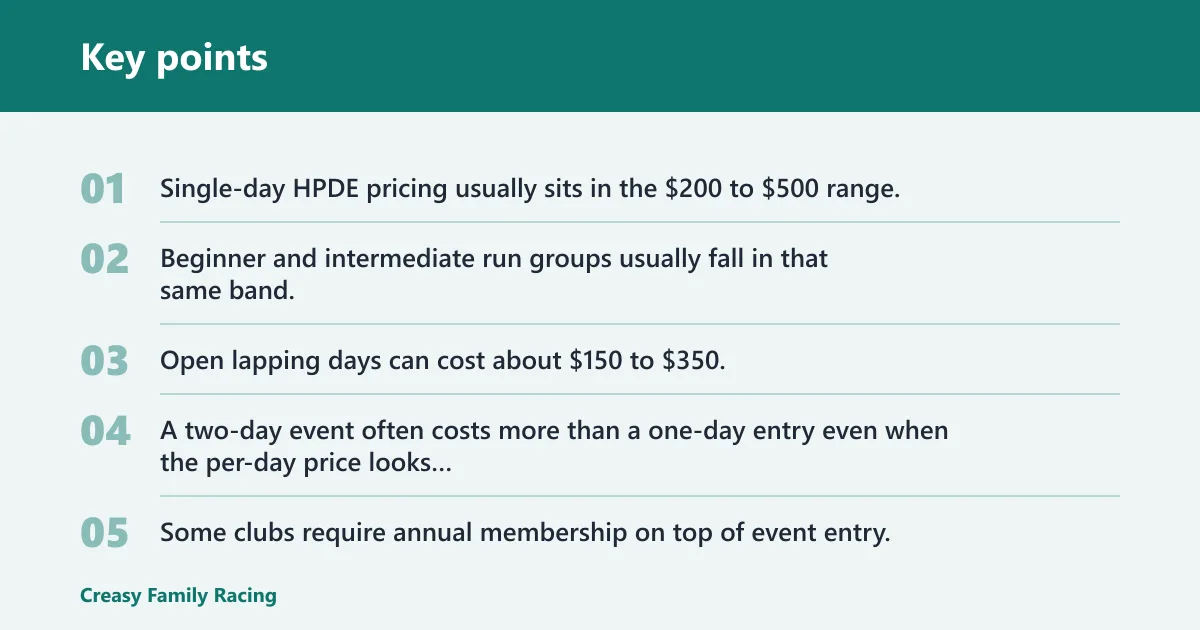
Single-day HPDE pricing usually sits in the $200 to $500 range. Beginner and intermediate run groups usually fall in that same band. Open lapping days can cost about $150 to $350, but those events may offer less instruction and a different level of structure.
Weekend pricing is different. A two-day event often costs more than a one-day entry even when the per-day price looks similar, because the total track time, staffing, and facility use go up.
When membership fees are added
Some clubs require annual membership on top of event entry. BMW CCA membership was listed at $58 per year. That kind of fee is not a track charge itself, but it belongs in the first-year budget if the event requires it.
Membership is a recurring cost, while registration is event-based. If you plan to attend only one day, the membership may matter less. If you expect to return, it becomes part of the real annual cost.
Why weekends cost more than one day
Weekend events usually mean more of everything: more track time, more fuel, more wear, and often one more night away from home. The registration fee may not double, but the total usually rises clearly once lodging and consumables are counted.
That is why a Saturday-only plan can land near the lower end of the budget while a full weekend pushes the total much higher.
What should you budget for wear and fuel?
Consumables are a major part of a first street-car track day. A realistic novice budget is about $300 per day for fuel, brake wear, tire wear, and fluids. Heavier cars and faster laps drive that number up fast, especially if the car already needs pads or fresh fluid.
Fuel use on track
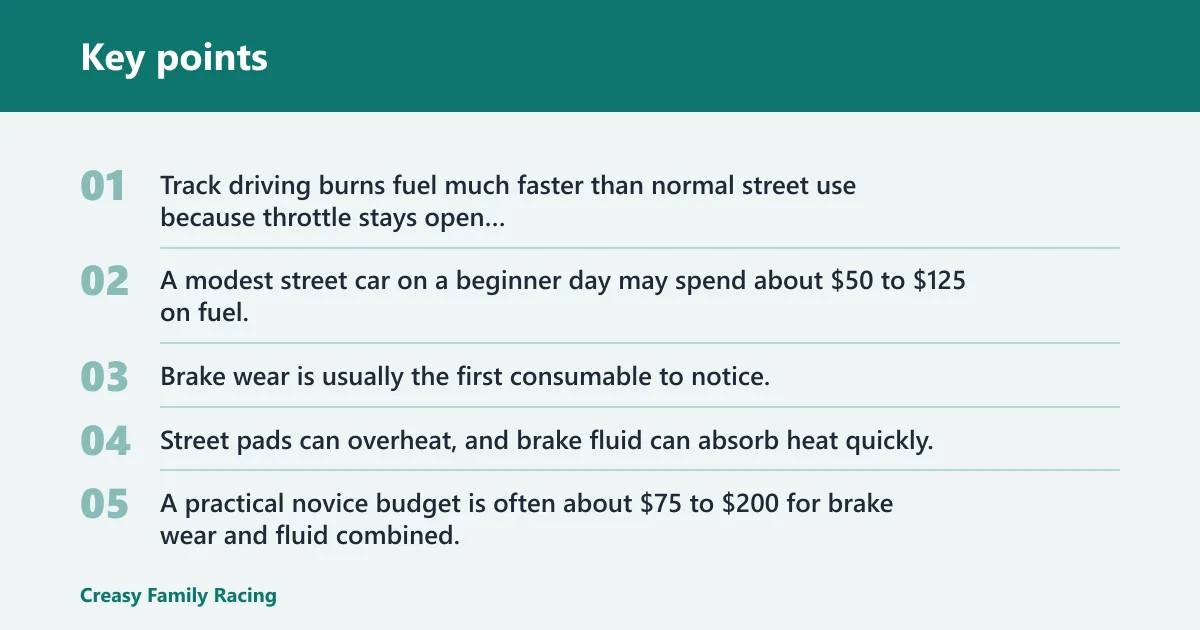
Track driving burns fuel much faster than normal street use because throttle stays open longer and speeds stay higher. A modest street car on a beginner day may spend about $50 to $125 on fuel, while a heavier or more powerful car can use more. Track length and session count matter too.
Brake pad and fluid wear
Brake wear is usually the first consumable to notice. Street pads can overheat, and brake fluid can absorb heat quickly. A practical novice budget is often about $75 to $200 for brake wear and fluid combined, with more if the car needs fresh high-temperature fluid or new pads before the event.
Tire wear and heat cycles
Tires lose tread and heat cycles on track. Even if the tread looks fine, repeated hot laps can shorten life. A conservative first-day allowance is about $50 to $150 for tire wear, but that number can climb if the car is heavy, aligned aggressively, or driven at a brisk pace.
A common first-timer mistake is treating tires as free because they are already on the car. A set of street tires can lose useful life faster than expected when the car runs repeated sessions with high cornering loads and hot brakes nearby.
Why heavier or faster street cars cost more
More mass means more energy for the brakes to absorb. More power usually means more fuel burned. Both can push consumable spending well above a light, low-power car. The same event can feel inexpensive in a small sedan and expensive in a heavy performance coupe.
Do you need helmet rental or insurance?
Many events require a motorsports-rated helmet, and some drivers choose insurance as a separate line item. A solid track helmet starts around $250, while rentals are around $50 per day at some events. Track day insurance can cost $150 to $500 per event and is optional or sometimes required depending on the organizer.
Helmet purchase versus rental
A purchased helmet is usually a one-time cost, while rental is a per-day expense. Most events reference a motorsports rating such as Snell SA or similar. If you expect to return, buying a helmet often makes more sense after a couple of events than paying rental fees each time.
For a one-off day, rental can keep the first bill lower. For repeat use, purchase is usually the better long-term choice.
When track day insurance makes sense
Track day insurance is worth considering when the car is expensive to repair, the deductible would be painful, or the event requires coverage. It protects against physical damage to the car, which is why many first-timers see it as risk-managed spending rather than a luxury.
It is easiest to justify when the event fee is small compared with the car’s repair exposure. A $300 event can still become an expensive day if the vehicle needs bodywork, wheels, suspension parts, or cooling-system repairs afterward.
Why street insurance usually is not enough
Regular auto insurance usually does not cover track use. That means a normal street policy may deny damage that happens on course. If the organizer recommends or requires track insurance, treat that as a separate decision from your street policy.
What extra fees can surprise first-timers?
Garage rentals, second-driver fees, RV parking, campsite fees, and paddock charges can add $0 to $250+ to the bill. Food and lodging also matter. These costs are easy to miss because they sit outside the track entry form, but they affect the real total.
Garage, paddock, and RV fees
Some tracks rent garages by the day, and some charge for RV parking or a campsite. A garage can be worth the cost in bad weather or if the car needs a covered space, but it is optional at many beginner events. Paddock fees are less common, but they do appear at some venues.
Second-driver charges
If two people share one car, some events charge a second-driver fee. That fee is separate from registration and can matter if a friend or spouse plans to drive the same car. It is another small line item that first-time budgets often miss.
Food, lodging, and travel
Food is usually modest for a local day, but hotel or fuel for the tow vehicle can change the budget quickly. A nearby track might mean a simple meal plan, while an overnight event can add a hotel and dinner, plus the cost of getting there and back.
Can you do a track day in a daily driver?
Yes, many beginner HPDE events are street-car friendly, and a daily driver can often attend without major prep. The key is to meet the event’s tech inspection and safety rules. A normal street car is often enough if the basics are sound and the consumables are in good shape.
Basic prep before registration
Check brake pad thickness, tire condition, fluid levels, wheel lug torque, and visible leaks. Confirm that the car has no loose suspension parts or warning lights that could affect safety. This is not a full rebuild; it is a pre-event check so the car meets the organizer’s rules.
Tech inspection items to check
Some events require a shop tech inspection at $60 to $300. Others allow owner self-checks or simple forms. Either way, the car should be inspected before you arrive so you do not lose the entry fee to a preventable safety issue.
- Confirm brake pads and rotors are serviceable.
- Check tire tread, sidewalls, and pressures.
- Inspect for fluid leaks and low fluid levels.
- Make sure the battery is secure.
- Review the event’s helmet, belt, and safety rules.
When repairs should be budgeted before the event
Budget for repairs when the car already needs pads, tires, fluid, wheel bearings, or other safety items. Typical pre-event safety repairs can run about $300 to $750, and track use can accelerate wear on suspension and braking parts. That number belongs in the first-day plan if the car is not ready yet.
Say your street car needs front pads and fresh brake fluid before the event. That is not a surprise expense; it is part of making the day happen safely, and it should be counted before registration goes through.
Frequently asked questions
How much does a track day cost?
A typical track day overall cost can range from $300 to $3,000, depending on the car, the event, the track, and the amount of protection you buy. For a first beginner HPDE in a street car, a realistic total often lands closer to $500 to $900, with the middle case near $600 to $800.
What is the total cost of a track day with a street car?
The total cost of a track day with a street car is usually more than the registration fee by a wide margin. Add fuel, brake wear, tire wear, helmet costs, food, and possibly insurance or lodging. A fully loaded day can push the budget to $1,500 or more.
What expenses should I budget beyond the entry fee?
Beyond registration, budget for fuel, brake wear, tire wear, fluids, a helmet or rental, food, and possible lodging. If the event requires it, include membership fees and tech inspection costs too. Those items are the difference between the entry fee and the real first-day total.
Do I need track day insurance for my street car?
No, not every driver needs it, but many should consider it. Track day insurance can cost $150 to $500 per event and is useful when repair exposure is high. Regular auto insurance usually does not cover track use, so do not assume your street policy protects the car.
How much do helmet rentals and safety gear cost?
A solid track helmet starts around $250, while rentals are around $50 per day at some events. If you plan to attend more than once, buying usually makes more sense over time. Check the event’s helmet rating rule before you register so you do not rent the wrong gear.
How much fuel and brake wear should I expect on track?
A novice street car often needs about $300 total for consumables, with fuel and brake wear taking most of it. A reasonable split is $50 to $125 for fuel and $75 to $200 for brake wear and fluid, with tire wear and miscellaneous fluids filling out the rest.
How much is CarTrack per month?
CarTrack pricing is separate from track day registration, and monthly cost depends on the provider and plan. There is no standard track-day answer for it. If you mean a club, subscription, or vehicle service, check that company’s current plan details before adding it to your motorsports budget.