Brake Rotors for Track Days: What to Buy and Why
For track days, plain or lightly slotted, high-mass vented rotors from a reputable OE-grade or motorsport line are a common choice, and they are typically replaced before they reach minimum thickness; 2-piece rotors can make sense when heat load, weight, and replacement cost justify them. Get this wrong and you invite pad knockback, cracking, fade, and short rotor life. This guide covers rotor types, thickness reserve, front/rear choices, and the hardware that matters.
The key decision is not the face pattern by itself. Rotor mass, remaining thickness above discard spec, vane cooling, session length, car weight, power, tire grip, and pad abrasiveness do more to determine rotor life than the blank-versus-slotted debate alone.
What makes a rotor track-worthy?
A track-worthy rotor has enough mass, thickness reserve, and vane airflow to absorb repeated stops without reaching its discard limit or cracking too soon. For most street/track cars, the front axle sets the requirement because it handles most of the braking work and heat during repeated sessions.
Heat capacity starts with mass and thickness
Track use is hard on thin rotors because each millimeter of iron lost to wear cuts heat reserve. A rotor near minimum thickness heats faster, sheds heat less evenly, and leaves less margin before heat checking turns into cracking.
That matters more than face style. A blank rotor with solid thickness reserve will usually outlast a thin slotted rotor on the same car, with the same pad, on the same event schedule.
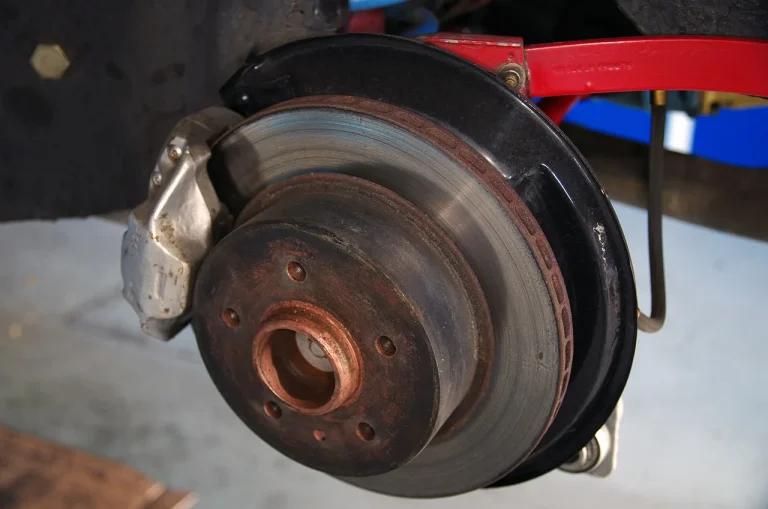
Use three numbers, not one: new thickness, measured current thickness, and minimum or discard thickness cast into the rotor hat or listed by the vehicle maker. The useful reserve is the measured thickness minus the discard thickness. As that gap shrinks, the rotor has less iron to store heat and less safety margin under repeated hard stops.
Repeated sessions change the buying math
One novice session with cooldown laps does not load parts like four or five 20-minute sessions on a hot day. Repeated heat cycles make thicker rings, better vane design, higher-grade iron, and fresh fluid worth more than a cosmetic face pattern.
Vehicle mass and power change the picture fast. A light car on 200-treadwear tires may do well on quality one-piece blanks. A heavy, high-power car with sticky tires and aggressive pads can burn through front rotors quickly even with a plain rotor face.
Suppose a 3,900-pound sedan with strong straight-line speed runs repeated 20-minute sessions on sticky tires and a high-friction track pad. The braking energy is high, and the pad compound itself is abrasive. In that case, thickness reserve and cooling matter more than whether the rotor has slots.
Why front axle demand usually decides the setup
Most track-day cars work the front brakes much harder than the rears. Weight transfer under braking raises front tire load, front brake torque demand, and front rotor temperature, so front rotor quality and cooling should get the first dollars.
That does not make the rear axle irrelevant. Rear rotors still need correct thickness, good pad contact, and stable wear. But if the budget forces a choice, the front axle is usually where a higher-mass rotor, better vanes, and brake cooling pay back first.
Should you buy blank, slotted, or drilled rotors?
For many track-day cars, blank rotors are the default buy, lightly slotted rotors can help in certain pad and deposit situations, and drilled rotors are often considered the least desirable for repeated hard use. The reason is simple: each hole or slot changes how the rotor handles cracking, pad wear, noise, and heat.
Blank rotors: strongest value for most track-day cars
A quality blank rotor keeps the most uninterrupted iron in the friction ring. That usually means better crack resistance, lower pad wear, less noise, and the best cost-per-event for a street/track car.
Blank does not mean basic if the casting, venting, and thickness are right. Many OE-performance and motorsport one-piece rotors are plain-faced because thermal mass and durability matter more than appearance.
Slotted rotors: when pad refresh helps and when wear rises
Slots can scrape old transfer film and keep the pad face fresh, which can improve consistency with some track compounds that leave uneven deposits. They can also improve initial wet bite on the street, though that is a side benefit for track use.
The tradeoff is faster pad wear, more noise, and slightly less ring mass than an otherwise identical blank rotor. On cars that already wear front pads quickly, slots often add cost without adding much fade margin.
Say your car develops mild shudder after a hot weekend, but thickness measures safely above minimum and there are no structural cracks. Uneven pad deposits may be the issue. A lightly slotted rotor paired with a compatible pad can cut repeat deposit buildup better than switching to drilled rotors.
Drilled rotors: where they fit and why crack risk goes up
Cross-drilled rotors can work on some lighter street-focused cars, especially when they are OE-designed for that application. For repeated track sessions, especially on heavy or fast cars, drilled holes create stress risers that make cracks between holes or from holes to the edge more likely.
That risk rises as rotor thickness reserve falls, pad friction rises, and session length increases. Noise and pad wear also tend to increase. Drilled rotors are rarely the smart first choice when reliable track braking is the goal.
Do rotor material and construction matter?
Yes. Standard cast iron works for many track-day cars, high-carbon iron can improve thermal stability and noise behavior, and 2-piece construction earns its keep when heat load, unsprung-mass savings, and ring replacement cost outweigh the higher purchase price. Material matters, but it cannot fix poor cooling or a rotor that is already too thin.
Standard cast iron versus high-carbon iron
Standard cast iron remains the baseline because it is affordable, predictable, and widely available in correct OE-style dimensions. For moderate track use, a good casting with proper vane design often matters more than the label on the box.
High-carbon iron can offer better thermal stability and damping. In practice, that may mean less tendency to judder from uneven deposits, somewhat better crack resistance under cycling, and less ringing noise. It helps, but it is not magic. If the car is too heavy, the sessions too long, or the cooling too poor, high-carbon iron will still run out of margin.
One-piece rotors for moderate heat and tighter budgets
One-piece rotors suit most beginner and intermediate track-day cars. They are simpler, cheaper to replace, and often available in OE-performance shapes with good internal venting.
For a dual-duty street/track car on a sane tire and pad package, a one-piece high-mass blank or lightly slotted rotor is often the best buy. The money saved can go to fluid, front cooling ducts, and spare pads, all of which can change reliability more than face pattern alone.
Two-piece rotors for higher heat load and serviceable rings
Two-piece rotors separate the iron ring from an aluminum hat. That can cut unsprung mass and reduce heat transfer into the hub and bearings. On some systems, the ring can be replaced separately, which matters when front rotors are frequent consumables.
The benefit grows when the car is heavy, powerful, sticky-tired, or run in long sessions. The downside is cost, plus the need to verify hardware condition, ring dimensions, and replacement ring availability. They are worth considering when a car repeatedly overwhelms quality one-piece rotors of the same size.
How do you choose rotor size and thickness?
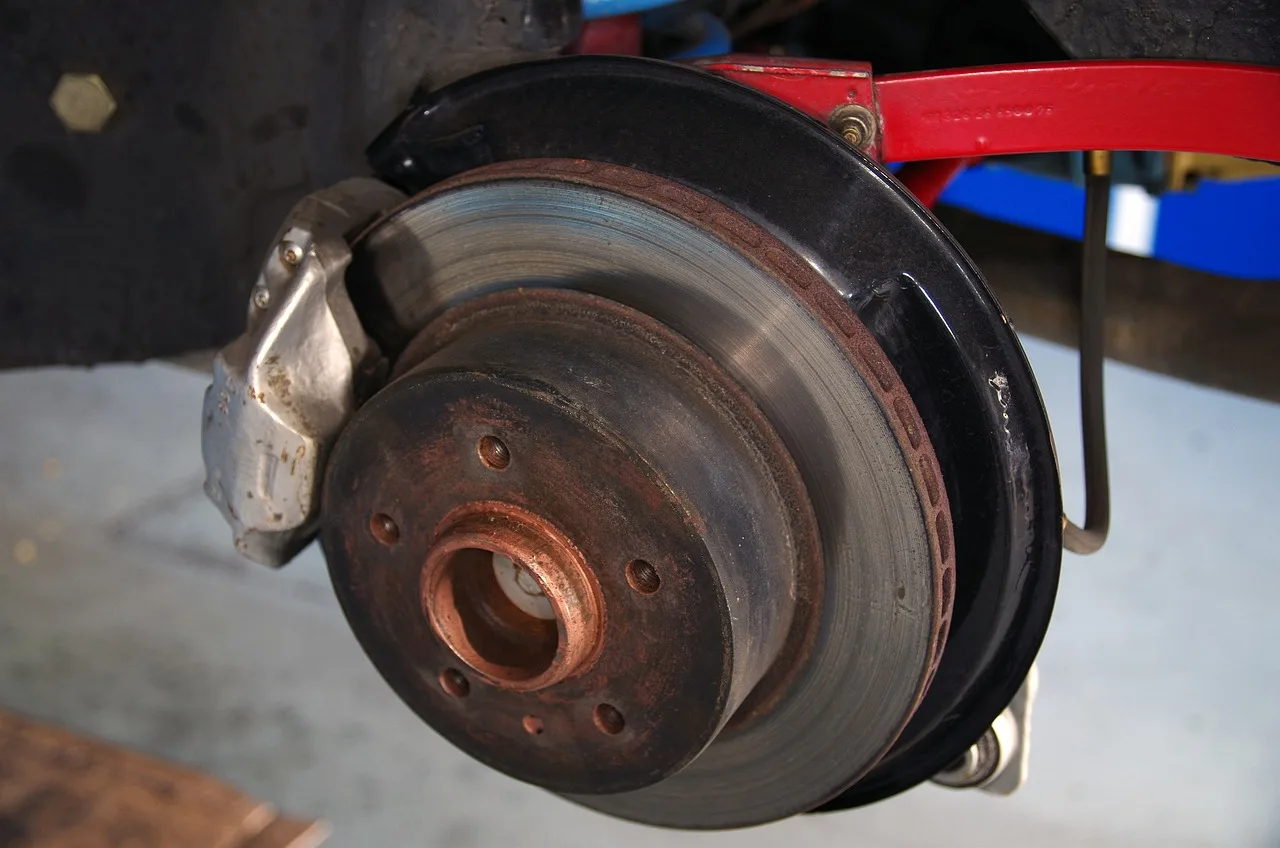
Choose rotor size and thickness by fitment first, then by heat load. Diameter affects brake torque and wheel clearance, while thickness sets heat reserve and crack margin. If an upsized factory-compatible package fits the wheels and preserves balance, it can help; if not, a thicker, better-vented stock-size rotor is often the smarter move.
Diameter, brake torque, and wheel clearance
A larger rotor gives the caliper more leverage, which can reduce required clamp force for the same brake torque. It can also spread heat over a larger ring. But diameter gains matter only if the caliper, pad shape, wheel clearance, and brake bias remain appropriate.
Wheel clearance is the hard stop. Barrel shape and spoke design matter as much as wheel diameter. A rotor that technically fits an 18-inch wheel may still contact the barrel or spokes with a different caliper bracket.
Thickness reserve, discard spec, and heat margin
Thickness is the track-day decision point many buyers miss. Two rotors with the same diameter can behave very differently if one starts thicker or keeps more measured material above discard thickness.
Most manufacturers list a minimum thickness on the rotor or in service information. Replace the rotor before it reaches that number, not after. For track use, many drivers stop earlier than the stamped minimum so the weekend starts with real heat reserve instead of the bare legal limit.
Picture a front rotor that was new at 30 mm and has a 28 mm minimum, which leaves only about 0.4 mm at 28.4 mm. At 28.4 mm, it is still technically above discard, but only about 0.4 mm from the limit. For a calm street month, that may pass inspection. For a hot track weekend, it leaves very little heat margin.
Factory-size replacements versus upsized packages
Factory-size rotors remain the sensible answer for most dual-duty cars because they keep ABS tuning, parking brake function, wheel fitment, and parts availability straightforward. An OE-performance replacement with stronger vanes or better iron can be enough.
Upsized packages make sense when the stock front brakes repeatedly overheat despite correct pads, fluid, and cooling. On those cars, added diameter and thickness can improve fade resistance and consumable life. The package needs matched caliper hardware and verified wheel clearance, not just a larger disc.
Why vane design and cooling matter more than style
Internal vanes, airflow path, and rotor orientation
Internal venting controls how air moves from the rotor center outward. That airflow carries heat away between braking zones, so vane design can change repeated-session performance more than a face pattern.
Directional vanes are designed to move air in one direction and must be installed on the correct side. Left and right rotors are not interchangeable on a directional design. If they are swapped, airflow drops and cooling performance goes with it.
Directional vanes versus straight vanes
Straight vanes are cheaper and can work well on moderate-duty cars. Directional vanes usually cool better when designed properly because they move more air through the ring at speed.
The catch is availability. Many low-cost aftermarket rotors use straight vanes, even when the OE or performance version used directional vanes. For a car that sees repeated 20-minute sessions, that difference is worth checking before you buy.
Cooling ducts and front axle priorities
Brake ducts do not change rotor thickness, but they lower rotor and pad temperatures by feeding air to the rotor hat or inner face. That can improve pad life, fluid stability, and rotor crack resistance, especially at the front axle.
Cooling is often the best next step after quality front rotors, track-capable pads, and fresh fluid. If the fronts are overheating, spending on rear rotor style first rarely fixes the problem.
How should pads and fluid change your rotor choice?
Aggressive pads and marginal fluid raise rotor demands right away. Higher-friction, more abrasive compounds can increase ring wear and crack risk, while fluid with insufficient boiling margin causes a long pedal even when the rotor itself is still intact. Rotor choice should match pad bite, session length, and cooling, especially at the front.
Aggressive track pads and rotor wear rate
Track pads are built to work hot, and many do that by using compounds that are harder on rotors than street pads. More bite can mean more ring wear, more heat checking, and faster growth of small surface cracks.
That does not mean the pad is wrong. It means the rotor must have enough mass and reserve thickness to live with it. A mild novice pad may be fine on a budget one-piece blank; a high-torque endurance-style compound may justify better iron or a serviceable 2-piece front rotor.
Transfer layer behavior and uneven deposits
Many brake shudder complaints blamed on warped rotors are actually uneven pad deposits. The pad leaves transfer film on the rotor face; if that layer becomes patchy, the rotor can feel rough or pulse under braking even when measured thickness variation is small.
Pad and rotor pairing matters here. Some compounds like a smooth blank face and a stable bedding cycle. Others can benefit from light slotting that keeps the face cleaner. Mixing a very aggressive pad with a low-grade rotor often creates more noise, dust, and deposit problems.
Fluid boiling point and pedal consistency under repeated heat
Rotors do not work alone. If the fluid boils, the pedal goes long and confidence disappears even if the rotor still has life left. Most track-day cars need fresh high-temperature fluid before events because repeated braking loads the calipers and fluid quickly.
Choose wet and dry boiling point with actual track duty in mind. Fresh fluid and a good bleed are part of the rotor decision because the whole system must survive the same heat cycle.
Rotor choice decision table
| Track severity | Vehicle weight and power | Pad aggressiveness | Budget | Recommended rotor type | Replacement threshold | Expected tradeoffs |
|---|---|---|---|---|---|---|
| Beginner pace, 10-15 minute sessions, 2-4 events per year | Light car under about 3,200 lb, moderate power | Mild track or hybrid pad | Tight | One-piece blank, OE-size, vented; directional vanes if available | Replace at minimum thickness, or sooner if any full-depth crack appears at the edge or vanes | Best value, lowest noise, slower pad wear; least expensive to replace; less pad face cleaning than slots |
| Intermediate pace, repeated 20-minute sessions | Midweight car 3,200-3,800 lb or strong turbo power | Medium track pad | Medium | One-piece blank or lightly slotted high-carbon rotor, OE-size or factory-compatible upsized front package | Replace before minimum thickness for track use when reserve is small, and replace any rotor with growing radial cracks or clear heat-related edge distress | Better thermal stability; slots may reduce deposit issues but increase pad wear, dust, and noise |
| Advanced pace, repeated 20-30 minute sessions, hot weather | Heavy car over 3,800 lb, high power, sticky tires | Aggressive track pad | Medium to high | High-mass high-carbon rotor with strong vane design; consider lightly slotted fronts; cooling ducts strongly advised | Replace well before minimum thickness if reserve is low after an event; retire rotors with crack growth from holes, slots, or edges, uneven wear, or deposit issues that return quickly | Higher cost; more pad wear if slotted; much better chance of surviving repeated heat than cheaper drilled rotors |
| Frequent track use or time-trial pace | Heavy or very fast car, high front brake load | Aggressive track pad or endurance-style compound | High | Two-piece front rotors with replaceable rings; blank or light slot depending pad behavior; matched cooling | Replace rings before minimum thickness and retire early at clear crack growth, repeated judder from deposits, or hardware wear per maker spec | Highest entry cost; lower unsprung mass; easier front-ring service; still noisy and dusty with aggressive pads |
| Mostly street, occasional novice track day | Any weight, factory power | Street-performance pad | Tight to medium | Quality blank OE-grade rotor, full thickness reserve, fresh fluid; skip drilled rotors | Replace at minimum thickness or sooner if lip, cracks, or pedal pulsation with measured wear problems appear | Quietest daily use, lowest dust with mild pads; limited margin if pace or pad aggression increases later |
Can you run the same rotors on the street and at the track?
Yes, many drivers do, as long as the rotor starts the weekend with healthy thickness reserve, uses a compatible pad, and matches the car’s heat load. The compromise is faster wear, more noise and dust if track pads stay installed, and a greater chance of deposits or corrosion during normal street use.
Where dual-duty setups work well
Dual-duty works best on lighter cars, novice or intermediate pace, and sensible session lengths. A quality one-piece blank or lightly slotted rotor with fresh fluid and a matched pad can cover commuting and several events per year without drama.
Street/track rotors work especially well when you are willing to inspect thickness often and swap pads as needed. Rotor life is usually acceptable if the pad is not extremely abrasive and the front brakes have enough cooling.
Compromises in noise, dust, corrosion, and wear
Track pads on street rotors often squeal, dust heavily, and deposit unevenly when used cold. Rotors can also rust superficially between drives, and that is normal for iron. The real issue is whether the transfer layer stays stable when the car returns to daily use.
A common first-timer mistake is leaving a very aggressive track pad installed for months after an event, then blaming the rotor for noise and rough braking. Often the fix is pad choice and a fresh bedding cycle, not a different hole pattern.
When separate track consumables make more sense
If the car is heavy, powerful, or frequently tracked, separate front pads and sometimes separate front rotors can make financial sense. That is especially true when a street-friendly setup gives up too much heat margin, or when track pads chew through expensive daily-driving rings.
What should you inspect or replace before a track day?
Before a track day, inspect rotor thickness, crack location, heat checking, lips, deposits, and runout symptoms, then replace anything near the limit. Also check pads and fluid, because a rotor that passes inspection can still be part of a weak system if pad thickness or boiling margin is low.
Yes/no rotor checklist
| Checkpoint | Yes means | No means | Go/no-go note |
|---|---|---|---|
| Measured thickness is comfortably above discard spec | There is usable heat reserve for track duty | Replace rotor before the event | No-go if at or under minimum thickness |
| No cracks reaching an outer edge, hole, slot end, or vane area | Surface checking may still need monitoring | Replace rotor | No-go for structural crack growth |
| No heavy lip at the outer edge | Wear is likely more even | Measure carefully and inspect pad sweep | Large lips often mean little thickness reserve |
| No strong pedal pulsation, steering shake, or repeated pad imprinting | Runout and deposit condition may be acceptable | Inspect hub face, deposits, and rotor condition before running | No-go if symptoms are severe and unexplained |
| Rotor faces show even pad contact across the swept area | Pad support is consistent | Investigate caliper slide, piston, or pad taper issue | No-go if one side is heavily tapered or uneven |
| Directional rotors are installed on the correct left/right side | Vanes can pump air properly | Swap to the correct side | No-go until corrected |
Runout symptoms, pedal pulsation, and uneven wear
Excess runout can push pads back, create pedal knockback, and contribute to uneven deposits. Rust, paint, or debris trapped between the hub and rotor hat can create the problem even with a new rotor.
Resurfacing is often poor value for track rotors. It removes mass, reduces thickness reserve, and may cost close to replacement for common applications. On a track car, preserving heat capacity usually matters more than stretching the life of a tired ring by a small amount.
What to replace alongside rotors before the event
- Measure rotor thickness. Compare the current reading at several points around the swept area with the discard specification. If the reserve above minimum is small, replace the rotor before the weekend so heat margin is not used up on day one.
- Inspect for crack growth. Look at both faces, the outer edge, and any slots or holes. Fine surface heat checking can be monitored, but any crack that clearly grows toward an edge, slot end, hole, or vane area is a replacement call.
- Check pad depth. Make sure pad material is adequate for the full event, not just the first session. Aggressive compounds can wear quickly on rough tracks, and thin pads pass more heat into the caliper and fluid.
- Flush or bleed fluid. Use fresh high-temperature brake fluid if the current fill has seen previous track heat or long service. Pedal consistency depends on fluid condition as much as rotor condition once sessions stack up.
- Confirm cooling and hardware. Verify backing plates, ducts, clips, anti-rattle hardware, and wheel clearance. A loose shield, blocked duct, or incorrect left/right directional rotor can wipe out the value of a good rotor choice.
Frequently asked questions
What brake rotors are best for track days?
For most street/track cars, the best choice is a quality blank or lightly slotted vented rotor with high mass, healthy thickness reserve, and good internal vane design. On heavier or faster cars, high-carbon iron, better cooling, or a 2-piece front rotor can make more sense than changing face style alone.
Should I buy blank, slotted, or drilled rotors for track use?
Blank rotors are the best starting point for most track use because they keep more iron in the ring and usually resist cracking better. Light slots can help with pad refresh and deposit control. Drilled rotors are the weakest option for repeated hard sessions on heavy or high-power cars.
Do I need two-piece rotors for track days?
No. Many cars do well on quality one-piece rotors. Two-piece rotors become easier to justify when front rotors are frequent consumables, heat load is high, ring replacement lowers long-term cost, or reduced unsprung mass and lower hat temperatures matter to the overall setup.
How do I choose rotor size and thickness for my car?
Start with fitment, caliper compatibility, and wheel clearance. Then look at diameter for brake torque and thickness for heat reserve. For repeated track use, measured thickness above discard spec matters more than appearance. If stock-size rotors overheat repeatedly, a verified upsized front package may be worthwhile.
Will high-carbon rotors handle track heat better?
Often, yes, but within limits. High-carbon iron can improve thermal stability, damping, and resistance to heat-related roughness compared with basic castings. It does not replace proper thickness reserve, vane cooling, pad selection, or fluid quality, all of which still control track reliability.
What should I replace with rotors before a track day?
At minimum, inspect or replace pads and refresh brake fluid if it has seen prior heat or age. Also verify hardware, hub cleanliness, rotor orientation, and cooling path. A new rotor paired with thin pads, old fluid, or blocked airflow can still produce fade, deposits, and inconsistent braking.