What Do Tire Wear Bars Mean on a Track-Driven Street Car?
On a track-driven street car, tire wear bars mean the tread is down to about 2/32 inch at that spot. Once they are flush, plan replacement. In NHTSA and state safety guidance, that 2/32-inch point is the common legal minimum for street use, and tire makers treat visible wear indicators as a sign that wet grip is fading and replacement is near. On track, the signal matters even more because heat, camber, and water evacuation all become less forgiving.
How tread wear indicators work
What are raised bridges in the grooves?
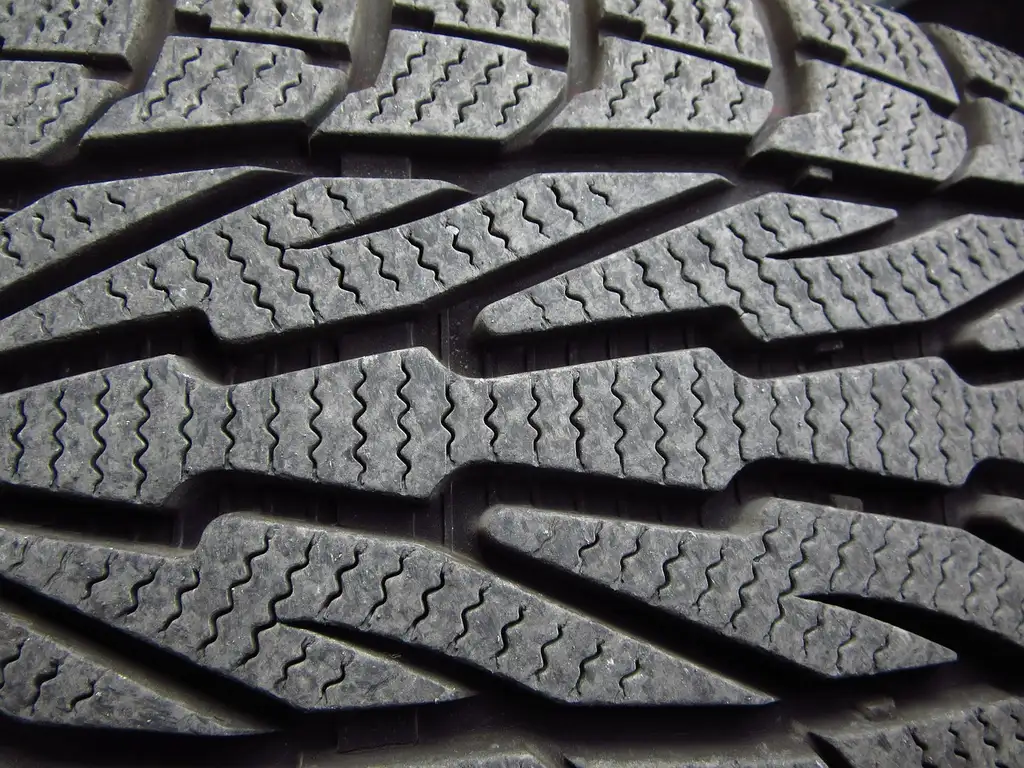
Tread wear indicator bars are raised rubber bridges molded into the main grooves of a tire. They are also called wear bars or tread wear indicators. When the surrounding tread wears down to the same height as those bridges, the tire is at the common 2/32-inch mark in that area.
That makes the bars a simple visual signal. They do not mean the tire is instantly unsafe in every condition, but they do mean usable tread is nearly gone at that point and wet traction is much poorer.
Why does 2/32 inch matter?
Tread depth is measured in 32nds of an inch. Legal minimum tread depth varies by jurisdiction and use case, but track use often becomes performance-limited before the legal minimum in many cases. A tire can still be legal for street use and still be a poor choice for a hot session, especially if wear is uneven or the tire has been heat-cycled hard. NHTSA and state guidance use 2/32 inch as the replacement threshold because wet traction drops sharply as tread disappears.
Treadwear ratings under UTQG have limits too. They are a consumer comparison tool, not a warranty of track life, and they do not tell you how a tire will hold up to repeated heat, alignment load, or water on a circuit. The system also has a track-use caveat: some tires are designed for street comparison, not for predicting high-heat laps.
What do wear bars mean on track tires?
On track tires, visible wear bars mean more than “the tire is getting old.” They are a decision signal. If the bars are even with the tread across the whole width, the tire is near the end of useful street tread. If only one shoulder is at the bars, the tire may still have tread in the middle but be failing in the spot that matters most on track.
That difference matters because a tire can be legal and still be a bad track tire. Heat load, camber, and pressure can make a tire slow, greasy, or fragile before the legal minimum is reached.
What is the street-use meaning versus the track-day meaning?
For street use, visible wear bars usually point to replacement soon, especially with rain in the forecast. For track use, the question is stricter: does the tire still have even tread, stable structure, and enough wet margin for the drive home or a change in weather? If the answer is uncertain, slow down or replace the tire.
Why is legal to use not the same as track-ready?
A tire with tread left above the bars may still fail track-day use if it has localized shoulder wear, heat damage, or signs of cord exposure. The safest rule is simple: legal status does not override condition. A tire that is squarely at the bars, or close enough that one hard session could expose cord, should be treated as a replacement candidate, not a “one more event” tire.
How do you read tread depth at the inner edge?
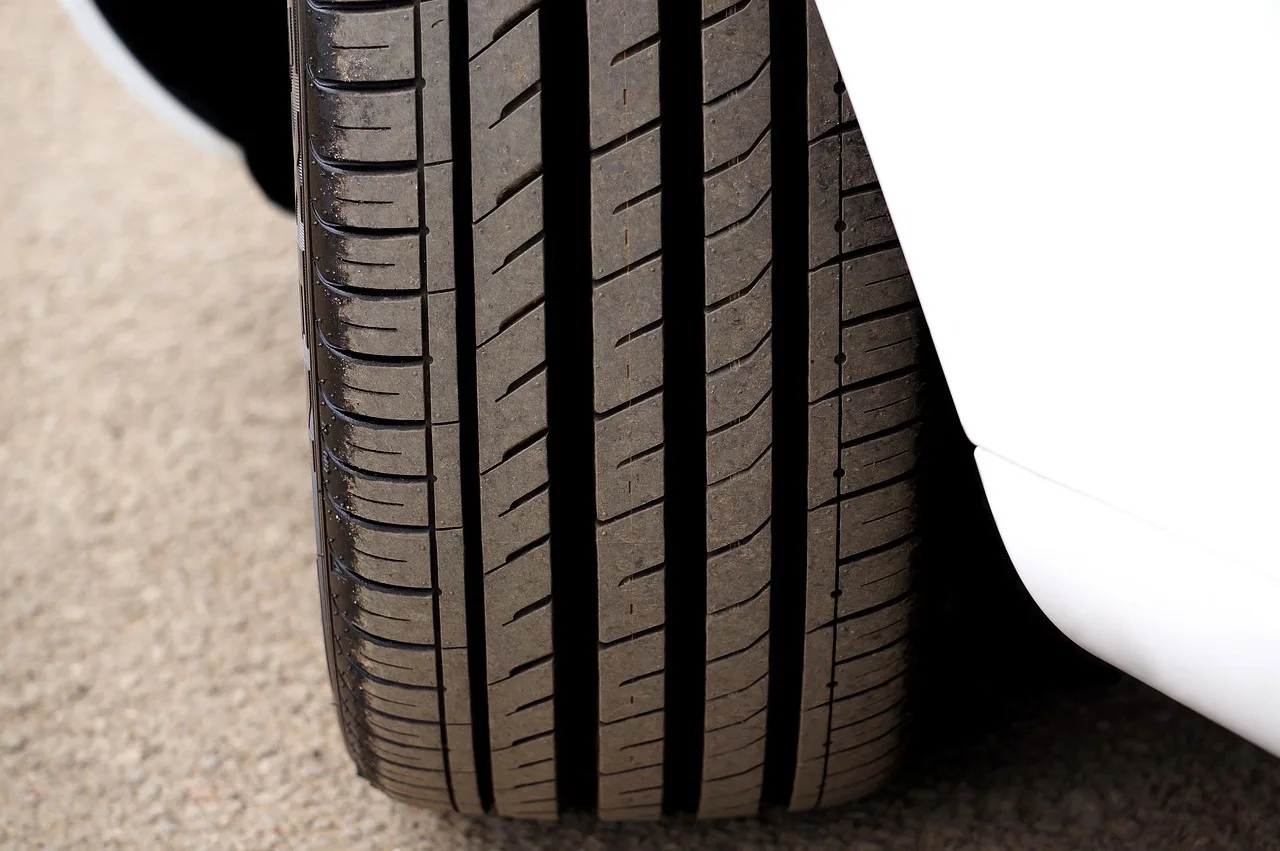
Use a tread depth gauge at the inner edge, center, and outer shoulder. That is the only way to see whether the bars are even or whether one part of the tread is wearing much faster than the rest. Track tires often wear unevenly, and the outer shoulder or inner edge can hit the bars first.
-
Measure three points.
Check the inner edge, center, and outer shoulder on each tire with a tread depth gauge. Record the reading in 32nds of an inch at each point so you can compare side to side and front to rear. -
Compare the spread.
If one shoulder is near 2/32 inch while the center still has clearly more tread, the tire is not wearing evenly. That usually points to camber, pressure, or both. -
Inspect both shoulders.
Look for feathering, tearing, blueing, cracking, chunking, blistering, cords, punctures, or a glossy, overheated surface near the low-tread area. Also note any hot-pressure changes after a session, because pressure tells you whether the tire is being overworked or under-supported.
Check both shoulders, the inner edge, the center, and the sidewall before every track day, and do it again after a hot session. The useful question is not just “how much tread is left?” but “where is the wear, and is the tire showing heat or structure damage where it is thin?”
What is the track wear decision table
This table translates tread depth into action. Use it with a gauge, not with a quick glance. If the tire is wet-weather dependent, the wet-risk column should push the decision toward a slower pace or replacement sooner.
| Tread depth at inner edge / center / outer shoulder | Action | Wet-weather risk | Likely wear cause |
|---|---|---|---|
| All three spots clearly above the bars and close to even | Keep running, but monitor after each session. | Moderate if tread is still healthy; higher if rain is expected. | Normal use or mild heat cycling. |
| One shoulder near the bars, center still above them | Reduce pace, check pressures, and consider rotation before the next session. | Higher, because the worn shoulder loses water evacuation first. | Too much negative camber, underinflation, or repeated cornering load. |
| One spot at the bars, other spots still above them | Monitor closely after the session; if wear is localized, plan replacement soon. | High, especially in standing water. | Localized shoulder wear, alignment imbalance, or pressure mismatch. |
| Any spot below the bars, or cord visible anywhere | Replace now and remove from service immediately. | Very high. Wet grip and structure margin are both poor. | Severe wear, heat damage, or failure progression. |
Why does a 200TW tire wear unevenly?
200TW track-capable tires can wear unevenly across the tread because track load is not even. Negative camber often pushes the inner edge harder, while pressure choices can shift wear toward the center or the shoulders. Heat cycling can also harden the compound over time, so grip can fade before the tread is fully gone.
How do camber and shoulder wear connect?
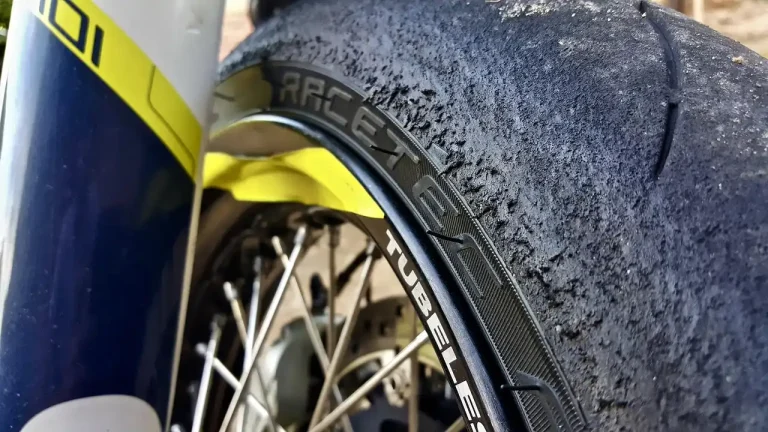
Too much negative camber can accelerate inner-edge wear. That is common after track sessions, because cornering load keeps the tire loaded on the inside shoulder for long periods. If the inner edge is down at the bars while the rest of the tread still looks usable, the tire is telling you that alignment, not just tread life, is the problem.
Suppose the inner edge of a front tire measures 2/32 inch, the center reads noticeably deeper, and the outer shoulder still has more tread. That is not a “healthy tire with one worn spot.” It is a tire that may be legal in some places but is already poor for another hot session, because the worn shoulder is where the next failure risk begins.
How do pressure and heat cycling change wear?
Inflation pressure shapes the contact patch. Underinflation can overheat shoulders, while overinflation can wear the center faster. On a 200TW tire, repeated heat cycling can also reduce grip and make the compound feel brittle before the bars are reached. That is why tread depth alone is not enough.
Do not treat UTQG as a track-life promise. It is only a consumer comparison metric. A tire with a decent tread rating can still be a poor fit after repeated high-heat sessions, and the UTQG system is not designed to predict track durability or lap-after-lap heat tolerance.
How can localized wear hide cord exposure?
Cord exposure is a remove-from-service condition, even if the wear bars are not evenly reached. On a track tire, the outer shoulder or inner edge can thin enough for cord to show while the center still appears fine. That is a serious warning, not a cosmetic issue.
Picture a rear tire with good tread across the center but a thin outer shoulder after a long session. If a grey or shiny line appears in the worn area, stop using the tire. Cord exposure can begin where the tire is most loaded, not where the gauge looks best.
When should you replace worn tires?
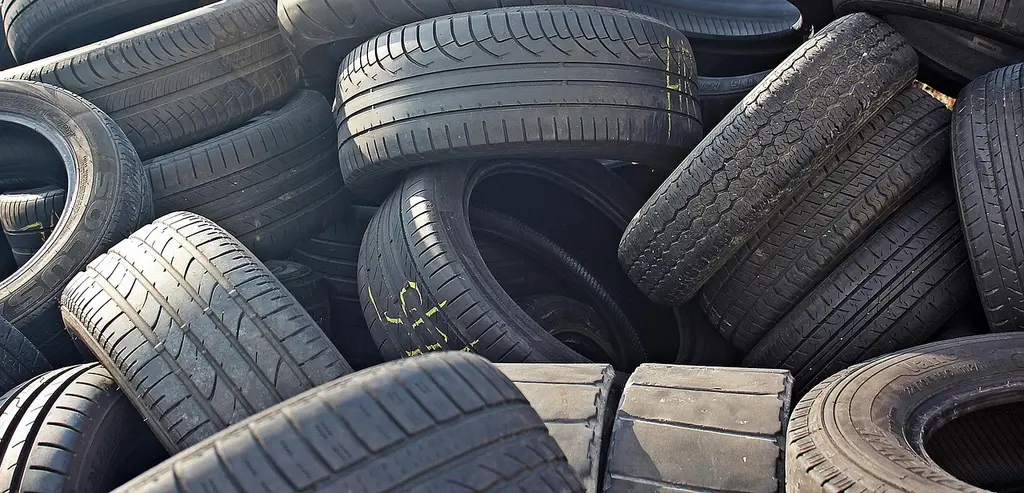
Replace tires before a track day if the bars are already visible in one shoulder, if wear is uneven enough to change balance or braking feel, or if wet weather is likely. A tire at or near the bars has little rain margin left, and low tread can lose standing-water control fast. Tire makers and road-safety guidance both treat that as the point where replacement should move from “soon” to “now.”
When is replacement needed before a track day?
If a gauge shows about 2/32 inch at any spot and the forecast includes rain, replacement is the safer move. Even in dry weather, a tire with one worn shoulder may not survive a full session without exposing cord. Do not count on “one more event” unless the tire is even, dry, and free of heat damage.
When should you back off after a session?
If the wear is concentrated on one shoulder, back off on the next session, check pressures, and inspect the tire again before you drive home. If the wear has turned into a rough, torn, blistered, or cord-threatening patch, stop using that tire. A small amount of tread left does not protect a damaged carcass.
When does wet traction matter most?
Low tread is a bigger problem in standing water than on a dry road. Wear bars are a clear signal that wet performance has fallen enough to matter, even if the tire still looks serviceable from a distance. If you need the car to handle a wet drive home, treat the bars as an early replacement trigger, not a late one.
Can you still drive home from the track on tires at the wear bars? Sometimes, but only with strong limits: dry pavement, short distance, moderate speed, no sign of cord, and no severe localized wear. If rain, highway speed, heat damage, or shoulder wear is in play, do not assume the tire is fit for the trip.
Frequently asked questions
What do the wear bars on a tire actually mean?
Wear bars are raised rubber bridges molded into the tread grooves. When the surrounding tread reaches their height, that spot is at about 2/32 inch. On a track-driven street car, that is a signal to inspect closely and usually plan replacement soon.
How much tread is left when the wear bars are visible?
Usually about 2/32 inch at the spot where the bar is flush with the tread. That number can differ by location on the same tire if wear is uneven. The inner edge may hit the bar long before the center does.
Can I still drive home from the track on tires at the wear bars?
Only if the drive is short, the road is dry, the tire is not showing cord or heat damage, and the wear is not badly localized to one shoulder. Rain, long highway speeds, or a damaged shoulder change the answer quickly. In those cases, replacement or transport is safer.
Do wear bars mean my tires are unsafe right away?
Not instantly in every situation, but they do mean the tire is near the end of useful tread. On track, that can be enough to reduce wet grip and water evacuation, and a tire with visible bars may still be unsafe if it has heat damage or cord exposure.
How do track temps and alignment affect how fast wear bars show up?
Higher track temperatures increase wear rate, and too much negative camber can drive the inner shoulder to the bars first. Pressure also changes the pattern: underinflation tends to overwork shoulders, while overinflation can wear the center more quickly. Heat cycling can reduce grip before tread is gone.
Can cord show before the wear bars disappear on a track tire?
Yes. Localized shoulder wear can cut through the tread in one area while the rest of the tire still has visible depth. If cord is visible anywhere, remove the tire from service immediately. Do not wait for the other parts of the tread to match it.
What should I inspect besides tread when wear bars are close?
Check for cracks, chunking, tearing, glazing, blueing, a rough patch, punctures, or blistering near the low-tread area. Also inspect both shoulders, the inner edge, and the sidewall for cuts or bulges, and note whether hot pressures are climbing more than expected after a session. If the tire has been heat-cycled hard, assume grip and structure may be worse than the tread depth suggests.